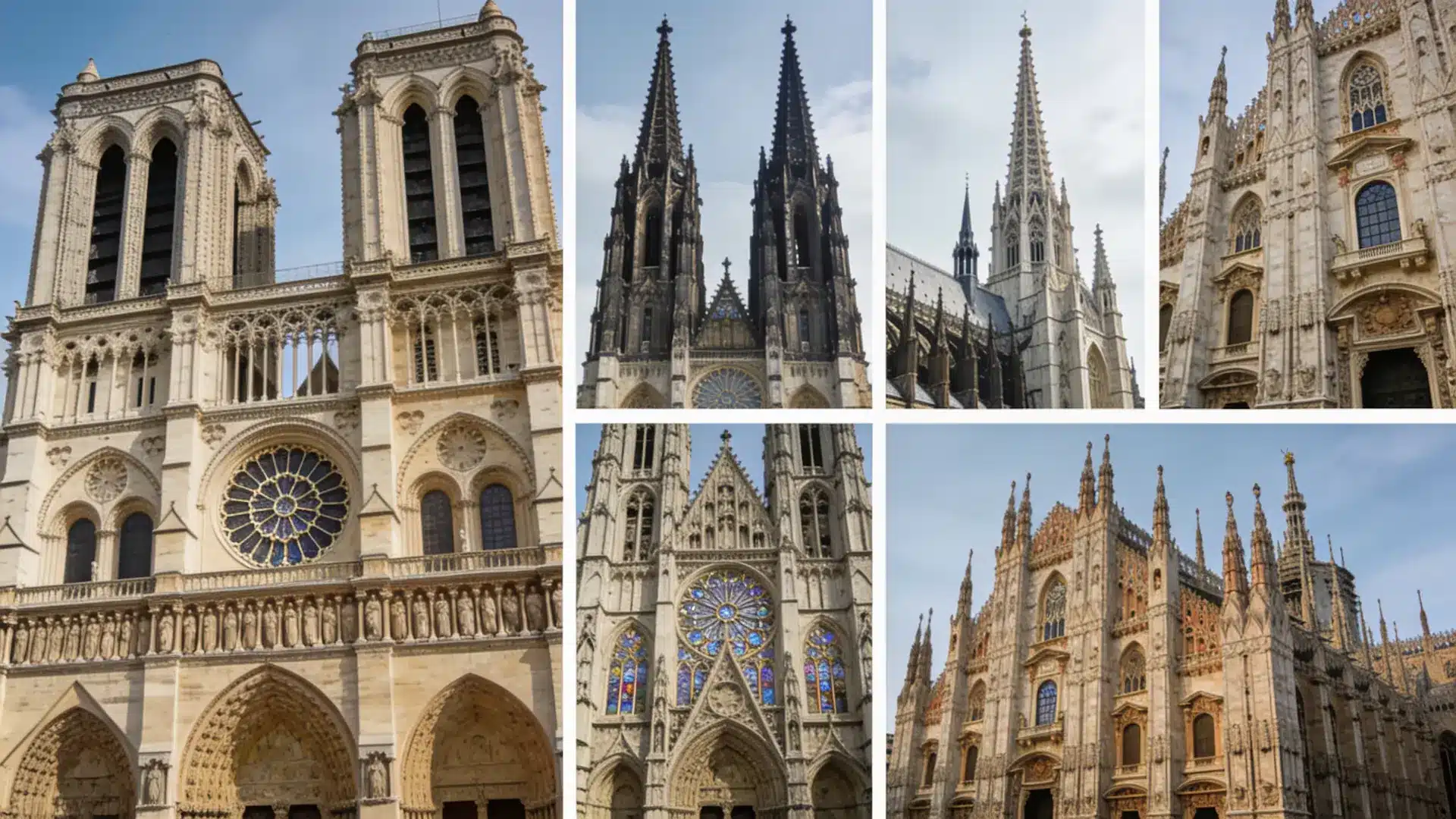
The first thing that we all notice in Gothic cathedrals is the height.
That spires rise fast, the stained glass catches your eye, and the carved stone makes every wall feel alive. Step inside, and the space can feel almost too big to be real.
I like these buildings because they are more than old churches. They bring art, faith, structure, and light into one place.
Their pointed arches, rib vaults, flying buttresses, tracery, rose windows, and stained glass helped builders create taller, brighter, more dramatic interiors, as Architectural Digest explains.
This list looks at the most famous Gothic cathedrals and important Gothic churches that show the style at its strongest.
What are the Most Famous Gothic Cathedrals? Quick Glance
The most famous Gothic cathedrals include Notre-Dame de Paris, Chartres Cathedral, Reims Cathedral, Amiens Cathedral, Cologne Cathedral, Milan Cathedral, Canterbury Cathedral, York Minster, Burgos Cathedral, Seville Cathedral, and St. Vitus Cathedral.
These buildings are often praised for their height, stained glass, towers, stone carving, and dramatic interiors.
Some famous Gothic churches, such as Westminster Abbey, are also included because many readers seek strong examples of Gothic architecture, not only formal cathedrals.
Here is the quick list before we look at what makes each one worth seeing.
| Cathedral Or Church | Country | Best Known For |
|---|---|---|
| Notre-Dame de Paris | France | Rose windows and flying buttresses |
| Chartres Cathedral | France | Blue stained glass and preserved Gothic design |
| Reims Cathedral | France | French royal coronations and sculpted facade |
| Amiens Cathedral | France | Huge interior and tall nave |
| Cologne Cathedral | Germany | Twin spires and large-scale |
| Milan Cathedral | Italy | Marble exterior and rooftop spires |
| Canterbury Cathedral | England | English Gothic history |
| York Minster | England | Great East Window and vast nave |
| Burgos Cathedral | Spain | Decorative spires and Spanish Gothic detail |
| Seville Cathedral | Spain | Massive size and late Gothic design |
| St. Vitus Cathedral | Czech Republic | Prague skyline and stained glass |
| Westminster Abbey | England | Famous Gothic church and royal site |
The Most Famous Gothic Cathedrals and Churches
This list brings together the most famous Gothic cathedrals and a few major Gothic churches that readers often look for in the same search.
I chose them for their fame, design value, scale, cultural importance, engineering, and the clarity with which they show the Gothic style.
Some are known for rose windows. Others stand out for spires, stained glass, carved façades, royal history, or sheer size.
I like looking at them as more than landmarks. Each one shows how stone, glass, height, and structure can turn a church into something unforgettable.
This is not a strict ranking, but a curated list based on fame, visual impact, Gothic features, history, and how clearly each building represents the style.
1. Notre-Dame De Paris, France
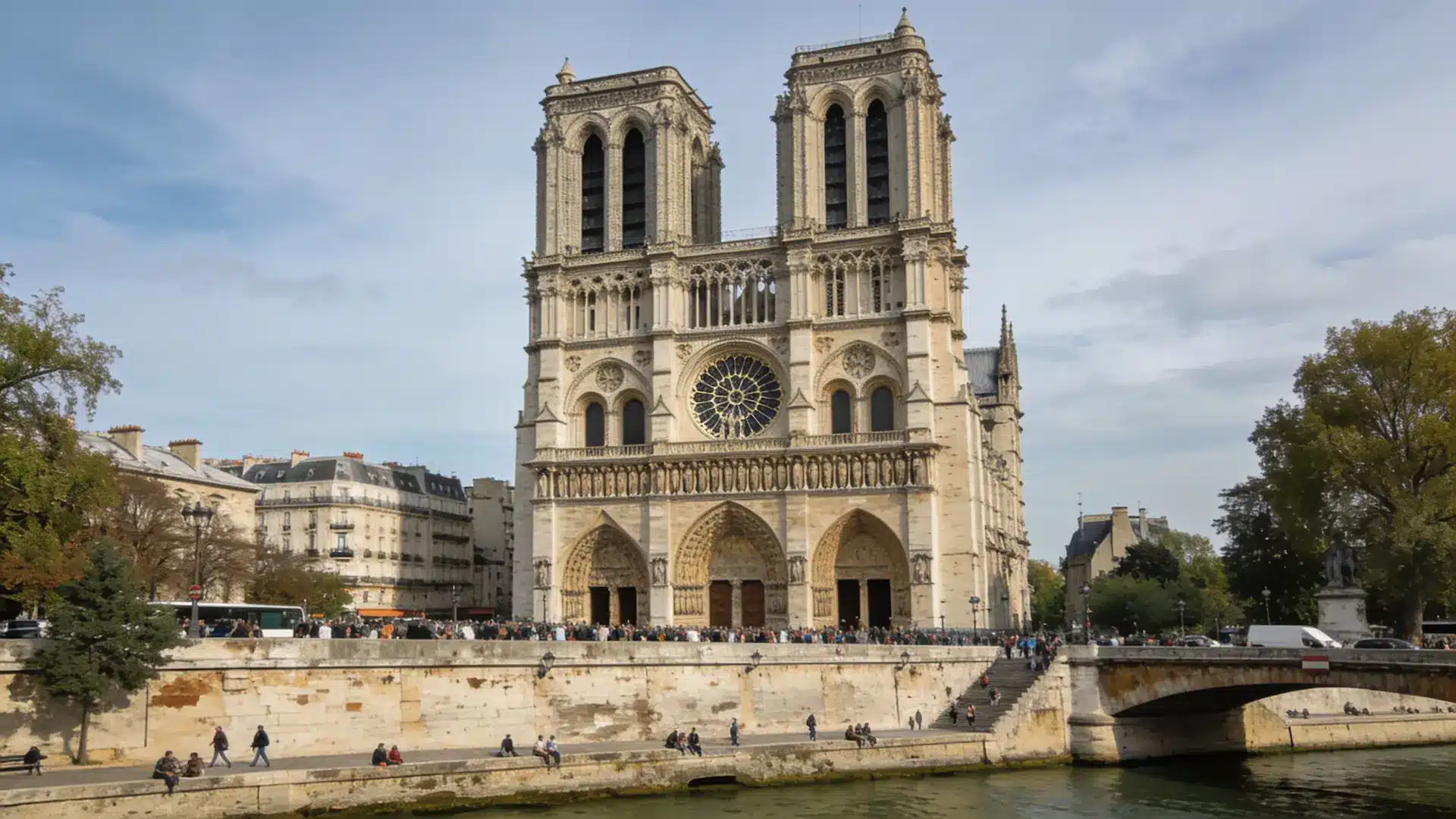
Notre-Dame de Paris is one of the best-known Gothic cathedrals in the world.
- Stands on the Seine, which makes the whole setting feel more memorable.
- Known for twin towers, rose windows, sculpted portals, and flying buttresses.
- I would look at the side view, not only the front.
- That is where the flying buttresses become much easier to understand.
- Reopened after restoration in December 2024, but its real strength is still the stone, glass, and structure.
My Verdict: Best for seeing how beauty and engineering work together.
2. Chartres Cathedral, France
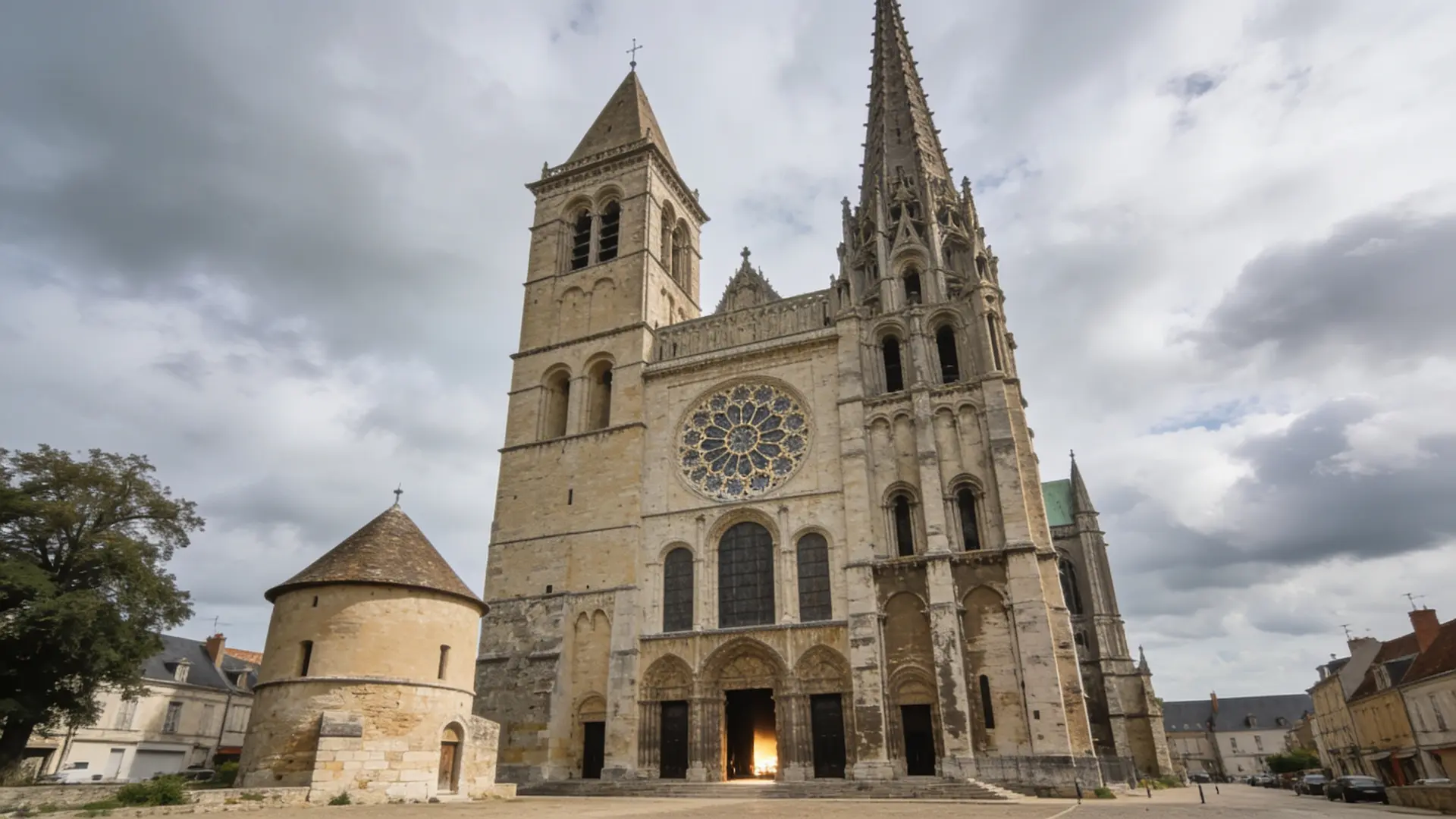
Chartres Cathedral is one of the most complete and respected Gothic cathedrals in France.
- Known for stained glass, deep blue light, towers, portals, and sculpture.
- UNESCO describes it as one of the most complete works of early 13th-century religious architecture.
- I like Chartres because the glass, stone, and height feel perfectly connected.
- Use this example to show how Gothic design turns structure into atmosphere.
- Best image angle: the nave lit by blue stained glass.
My Verdict: Best for the clearest “classic Gothic cathedral” example.
3. Reims Cathedral, France
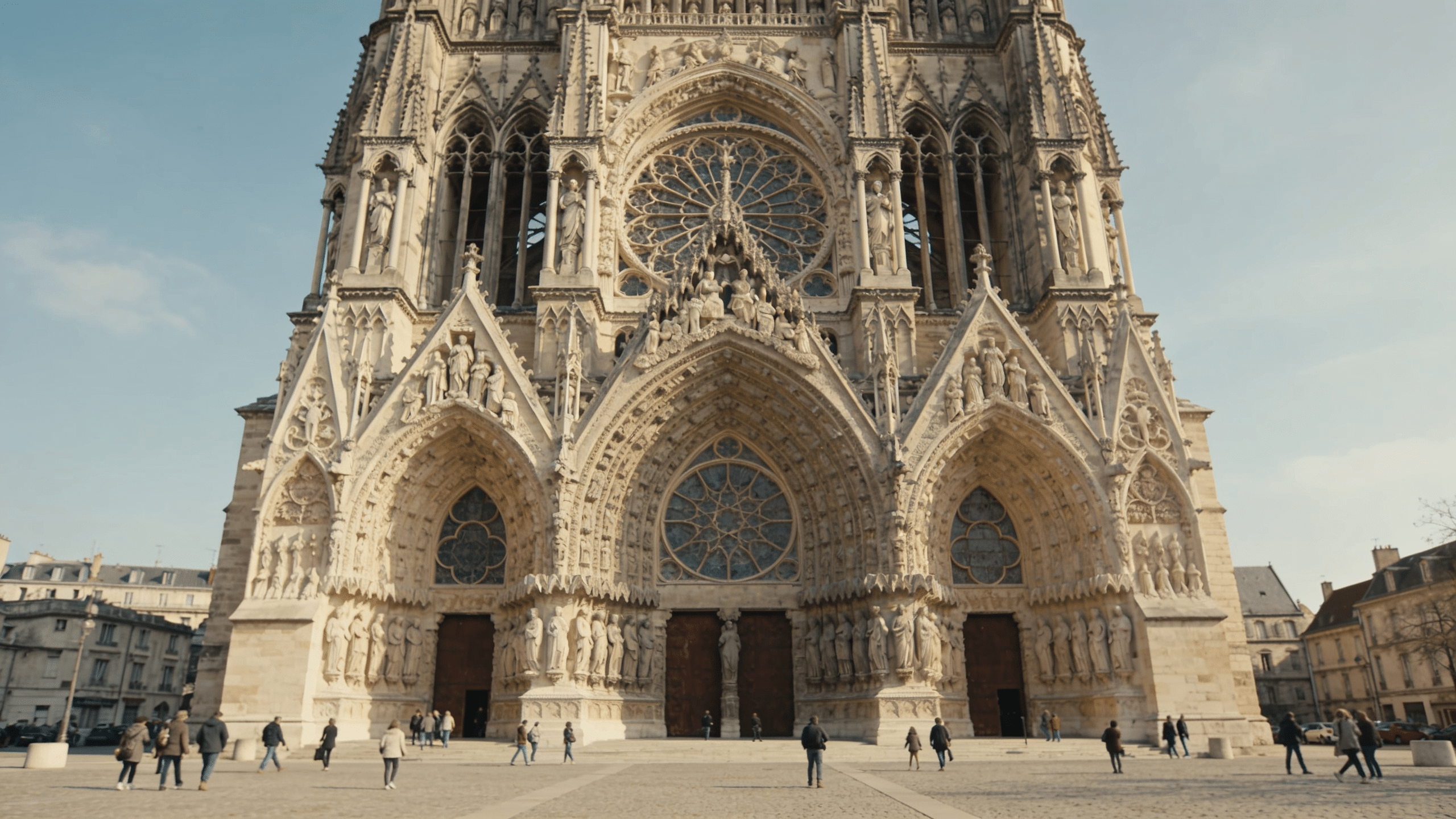
Reims Cathedral is a masterpiece of Gothic art, especially if you love carved stone.
- It is known for its sculpted façade, tall portals, rose windows, and royal history.
- The stone figures feel built into the architecture, not added later as decoration.
- UNESCO notes the close link between sculpture and structure here.
- I would focus on the front façade because that is where Reims feels strongest.
- This is a great pick for readers who love carved stone detail.
My Verdict: Best for sculpture, portals, and royal Gothic presence.
4. Amiens Cathedral, France
Amiens Cathedral is one of the largest classic Gothic churches of the 13th century.
- It is a strong example of Gothic scale, height, and order.
- The nave rises in clean vertical lines.
- The repeating columns make the interior feel structured rather than crowded.
- UNESCO highlights its plan, interior elevation, and sculpture.
- I would use Amiens to help readers understand how huge Gothic buildings were planned.
My Verdict: Best for understanding height, space, and Gothic scale.
5. Cologne Cathedral, Germany
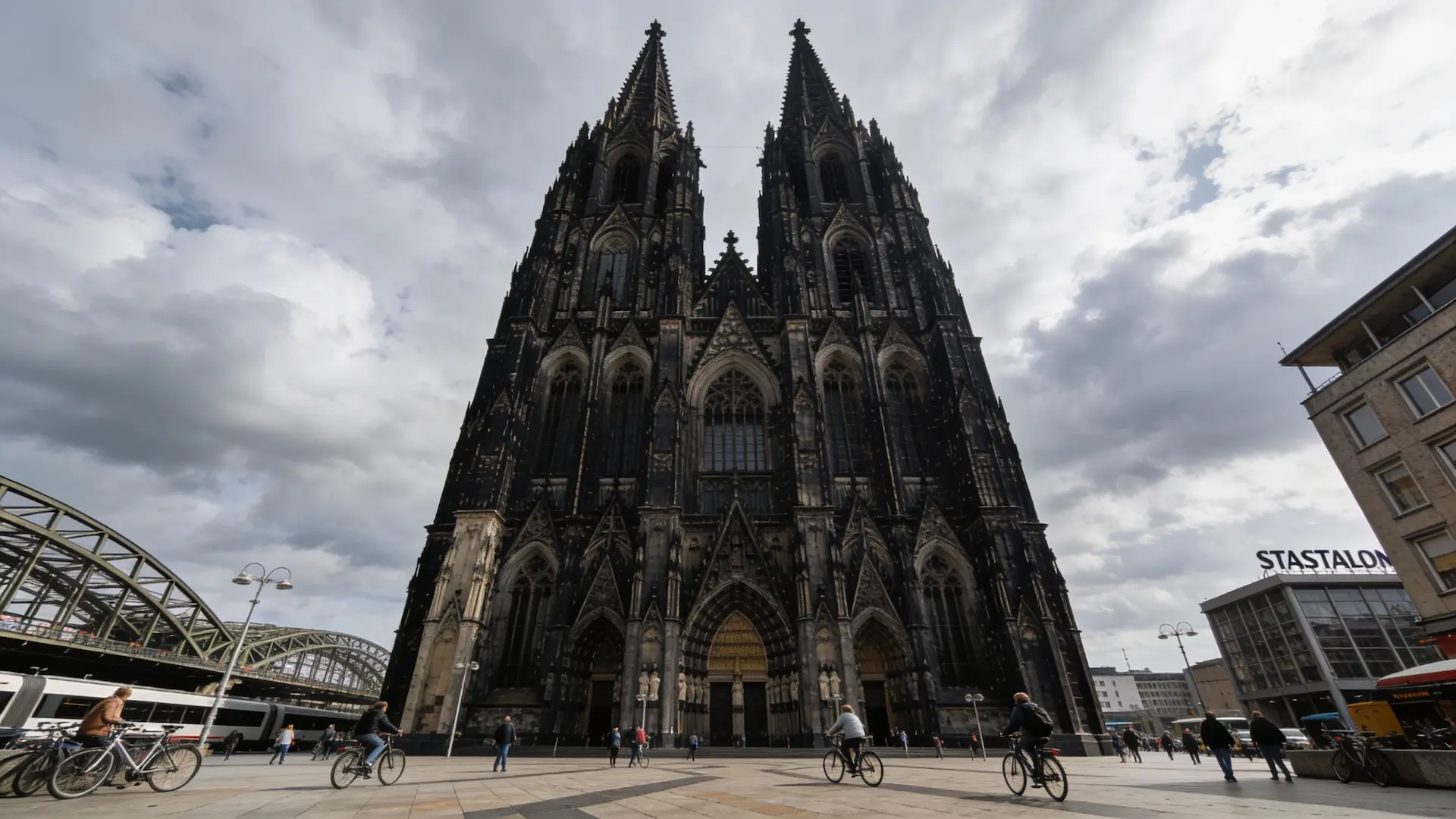
Cologne Cathedral is Germany’s great Gothic landmark.
- Its twin spires, dark stone, and huge vertical presence make it feel intense.
- Construction began in 1248 and was completed in 1880.
- UNESCO notes that later builders stayed loyal to the original Gothic plan.
- I would show it from a low angle so the spires feel even taller.
- This is the right place to link to a blog on German architectural styles.
My Verdict: Best for dramatic spires and German Gothic identity.
6. Milan Cathedral, Italy
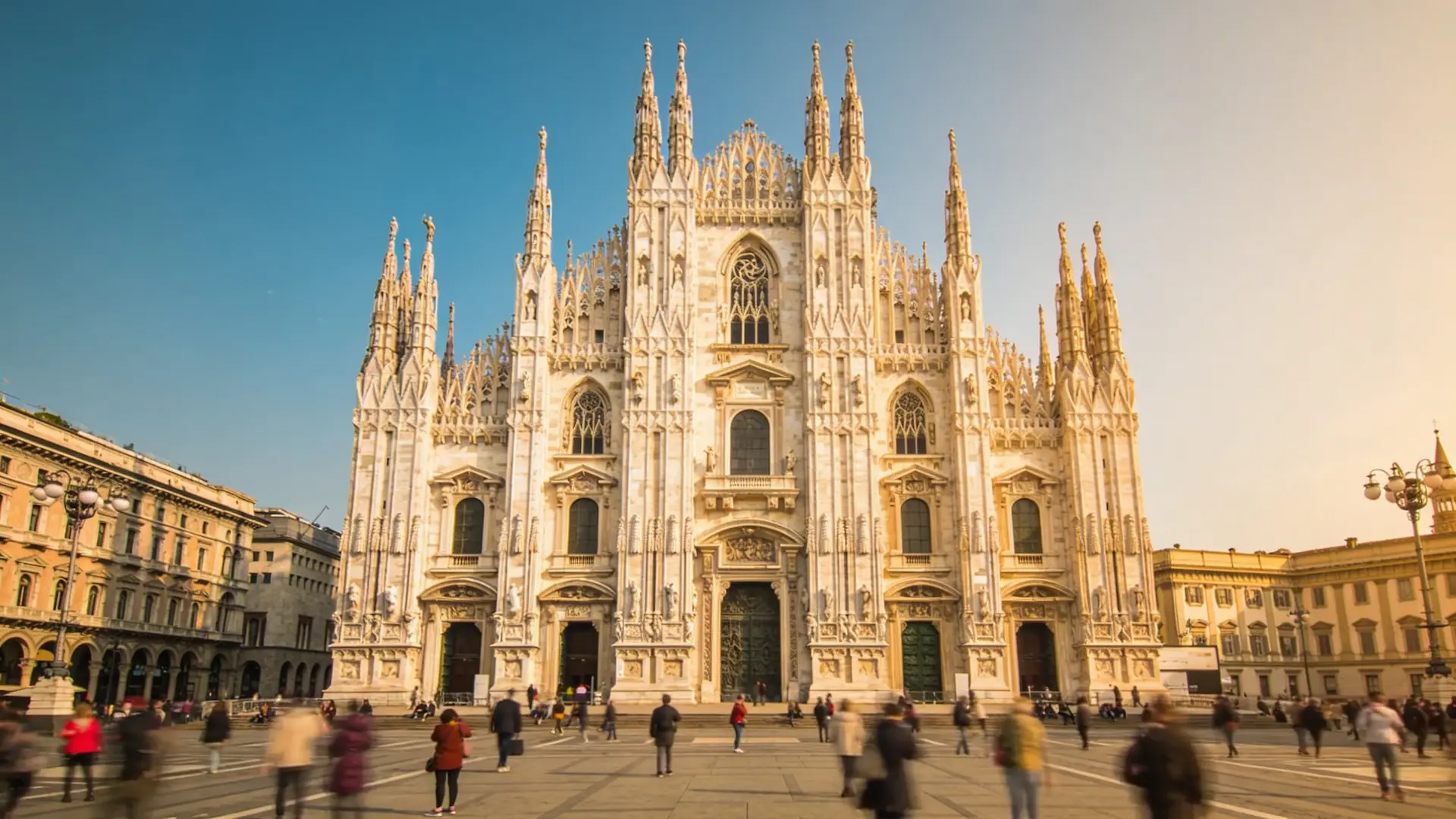
Milan Cathedral feels more decorative and marble-heavy than many French Gothic cathedrals.
- It feels more decorative and marble-heavy than many French Gothic cathedrals.
- Known for white marble, dense spires, statues, rooftop views, and a lace-like façade.
- The official Duomo site says construction likely began in 1386.
- I would focus on the rooftop because the spires feel almost like a stone forest.
- It shows how Gothic design can become highly detailed and ornamental.
My Verdict: Best for marble detail, rooftop views, and rich decoration.
7. Westminster Abbey, England
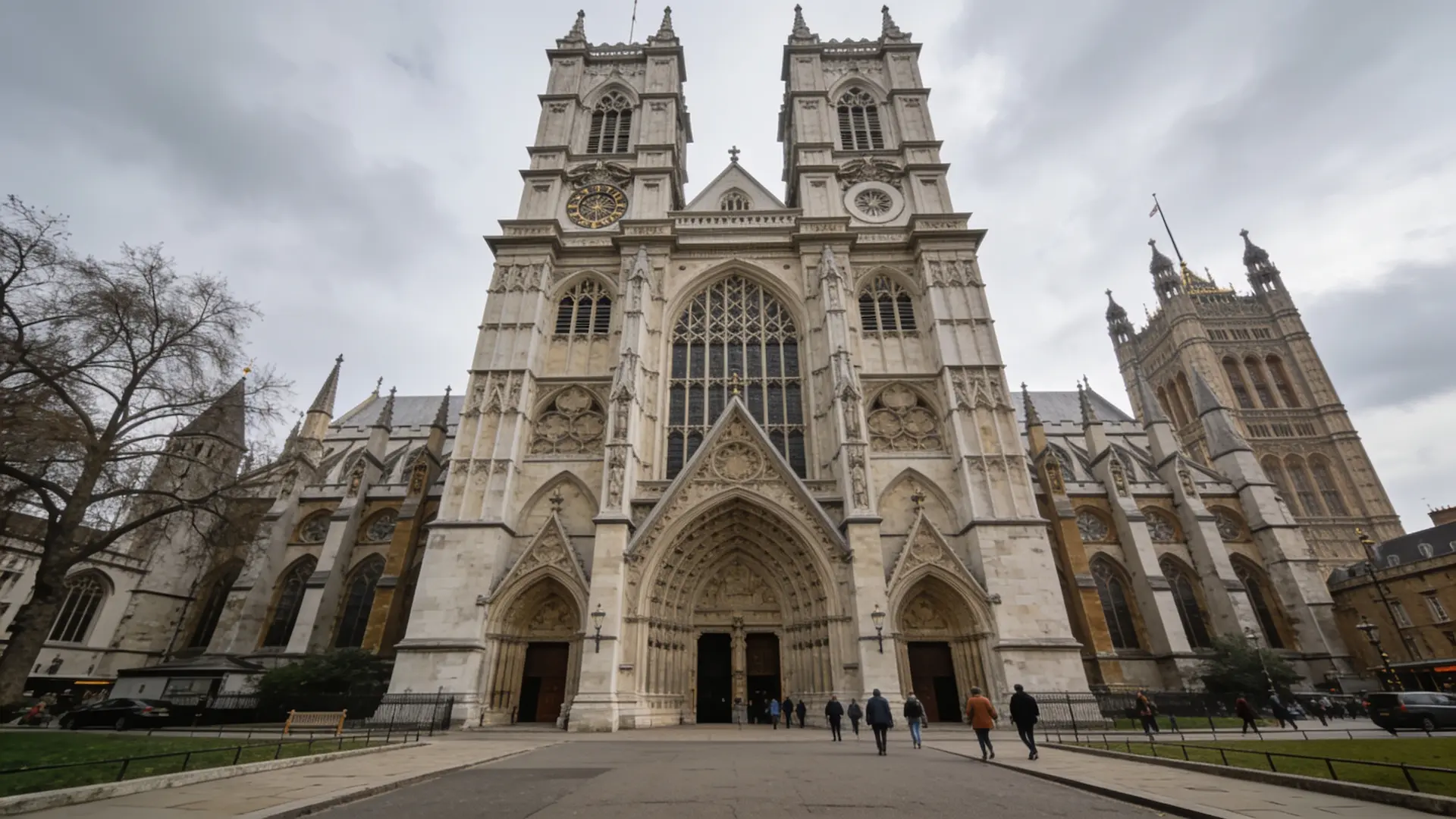
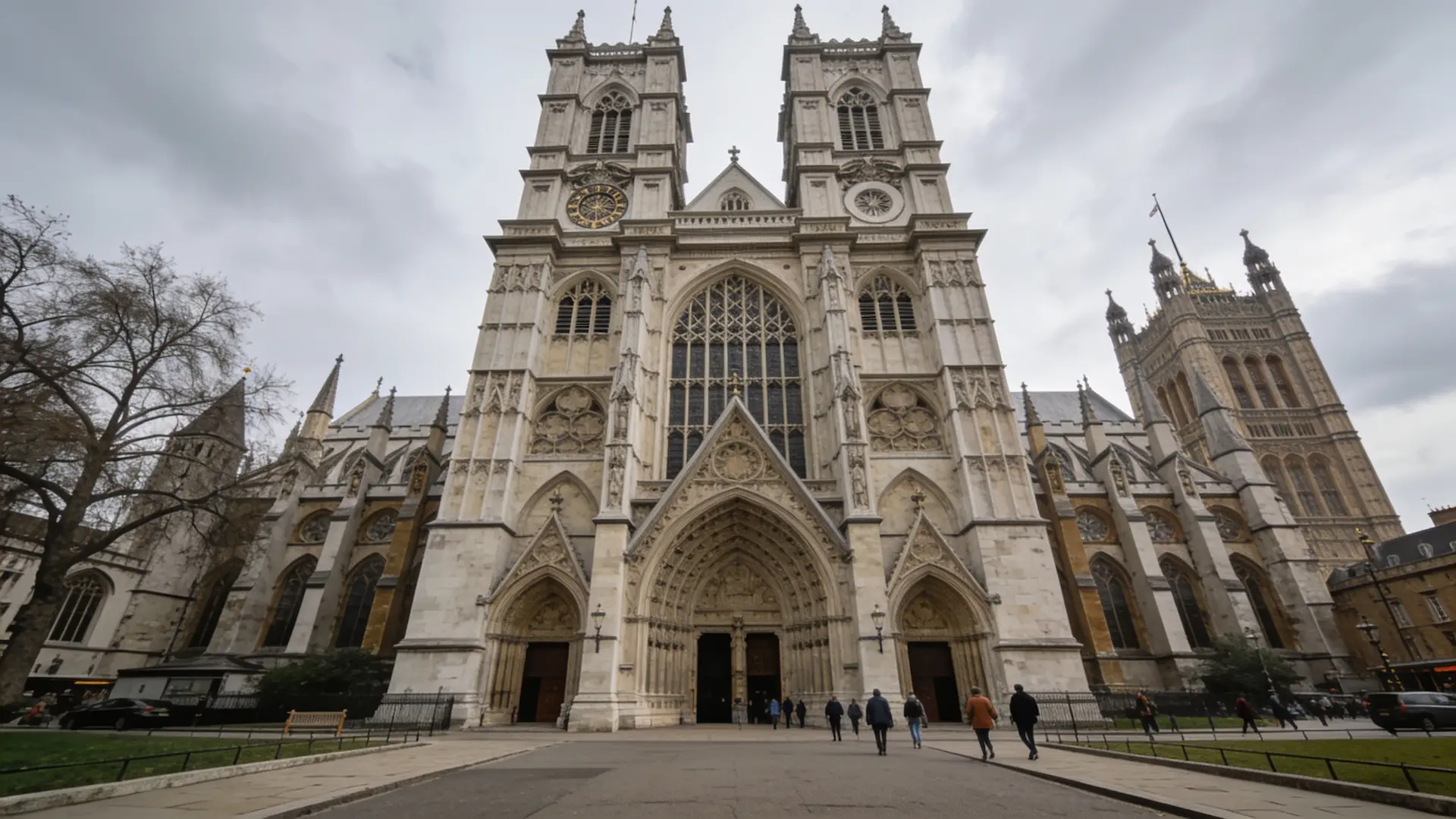
Westminster Abbey is not a cathedral, but it belongs on this list because it is one of the most famous examples of Gothic architecture in the world.
- Known for royal ceremonies, pointed arches, vaulting, and English Gothic character.
- The Abbey’s official history says Henry III rebuilt it in the Gothic style in the 13th century.
- I would focus on the long nave and vaulted ceiling.
- It feels formal, symbolic, and deeply tied to British history.
My Verdict: Best Gothic church example for royal ceremony and history.
8. Canterbury Cathedral, England
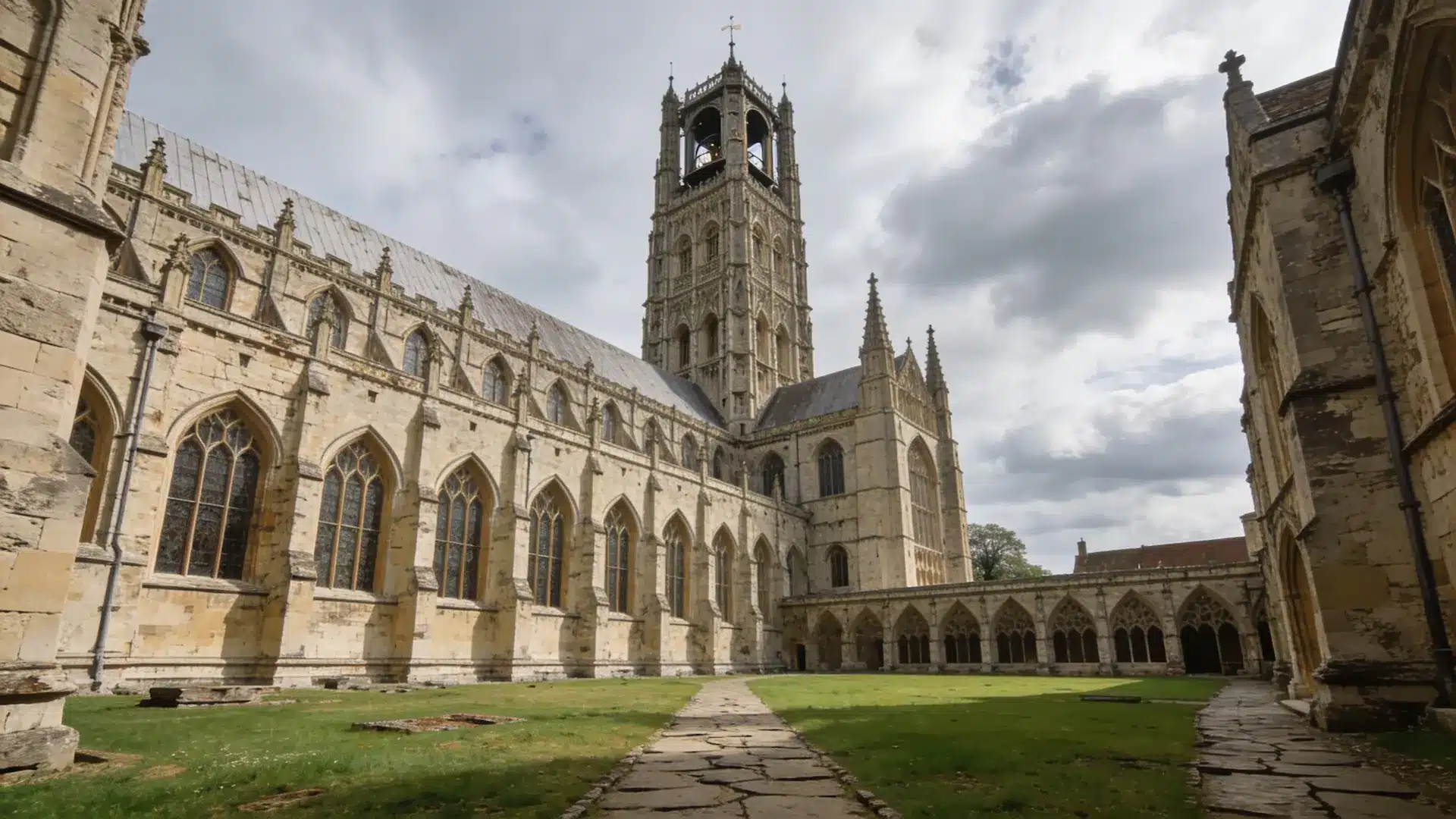
Canterbury Cathedral is valuable because it is not visually “one style only.”
- It combines Romanesque weight with later Gothic height and detail.
- UNESCO describes it as a mix of Romanesque and Perpendicular Gothic architecture.
- That makes it useful for comparing styles in one building.
- I like Canterbury because it shows how church architecture changed over time.
- It feels layered, historic, and less polished than a single-style cathedral.
My Verdict: Best for seeing how Gothic grew from older church forms.
9. York Minster, England
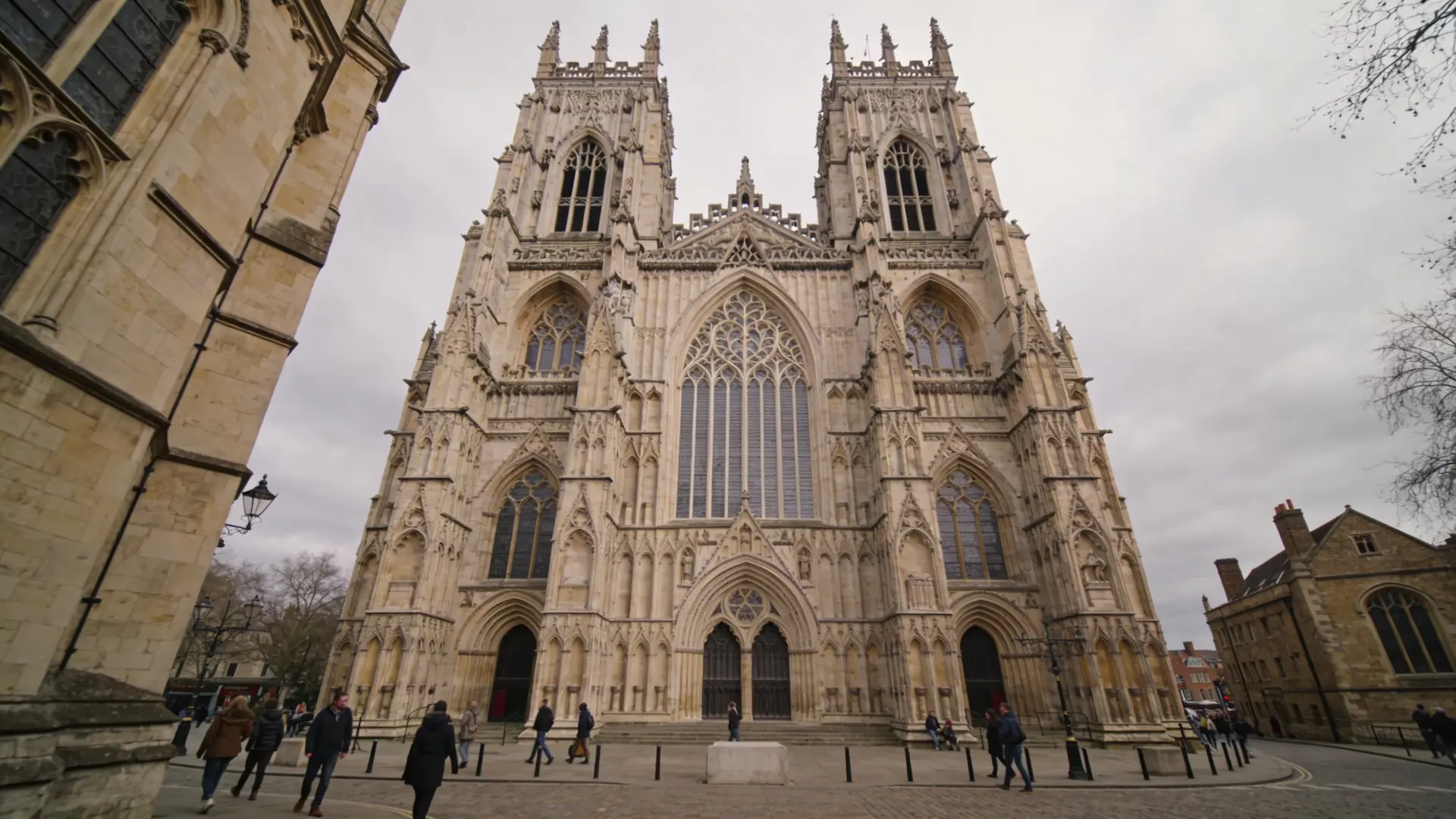
York Minster is one of the strongest English Gothic churches for stained glass, scale, and long building history.
- The Gothic Minster began around 1225–1255 under Archbishop Walter de Gray.
- The Great East Window is one of its major visual features.
- I would use York to show English Gothic detailing and large-window design.
- It feels grand without copying French Gothic too closely.
My Verdict: Best for English Gothic glass and a huge interior.
10. Salisbury Cathedral, England
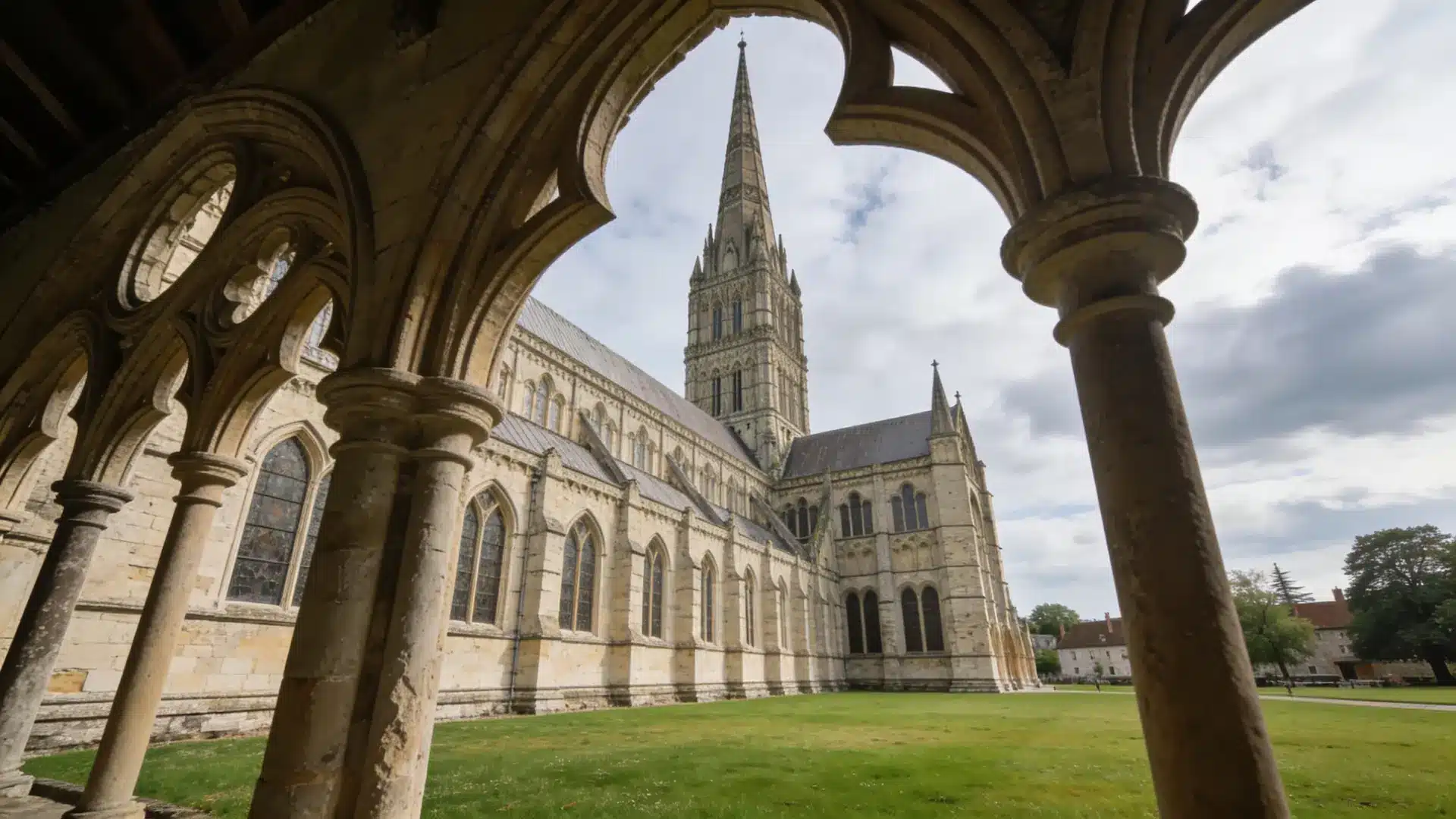
Salisbury Cathedral is a strong example of Early English Gothic.
- It feels cleaner and calmer than Cologne or Milan.
- Known for its pale stone, lancet windows, balanced layout, and famous spire.
- Smarthistory describes it as a major example of Early English Gothic.
- I would compare it with Milan to show how different Gothic design can feel.
- Salisbury proves Gothic architecture can be powerful without heavy decoration.
My Verdict: Best for simple, clean, early English Gothic design.
11. Burgos Cathedral, Spain
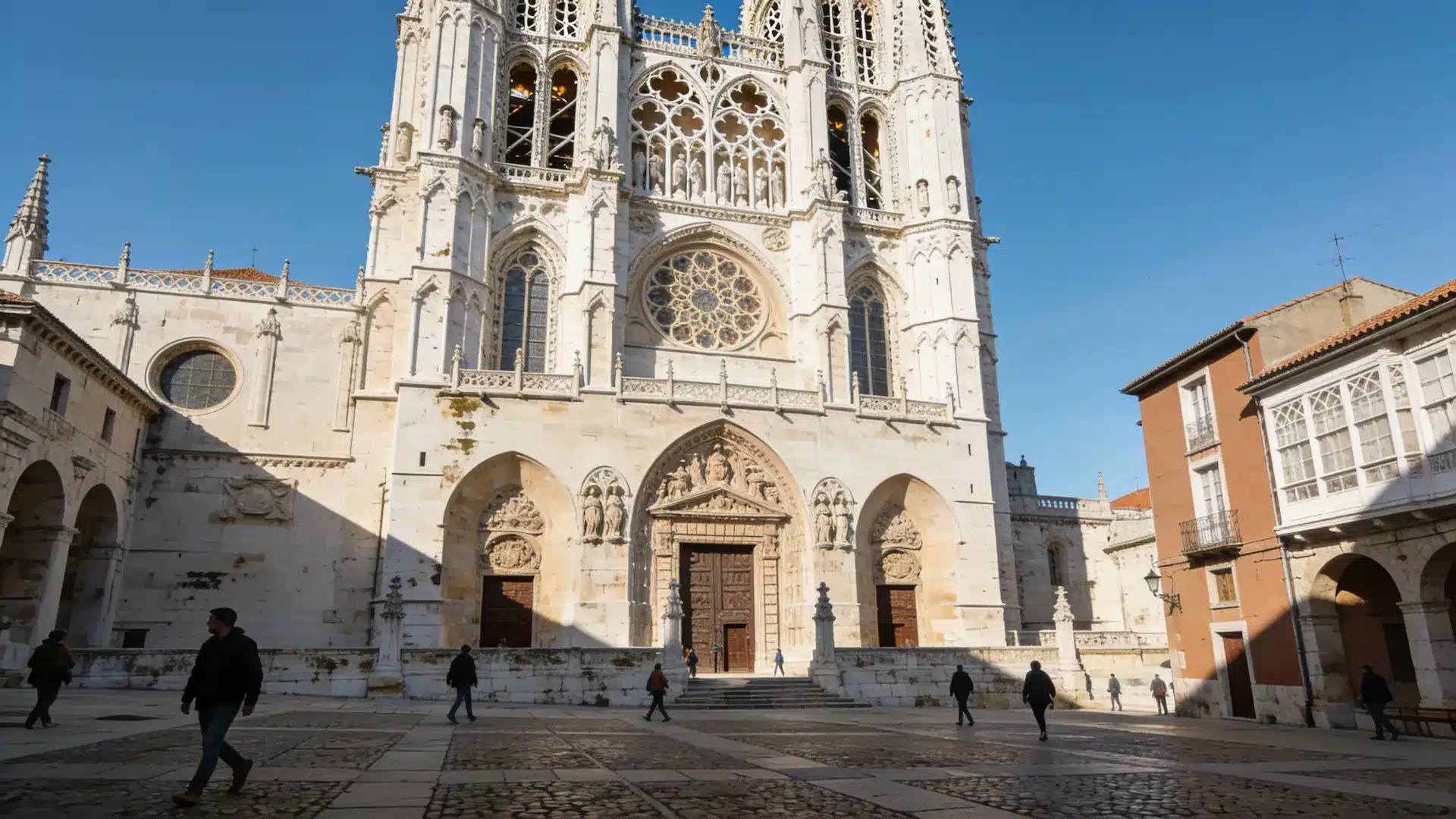
Burgos Cathedral is one of Spain’s strongest Gothic examples.
- It has sharp spires, sculpted portals, stained glass, chapels, and later decorative layers.
- UNESCO says the history of Gothic art is summed up in its architecture and art collection.
- I would use Burgos for readers who want Spanish Gothic beyond France and England.
- It keeps the height and structure of Gothic design.
- At the same time, it adds a richer Spanish decorative character.
My Verdict: Best for Spanish Gothic detail and layered decoration.
12. León Cathedral, Spain
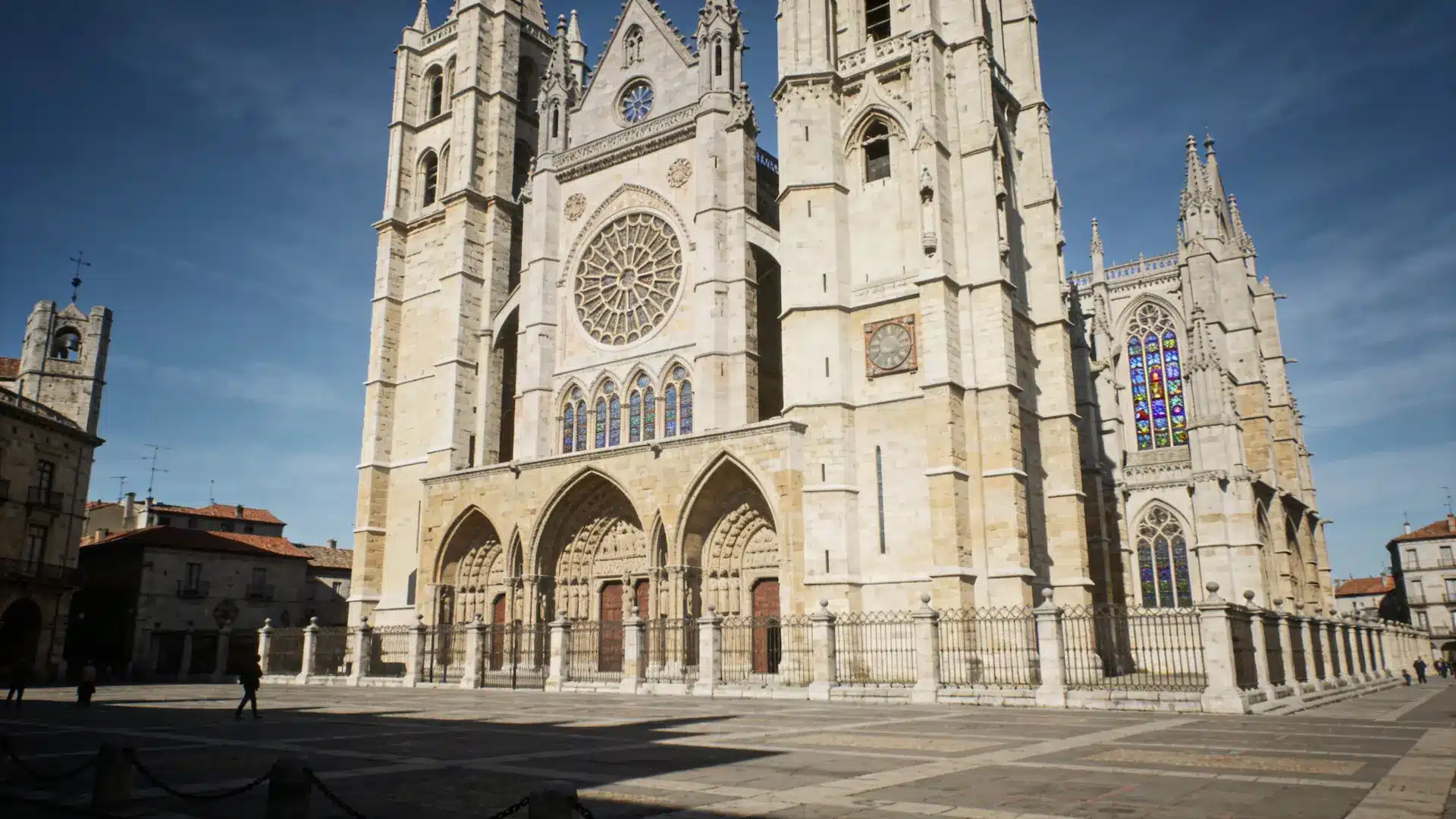
León Cathedral is the glass-filled Gothic church on this list.
- It is known for light, thin walls and large stained-glass surfaces.
- Spain’s official tourism site notes 1,765 square meters of stained glass.
- The glass dates from the 13th to the 20th centuries.
- I would show the interior first because the colored light is the main story.
- León helps explain how Gothic buildings tried to replace heavy walls with light.
My Verdict: Best for stained glass and the feeling of lightness.
13. Strasbourg Cathedral, France
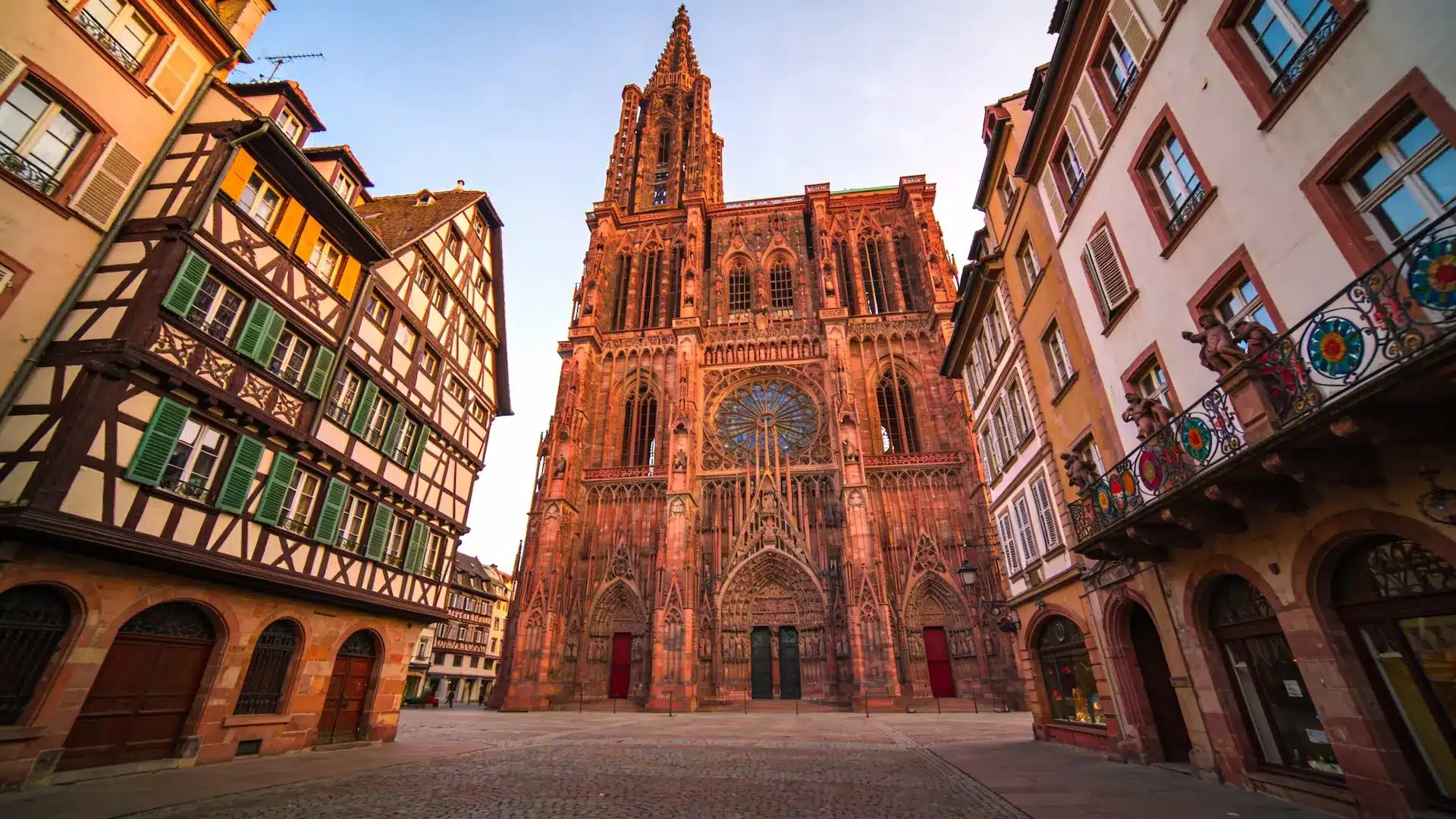
Strasbourg Cathedral stands out because it is in a city shaped by French and German influences.
- It is known for its single spire, reddish stone, carved façade, and old-town setting.
- UNESCO calls the cathedral a major masterpiece of Gothic art.
- The warm stone color makes it stand apart from paler French cathedrals.
- I would show it from street level, rising above nearby buildings.
- It feels closely tied to the surrounding city.
My Verdict: Best for a Gothic façade with strong city character.
14. Seville Cathedral, Spain
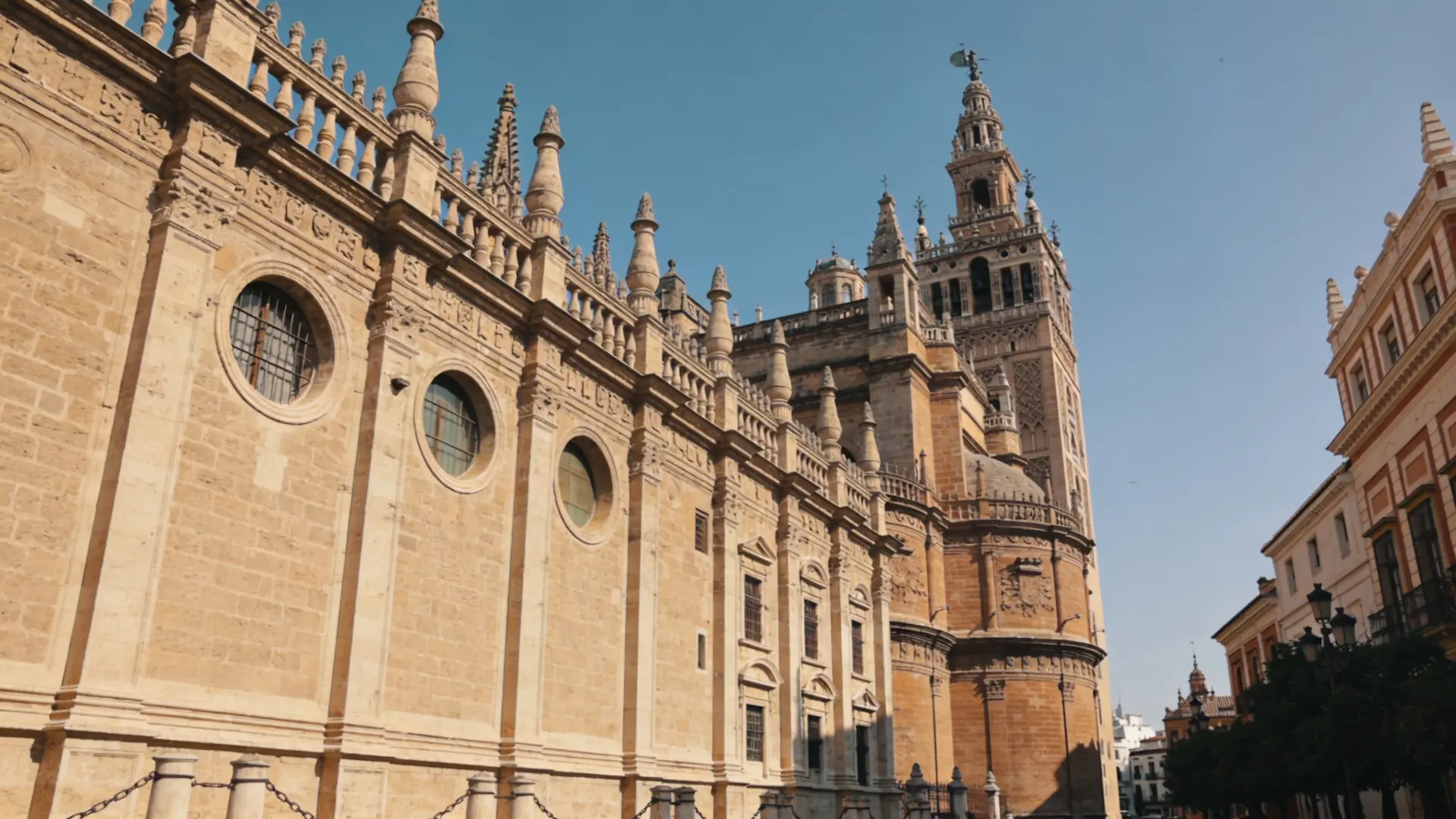
Seville Cathedral is massive, layered, and unlike any other building on this list.
- UNESCO describes it as the largest Gothic building in Europe.
- It has five naves, a huge interior, and the Giralda beside it.
- The site also carries Islamic and Renaissance heritage.
- I would focus on the interior scale because that is where Seville feels most powerful.
- It feels wider, heavier, and grander than many tall French Gothic cathedrals.
My Verdict: Best for size, cultural layers, and interior impact.
15. St. Vitus Cathedral, Prague, Czechia
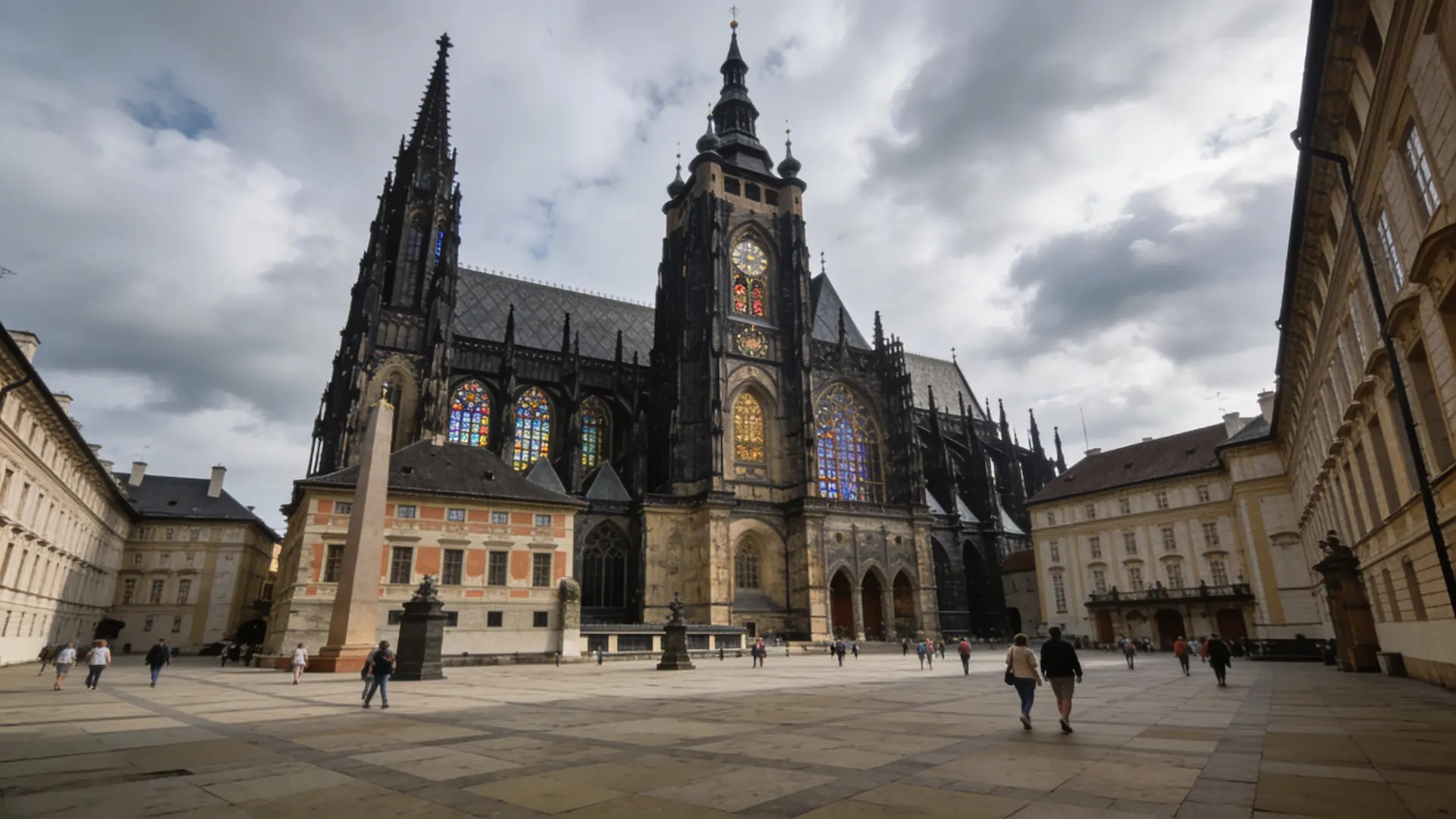
St. Vitus Cathedral is the final dramatic stop because it links Gothic design to the city’s identity.
- It stands inside Prague Castle and helps shape the city skyline.
- Known for dark spires, stained glass, ribbed vaults, and national importance.
- Prague Castle’s official site calls it the largest and most important temple in Prague.
- Czech royal coronations and burials took place there.
- I would end with St. Vitus because it links Gothic design with city identity.
My Verdict: Best for Gothic design tied to a city’s identity.
What Makes a Gothic Cathedral so Impressive?
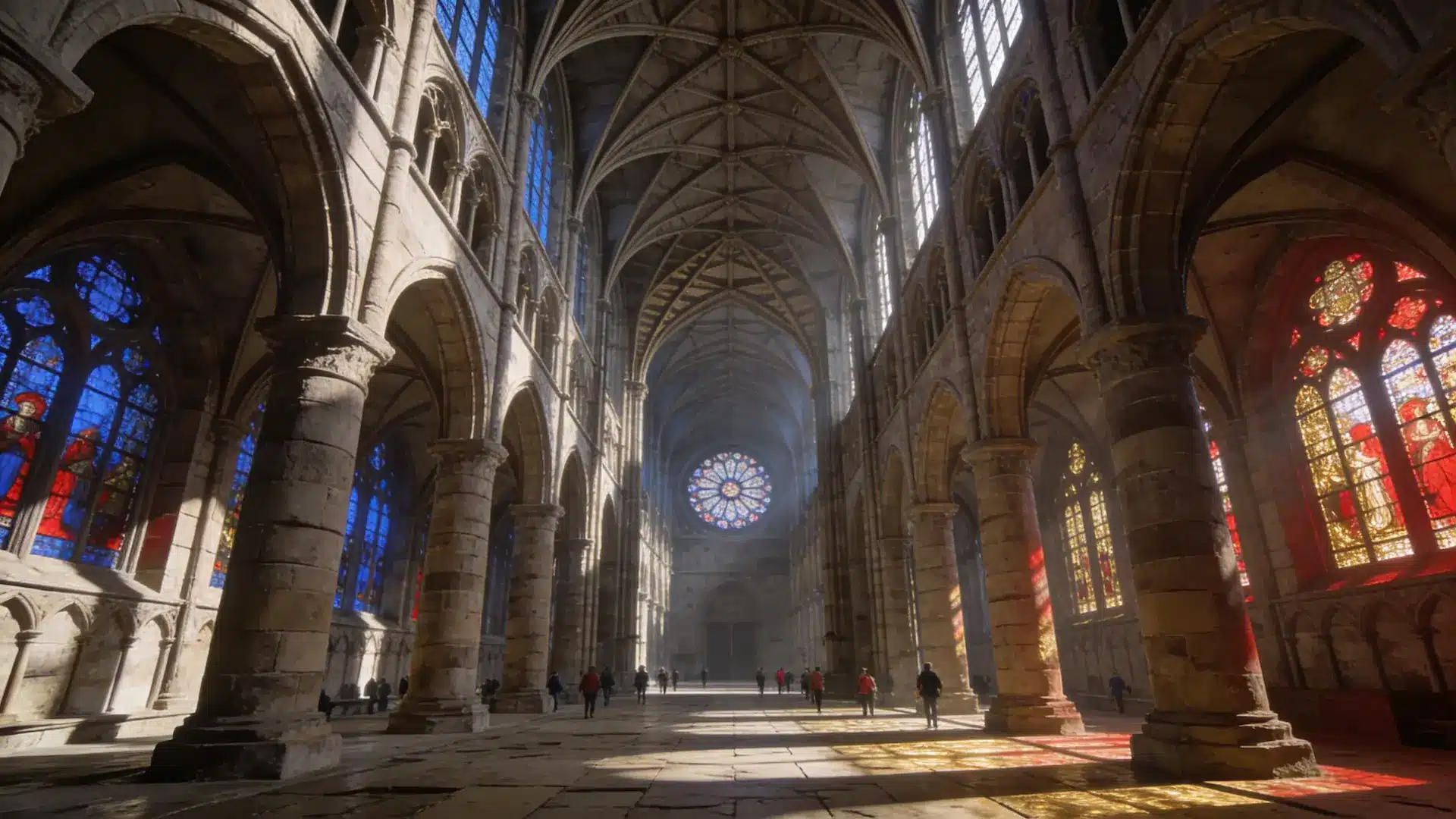
A Gothic cathedral feels tall, bright, and full of detail because the design works as one system.
- Pointed arches pull your eyes upward.
- Ribbed vaults shape the ceiling into clear stone lines.
- Flying buttresses support the walls from the outside, so the inside can feel more open.
- Tall windows, stained glass, rose windows, and stone tracery then fill that structure with color and pattern.
I think this is what makes Gothic buildings so memorable: the engineering is doing real work, but it also looks beautiful.
Khan Academy explains that pointed arches, rib vaults, flying buttresses, and stained glass all helped shape Gothic architecture.
1. Pointed Arches And Ribbed Vaults
Pointed arches are one of the easiest Gothic features to notice.
They rise higher than rounded arches, so the whole space feels pulled upward. Ribbed vaults add another layer of order.
Instead of a single heavy ceiling, the weight is carried by visible stone ribs. That makes the ceiling feel lighter, cleaner, and more planned, even when the building is huge.
2. Flying Buttresses And Taller Walls
Flying buttresses are the outside supports that help a Gothic cathedral stand so tall.
They carry weight away from the upper walls and push it down into stronger outer supports. Because the walls do not have to carry everything alone, builders could make them higher and open them up with larger windows.
That is why many Gothic churches feel both massive and surprisingly light.
3. Stained Glass And Rose Windows
Stained glass gives a Gothic church its color, story, and soft glow. Instead of plain light, the windows turn sunlight into blue, red, gold, and purple scenes.
Rose windows are especially easy to recognize because they look like huge circles of stone and glass. I always see them as moments where the Gothic design feels both technical and emotional.
How to Compare Gothic Cathedrals Without Getting Lost
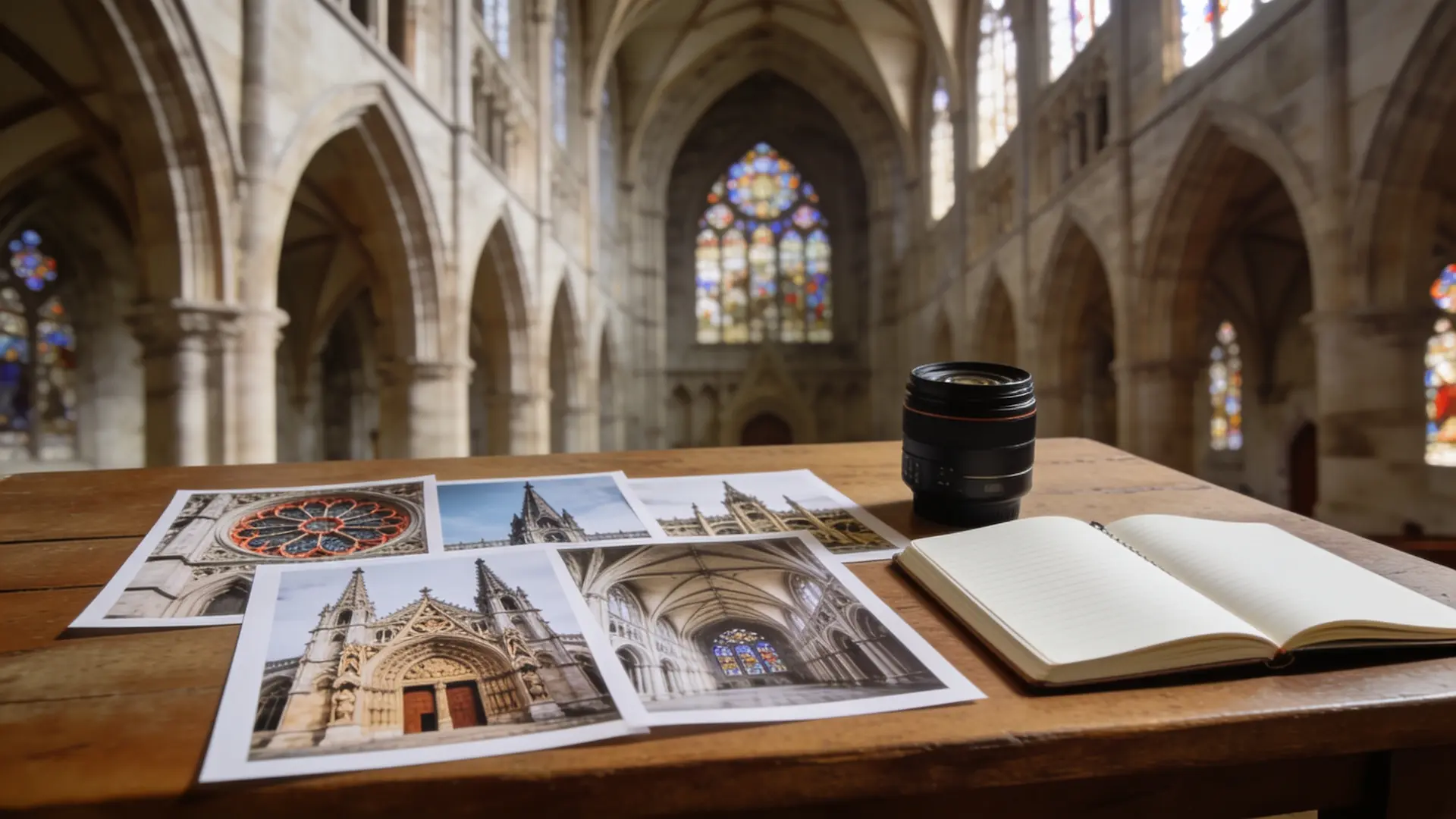
If you look at too many Gothic cathedrals at once, they can start to blend together.
I usually compare them through five simple things:
- height
- light
- glass
- sculpture
- structure
That keeps the buildings easier to remember. Chartres feels calm because the glass and stone work so well together.
Milan feels more decorative because of its marble, statues, and rooftop spires. Canterbury feels layered because it carries more than one style.
Reims feels carved into life through its façade. Instead of asking which one is “best,” look at what each cathedral does better than the others.
Best For Stained Glass
If stained glass is what pulls you in first, start with Chartres, León, York Minster, and Sainte-Chapelle.
Chartres has that deep blue glow people remember. León feels lighter because the walls almost give way to glass. York Minster is perfect for large English Gothic windows.
Sainte-Chapelle is a bonus example of Gothic architecture, but its glass feels so strong that it deserves a mention.
Best For Bold Exteriors
If you care more about the first view from the street, Cologne, Milan, Strasbourg, and Burgos are the ones I would look at closely.
Cologne feels dark, sharp, and towering. Milan is brighter, busier, and packed with marble detail.
Strasbourg stands out because of its reddish stone and single spire.
Burgos gives you carved Spanish Gothic detail with a more decorative face.
Best For Engineering
If you want to understand how these buildings actually stand, look at Amiens, Chartres, Notre-Dame de Paris, and Salisbury.
Amiens clearly and readably shows Gothic scale. Chartres beautifully connects glass, height, and stone.
Notre-Dame is great for studying flying buttresses from the side. Salisbury feels simpler, but that is the point. Its clean structure makes the design easy to understand.
Gothic Cathedrals By Style, Country, and Best Feature
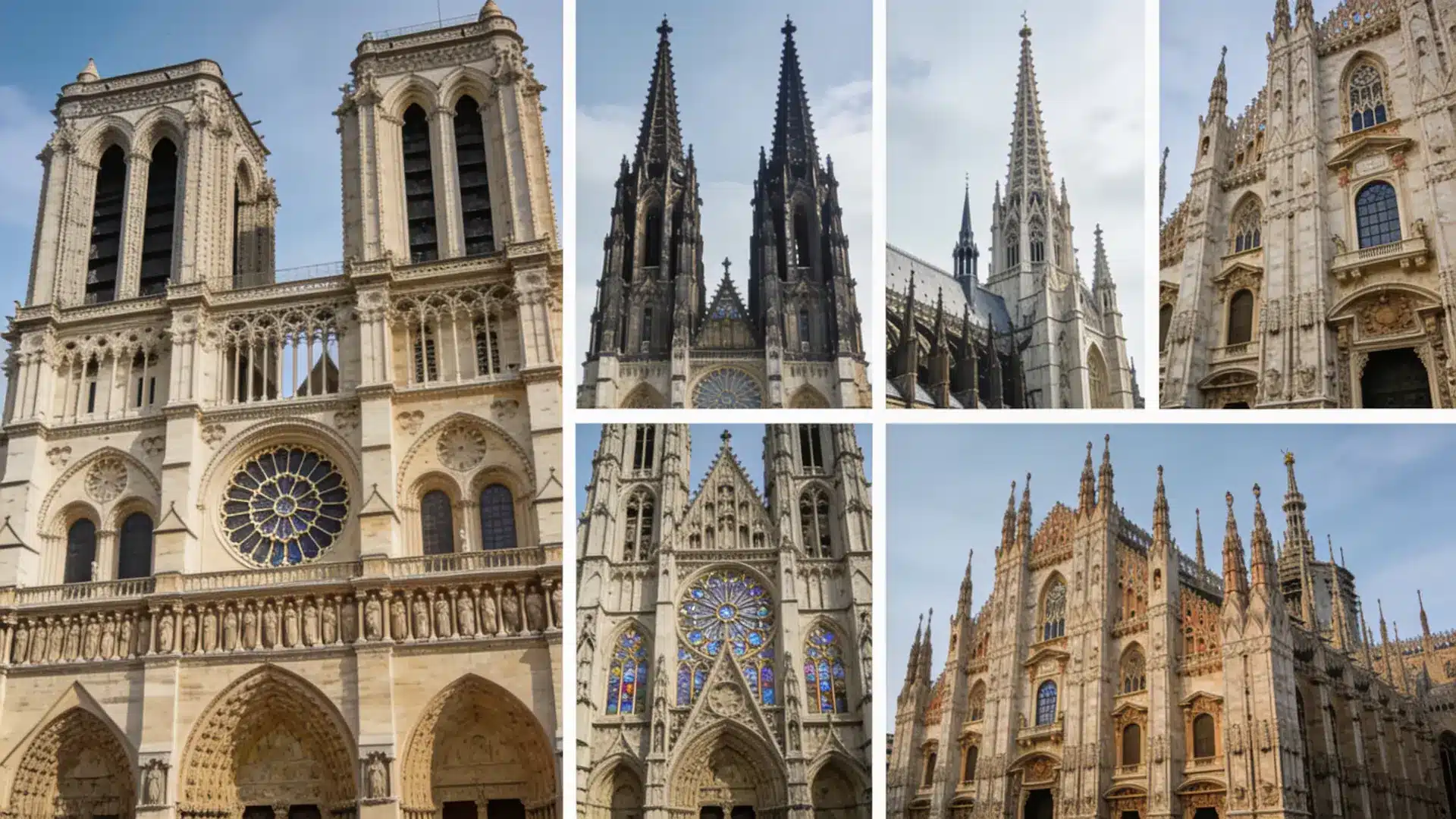
After the full list, this section helps readers sort the cathedrals by what they actually want to see.
Some people remember Gothic cathedrals through stained glass. Others care more about spires, carved stone, huge interiors, or a specific country style.
I like adding this table because it turns the article from a simple list into a quick choosing guide. It also helps readers compare Chartres with León, Cologne with Salisbury, or Reims with Burgos without rereading every section.
Once you have seen the main list, this table helps you choose which Gothic cathedral best fits your interests.
| Interest | Best Examples | Why They Fit |
|---|---|---|
| Stained Glass | Chartres, León, York | Strong color, soft light, and large window areas |
| Tall Spires | Cologne, Milan, Salisbury | Strong vertical impact and skyline presence |
| Sculpture | Reims, Amiens, Burgos | Rich portals, carved figures, and detailed façades |
| Huge Scale | Seville, Amiens, Milan | Large interiors, wide naves, and grand mass |
| English Gothic | Westminster, Canterbury, York, Salisbury | Different phases of English Gothic in one group |
| French Gothic | Notre-Dame, Chartres, Reims, Amiens | Core examples of Gothic development in France |
Final Verdict
Gothic cathedrals are famous for making stone feel lighter than it should.
The best ones pull your eyes upward with spires, vaults, carved portals, rose windows, and flying buttresses that look both strong and graceful.
Notre-Dame, Chartres, Reims, Amiens, Cologne, and Milan are strong starting points because each showcases a distinct aspect of Gothic design. Still, every region adds something different.
France gives you structure and glass. England adds long naves and layered history. Spain brings scale and rich decoration. Italy turns Gothic detail into marble detail.
If you are choosing which one to study first, start with the detail you love most: glass, height, sculpture, or structure.
Which Gothic cathedral would you stop to look at the longest? Share the one that feels most unforgettable to you.
Frequently Asked Questions
Why did Gothic Cathedrals Take so Long to Build?
Gothic cathedrals took decades or centuries because builders worked with stone, handmade tools, changing funds, wars, fires, repairs, and new design plans.
Are Gothic Cathedrals Still Used Today?
Yes, many Gothic cathedrals still hold services, concerts, tours, and public events. They remain active religious sites, not only historic monuments.
What is the Difference Between Gothic and Romanesque Churches?
Romanesque churches usually feel heavier, with rounded arches and thick walls. Gothic churches feature pointed arches, higher ceilings, larger windows, and more light.

Natalie Zhou, AIA, holds an MIT Master of Architecture and has designed civic and residential projects for 12 years. She joined us in 2025 to translate green-building theory into practical home ideas, spotlighting passive-solar layouts and space-saving details. Natalie’s articles blend on-site anecdotes with sketchbook tips. Away from the desk, she restores mid-century chairs and volunteers with Habitat for Humanity.