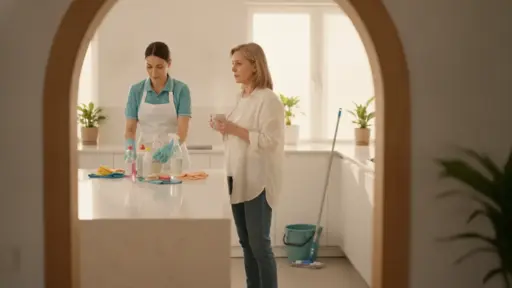

Life can get messy without looking messy from the outside. You still answer messages, pay bills, show up where you need to, and get through the week. But inside the routine, things may feel crowded. Too many plans. Too many small obligations. Too many habits you never really chose. Then a major reset happens, and everything pauses for a second. Maybe you change homes, start a new job, end a relationship, or work with a moving company Los Angeles before beginning somewhere else. Whatever the reason, a reset gives you a chance to ask what still belongs in your daily life.
Routines Become More Intentional
Most people do not build their routines carefully. They inherit them.
One habit starts because of a job. Another begins because of a partner, a child, a roommate, a commute, or a stressful period. Then the situation changes, but the habit stays.
You keep waking up too early.
You keep saying yes too quickly.
You keep spending Sunday catching up on errands because that is what Sunday became at some point.
A major reset interrupts that pattern. It makes your old rhythm harder to follow automatically. At first, that can feel strange. Later, it can feel like relief.
You suddenly get to ask simple questions:
Do I still want my mornings to feel rushed?
Do I need to keep every standing plan?
Is this task actually mine, or did I just become the person who always handles it?
That is where personal organization begins. Not with color-coded calendars or perfect storage bins. Noticing.
After a reset, people often simplify in small but meaningful ways. They stop overbooking weeknights. They create a cleaner morning routine. They cook easier meals. They leave one evening open. They stop treating every message like an emergency.
None of this looks dramatic.
But daily life starts to feel less tangled.
Priorities Become Easier to Identify
A big change has a way of sorting things for you.
Before the reset, everything may feel equally important. Work, family, errands, bills, friends, health, chores, plans, favors, messages. It all blends together until the whole day feels urgent.
Then life shifts, and some things fall away.
You may notice that one commitment only stayed because stopping felt awkward. You may realize a purchase habit was more about stress than need. You may see that one relationship gives you energy while another mostly takes it.
That kind of honesty can sting a little.
Still, it helps.
Major lifestyle changes often make priorities easier to separate:
- The things you truly need to protect
- The people who are part of your real support system
- The work that pays the bills or builds a future
- The habits that keep your body and mind steady
- The obligations that only stayed because nobody questioned them
That last group is usually bigger than expected.
Practical resources can help when a reset includes housing decisions. For example, HUD housing counseling offers guidance for people dealing with housing-related concerns. But even when the paperwork is clear, the personal part still takes time.
You are not only deciding where to live or what to do next.
You are deciding what deserves your attention.
Once that becomes clearer, the rest of life often feels easier to manage.
New Environments Encourage New Habits
A new environment can make you behave differently almost immediately.
That sounds too simple, but it is true.
The old place had built-in cues. The chair where you always scrolled. The table where mail always piled up. The store you stopped at when you were tired. The corner where unfinished tasks gathered.
You did not think about those cues every day.
You just followed them.
A new space has not trained you yet. That gives you a small opening to do things differently.
You can choose where keys go before they start landing everywhere. You can keep work out of the bedroom before the laptop claims the room. You can set up the kitchen in a way that makes cooking less annoying. You can decide that the first hour of the morning will not belong to your phone.
These are not huge reinventions.
They are better starting points.
The link between environment and behavior is one reason habits can feel so hard to break in familiar settings. A general overview of habit explains how repeated behavior can become automatic. A reset helps because it removes some of the old triggers.
That is why people often feel more motivated after change.
It is not always because they became more disciplined. Sometimes the surroundings simply stopped pushing them into the same old loop.
Simplicity Often Follows Major Change
A reset usually forces some letting go.
You may get rid of things you no longer use. You may stop paying for services you forgot you had. You may step back from commitments that fit an older version of your life.
This can feel uncomfortable.
People get used to carrying extra weight, especially when it builds slowly. A full closet. A packed calendar. Too many apps. Too many errands. Too many promises made out of guilt.
Then change comes along and asks, “Do you really want to bring all of this with you?”
That question can be useful.
Simplicity does not mean living with almost nothing. It means your life has fewer things constantly asking for attention.
Fewer objects to sort.
Fewer plans to juggle.
Fewer decisions made out of habit.
Fewer unfinished tasks following you around.
Even simple practical steps, like changing your address through the United States Postal Service, can remind you how many parts of life need to be updated during a transition. The real question is not only what address should receive your mail. It is what should continue with you into the next phase.
Simplicity often feels better than constant self-improvement because it asks less of you.
You are not trying to become a flawless person.
You are removing some of the extra noise so your life becomes easier to live.
Final Thoughts
Major resets are not always peaceful at the beginning. They can be tiring, emotional, and inconvenient. They can make you question routines you once depended on.
But they can also give you something valuable: a pause.
That pause helps you see what has been taking too much space, time, money, or energy. It gives you a chance to rebuild daily life with more care.
Real organization does not come from perfection. It comes from clarity.
A fresh start lets you choose again. Not everything has to change. But some things can. And sometimes that is enough to make life feel lighter, calmer, and more like it actually belongs to you.

Journalist Chloe Rivera studied at the University of Missouri and has covered mindful, stylish living since 2013. She joined us in 2025 to curate realistic routines, budget-friendly décor, and community stories that help readers craft balance without perfection pressure. When offline, Chloe volunteers at urban farms, photographs street style, and hosts weekend swap parties for preloved clothes and books in her neighborhood.