
You know that moment. You’re cutting through the kitchen, headed for the coffee maker, and you just… stop. Not because you forgot what you were doing (though that happens too). You stop because the fridge made a sound. Not the usual groan. Something else. A thud. A rattle. A hum that wasn’t part of the background noise five minutes ago. And you’re standing there in your socks, staring at this hulking white box, thinking: “Is that in my head, or is this thing about to eat a thousand dollars of my savings?”
Nobody pays attention to these machines until they start acting like they want to die. But they don’t just drop dead. There’s no dramatic death rattle. Just these tiny, infuriating clues that are painfully easy to explain away.
So, next time your fridge starts its little shenanigans, don’t just shrug. Here’s what you’re actually looking at.
1. The Temperature Has a Split Personality
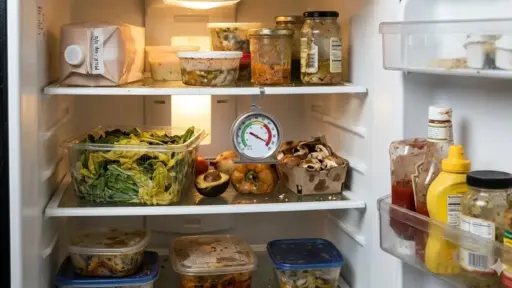
We’re not talking about the fridge going fully warm. That’s too obvious. We’re talking about the inconsistencies. You grab the milk, and it feels fine. But the juice in the door? Tepid.
That erratic behavior usually points to the beginning of the end for the compressor or a slow refrigerant leak. You can fiddle with knobs all you want, but nothing will work. You turn it down a notch. Nothing. Down another notch. Still nothing. Eventually you’re at the coldest setting, and the appliance is just… done.
If you’re reading this in Houston and your fridge is starting its mood swings, maybe look up home appliance repair in Houston TX, before you end up like my neighbor. Because this won’t age well.
2. Puddles Inside. Yes, Inside.
Condensation on the interior walls is one of those things people don’t pay attention to because it seems almost normal. It’s just water, right? Wipe it up, close the door, forget about it.
Wrong. A fridge that seals properly shouldn’t have swimming pools in the vegetable drawer. If you see droplets running down the back wall or water pooling under the crisper, you’re looking at either a door gasket on its last legs, or a clogged defrost drain. Either way, your fridge is losing the war against humidity.
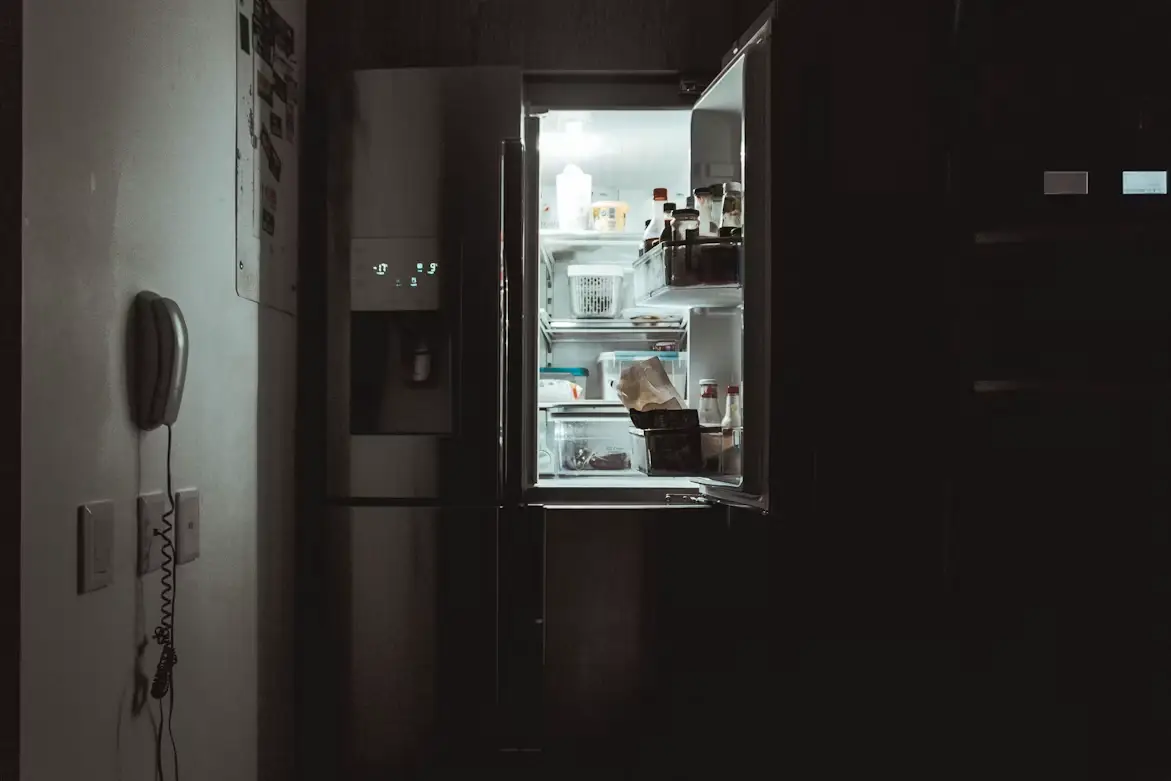
Usually, it’s those rubber door gaskets. They get old, shrink, harden, and stop hugging the frame. Warm and humid air gets through the gap, hits the cold interior, and turns into water. That water breeds mold. It makes your lettuce wilt in two days. It drips onto the floor and leaves weird stains on your wood.
Here’s a trick that will help you see if you have that problem: close the door on a piece of paper (a dollar bill will do). If you can yank it out with zero resistance, your seal is gone. Try it on all four sides. It’s a five-second test that will immediately tell you how much trouble you’re in.
3. The Compressor Won’t Stop Making Noises
Sometimes, a refrigerator just keeps running. You notice it at 2 AM, when the house is dead quiet. That low, industrial hum that doesn’t have a beginning or an end. It just drones on and on.
A healthy fridge works in cycles. It kicks on, does its job, and shuts up. It has a rhythm. When that rhythm breaks (when it runs for four hours straight), something is definitely wrong.
Usually, this means the compressor is losing its pumping power. It has to work overtime just to maintain the temp. More run time equals more wear, more heat, and a system that starts eating itself alive.
Conversely, sometimes it short-cycles—on for two minutes, off for two minutes, over and over. That’s just as annoying, and usually points to a failing start relay. That’s a cheaper fix, but you need to catch it fast.
4. Your Electric Bill Is Getting Fat
Refrigerators eat a lot of energy. They run constantly. And when they start losing efficiency (for whatever reason), they draw more power. The motor runs longer, the defrost cycles start more often, and the fans spin faster.
You might not notice a ten-dollar creep month-to-month. But over a year? That’s $120. Over the remaining life of the appliance, that’s basically the cost of a new unit going up in smoke.
There are plenty of stories where people check their ancient fridges with a kill-a-watt meter after months of rising bills and find out that these appliances were drawing twice the power they did when new. So don’t burn your money and pay attention when your bills are rising out of nowhere.
5. The Freezer Looks Like the Arctic Tundra
A little frost is fine, that’s how it’s supposed to be. You open the door, some warm air gets in, moisture settles, and it freezes. Normal.
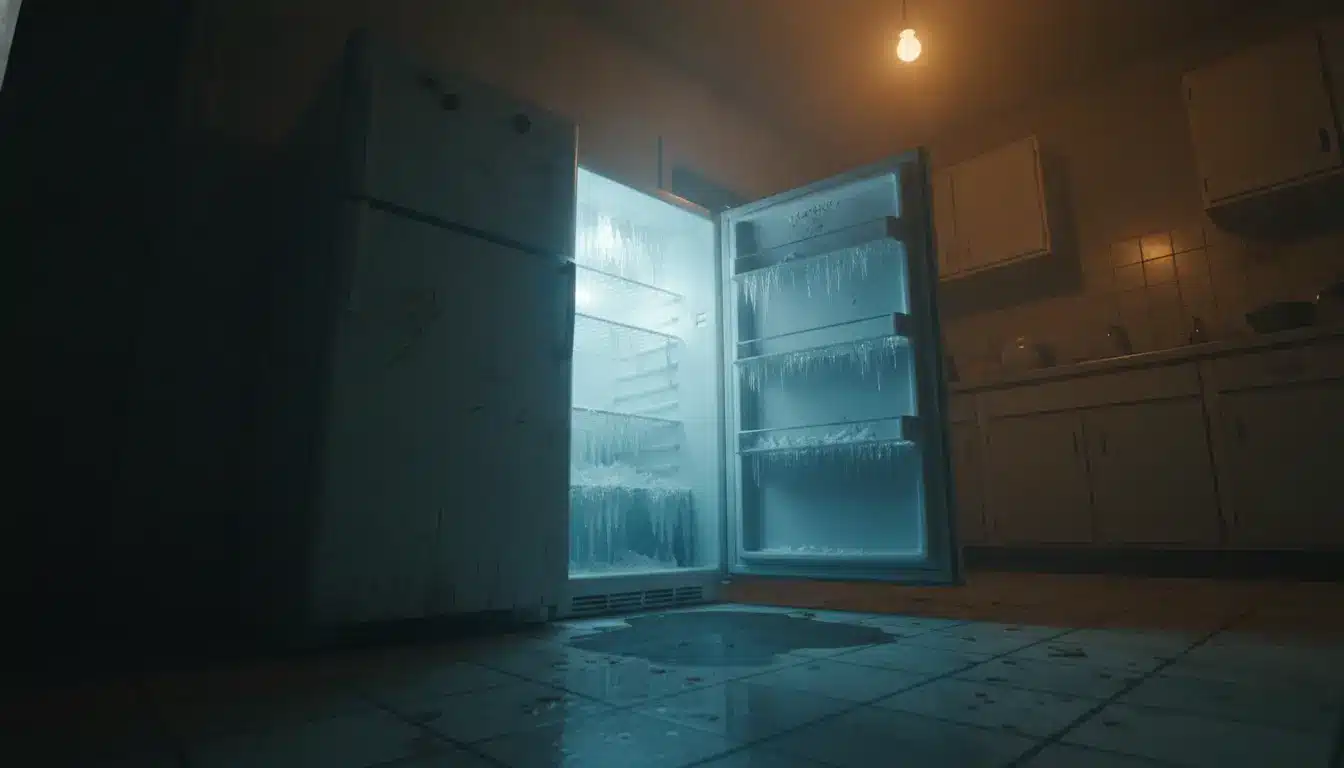
But frost that comes back twice as thick two days after you chipped it all out? Blocks the air vents? Looks like something out of a sci-fi movie? That’s a defrosting failure.
There’s a heater in there that melts ice off the coils. Timer kicks on, heater runs, ice melts, water drains. When that timer or heater breaks, the ice doesn’t melt. It just accumulates. Eventually, the coils are so encased in ice that air can’t circulate. The freezer warms up, but the ice fortress just keeps growing.
You can manually defrost it for temporary relief. But unless you plan on doing that every other week, you’re screwed. The ice will come back, and next time it’ll ruin your frozen steaks.
When Do You Just Throw in the Towel?
If the fridge is relatively young and you’ve got one of these issues, fix it. A new seal, a clean coil, a relay—those are cheap repairs that buy you years. But if you’ve got two or three of these things hitting you at once? It’s time to let it go.
Call a repair person, get a straight answer, and actually listen to them. Because the alternative is waiting for it to die during the most inconvenient moment, like a holiday dinner party, with a turkey thawing on the counter and guests arriving in an hour.
So, watch for the signs, make the call, and if it’s time to walk away—walk away.

Tommy Hardy, an alumnus of the Georgia Institute of Technology with a degree in Mechanical Engineering, has been a go-to figure in residential upkeep and innovation for over 18 years. His career commenced in a leading home appliance manufacturing company, where he mastered the intricacies of household systems. Joining our platform in 2020, Tommy quickly became a reader favorite for his practical and easy-to-follow guides. He took the helm of our DIY section in 2019, consistently delivering content that empowers homeowners. Beyond his professional pursuits, Tommy is a passionate gardener and enjoys woodworking, skills enhancing his hands-on approach to home care.