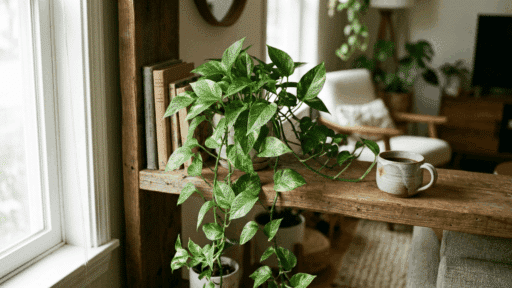
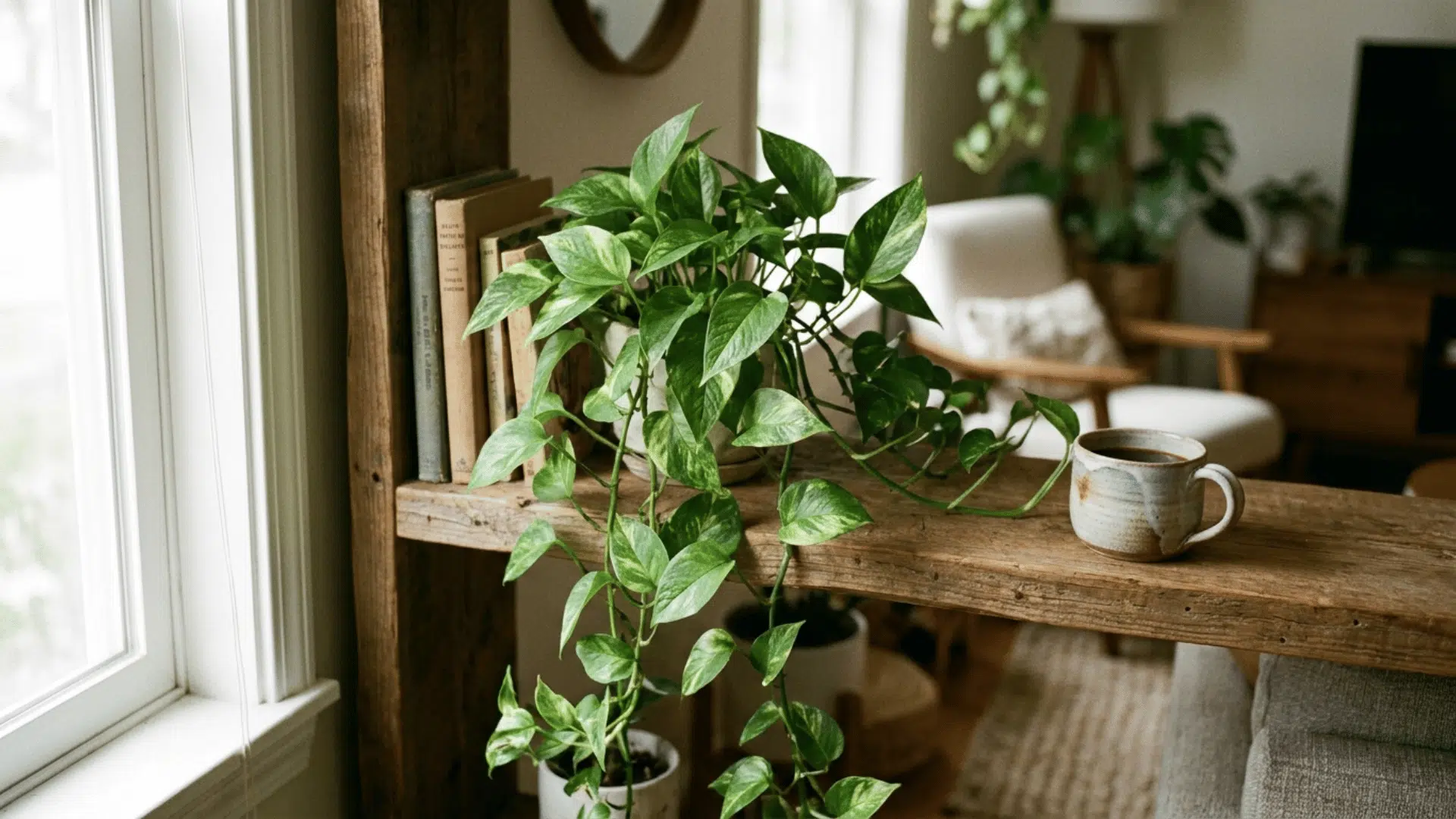

A plain wall. An empty corner. A bare bookshelf. Now add one trailing vine plant, and suddenly the whole room feels different.
That’s not an exaggeration. Vine house plants have a way of making any space feel fuller, greener, and more alive without a lot of effort on your part.
The best part? Most of them are easy to care for, even if you’ve never owned a plant before.
After years of working with all kinds of plants, I’ve seen firsthand how the right vine house plant can completely change the feel of a room.
In this blog, I’ll walk you through the best vine house plants you can grow indoors, from beginner-friendly picks like Pothos to bold growers like Monstera.
The blog will also cover how to choose the right one for your light and space, basic care tips, and simple ways to display them around your home.
Let’s get started.
The Best Vine House Plants You Can Grow Indoors
Not all vine plants are the same. Some trails down beautifully from a shelf. Others climb up a wall with the right support. Some are nearly impossible to kill, while others need a little more attention.
I’ve grouped the best options below by type so you can quickly spot what works best for your space and skill level.
Beginner-Friendly Picks
If you’re just starting, these are the ones I’d point you toward first. They’re forgiving, fast-growing, and hard to mess up, even if your watering schedule isn’t always perfect.
1. Golden Pothos
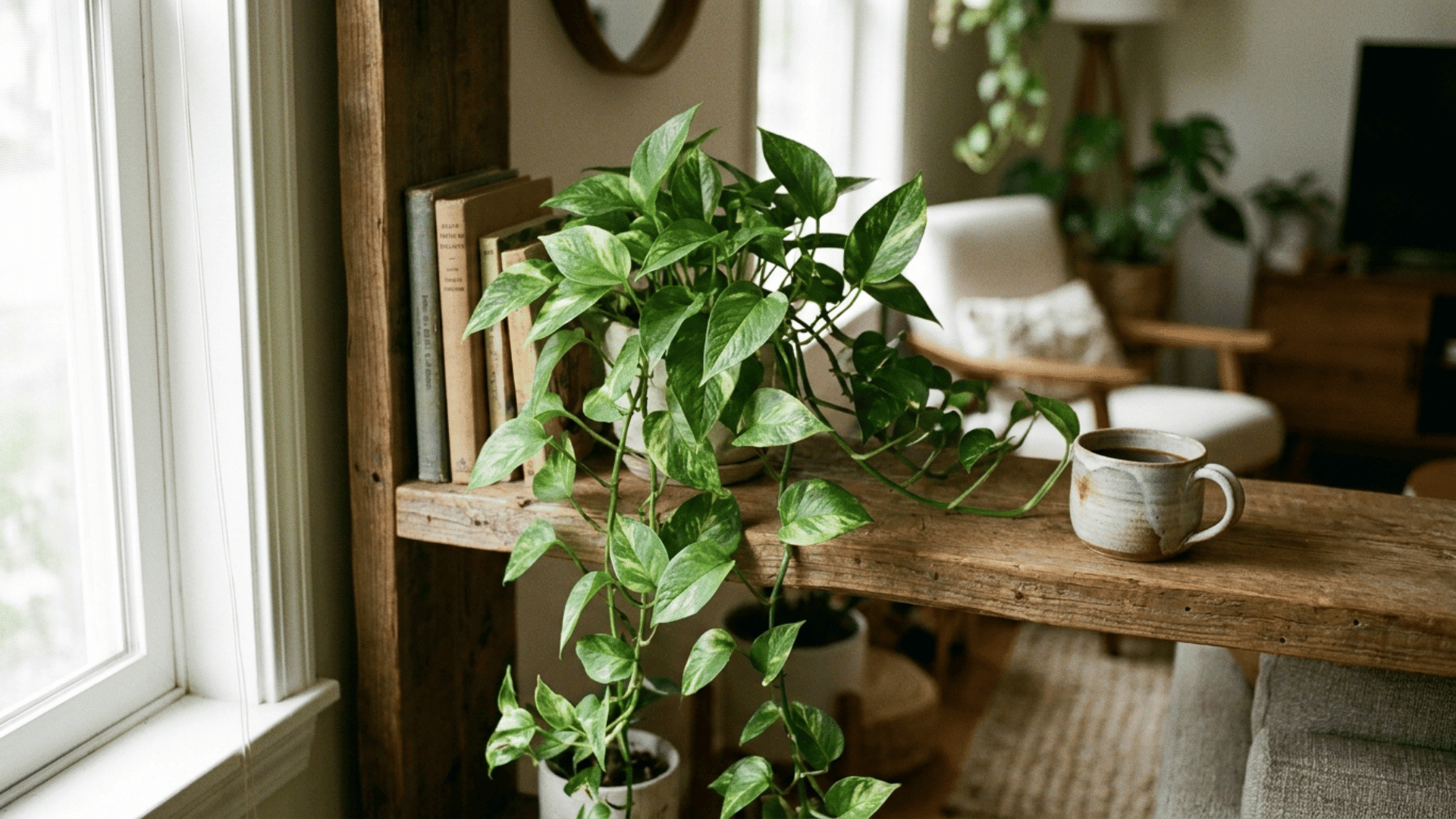
Golden Pothos is probably the most popular pick out there, and for good reason.
It grows fast, handles low light well, and bounces back even if you forget to water it for a week or two. In good conditions, it can push out 12 to 18 inches of new growth in a single month.
It works beautifully, trailing from a shelf or climbing a simple support. It’s the plant I recommend to almost every first-time grower without hesitation.
Quick Tip: If the leaves start turning yellow, that’s usually a sign of overwatering. Let the soil dry out completely between waterings, and it’ll bounce right back.
2. Marble Queen Pothos
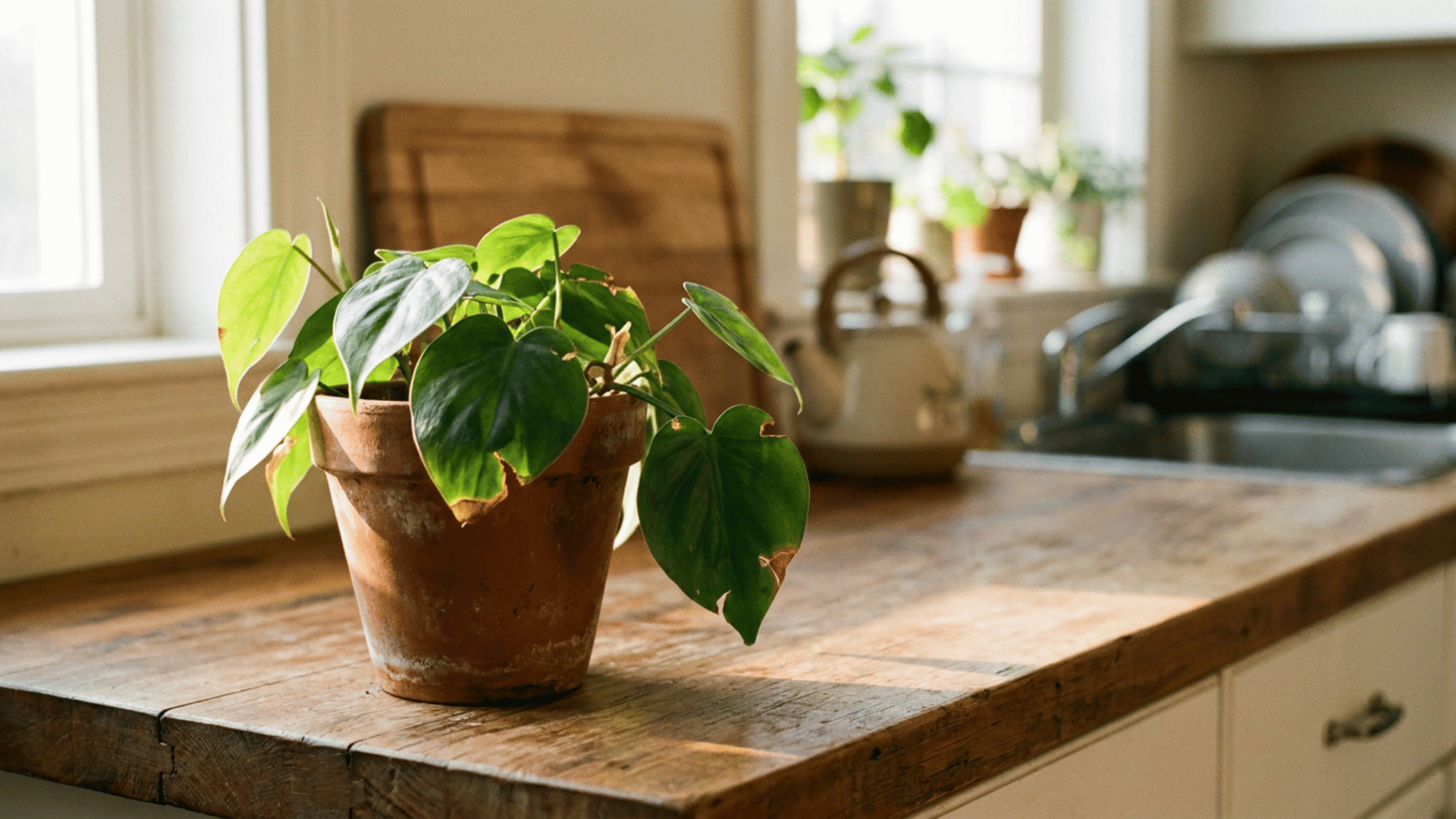
Marble Queen Pothos is a slower-growing version of Golden Pothos with striking white-and-green marbled leaves that look almost painted.
It needs a little more light than the Golden variety to maintain its variegation, but it stays low-maintenance overall.
I added a Marble Queen Pothos to my indoor plant collection, and it quickly became one of my favorite plants because of its unique marbled foliage.
3. Neon Pothos
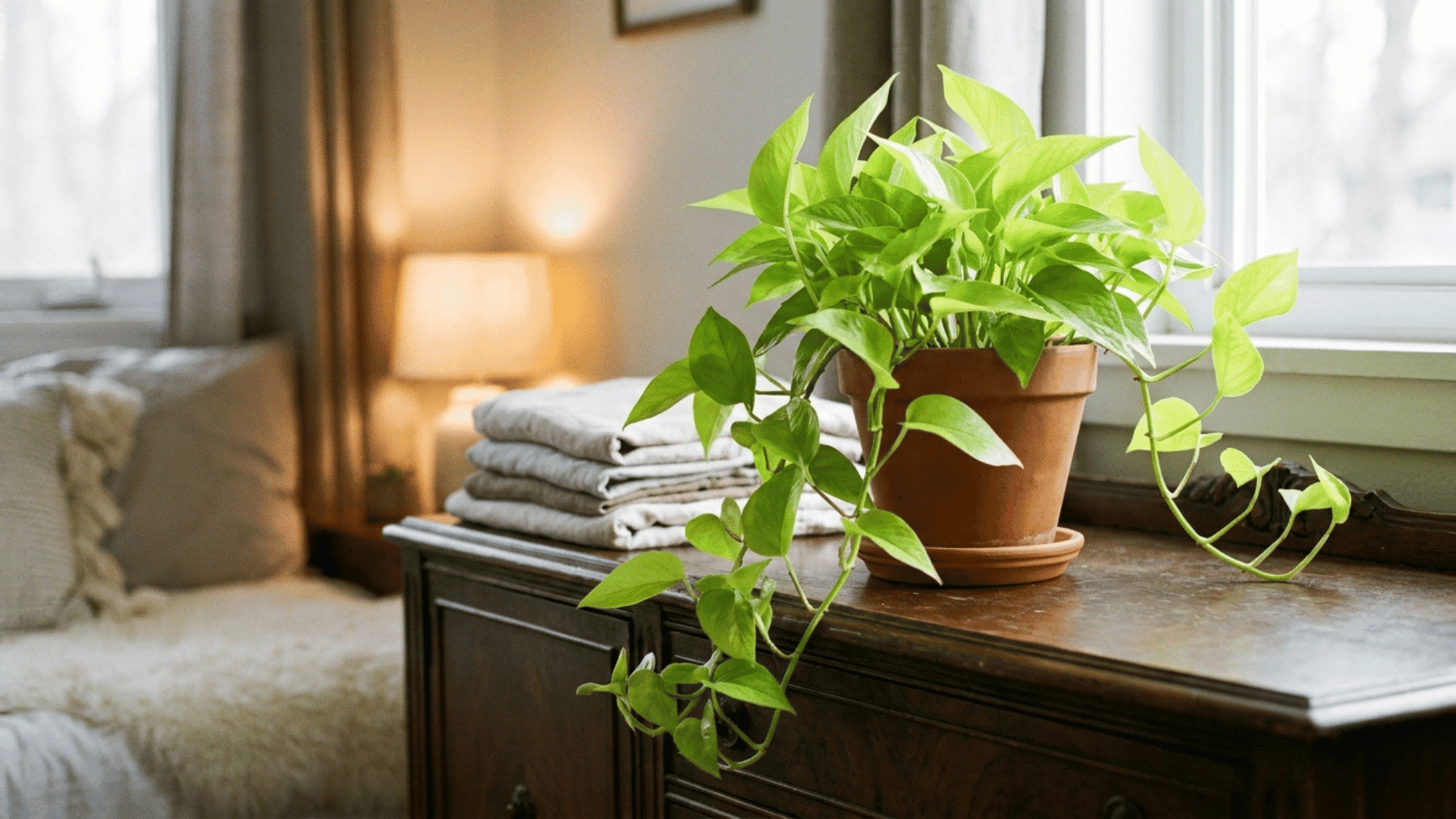
Neon Pothos stands out with its bright lime-green leaves that seem to glow in a well-lit room.
It follows the same easy-care routine as other Pothos varieties but adds a strong pop of color to darker corners and shelves that most other plants simply can’t pull off.
If your space feels a little dull and you want an instant fix, this is one of the easiest ways to get there.
4. Pearls and Jade Pothos
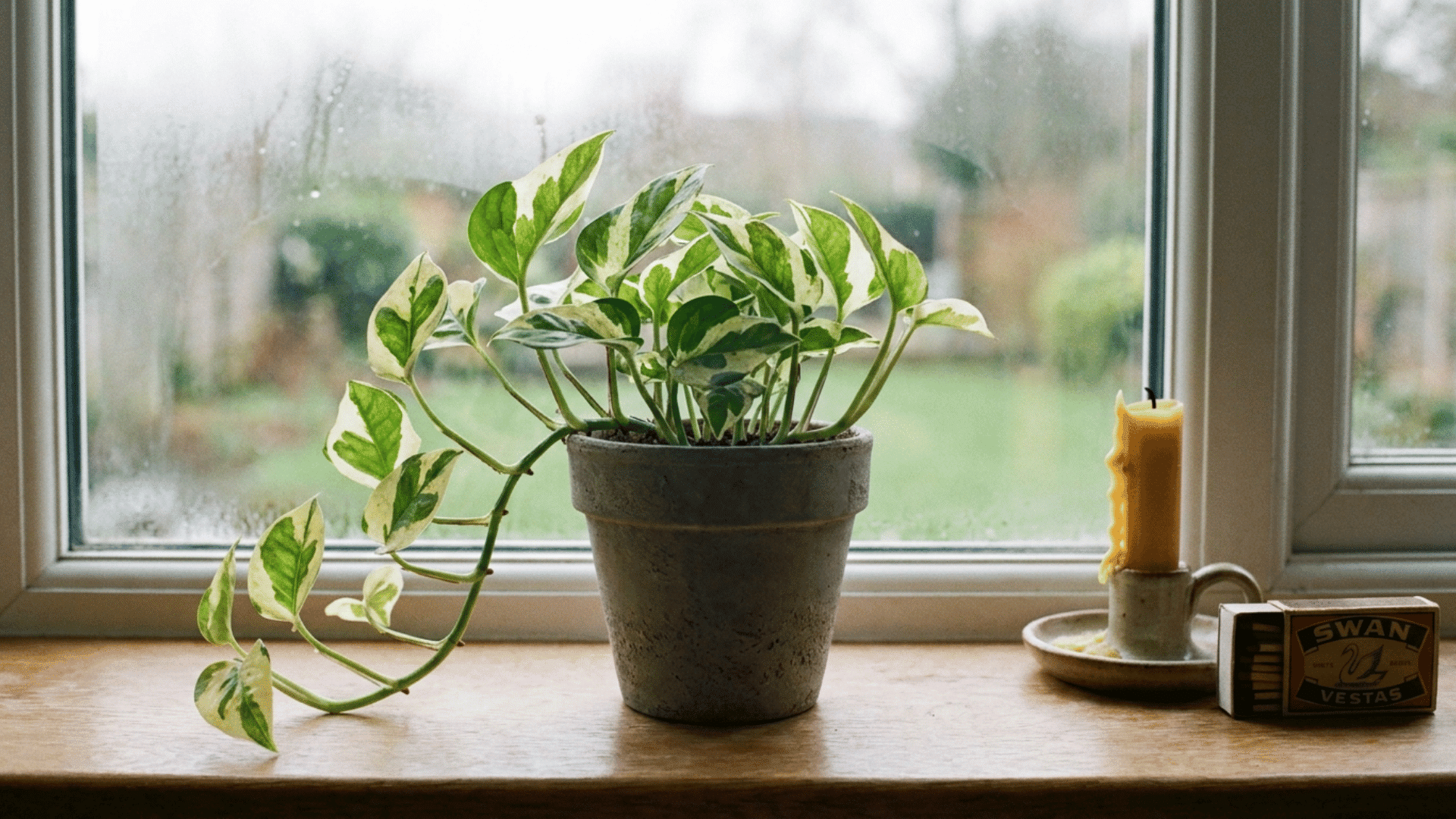
Pearls and Jade Pothos has smaller leaves with cream, silver, and green markings, making it one of the most attractive Pothos varieties you can find.
It’s still very straightforward to grow, even in less-than-ideal light conditions, making it a reliable choice for rooms that don’t get much natural light throughout the day.
It trails nicely and stays manageable in size compared to some of the faster-growing varieties.
5. Heartleaf Philodendron
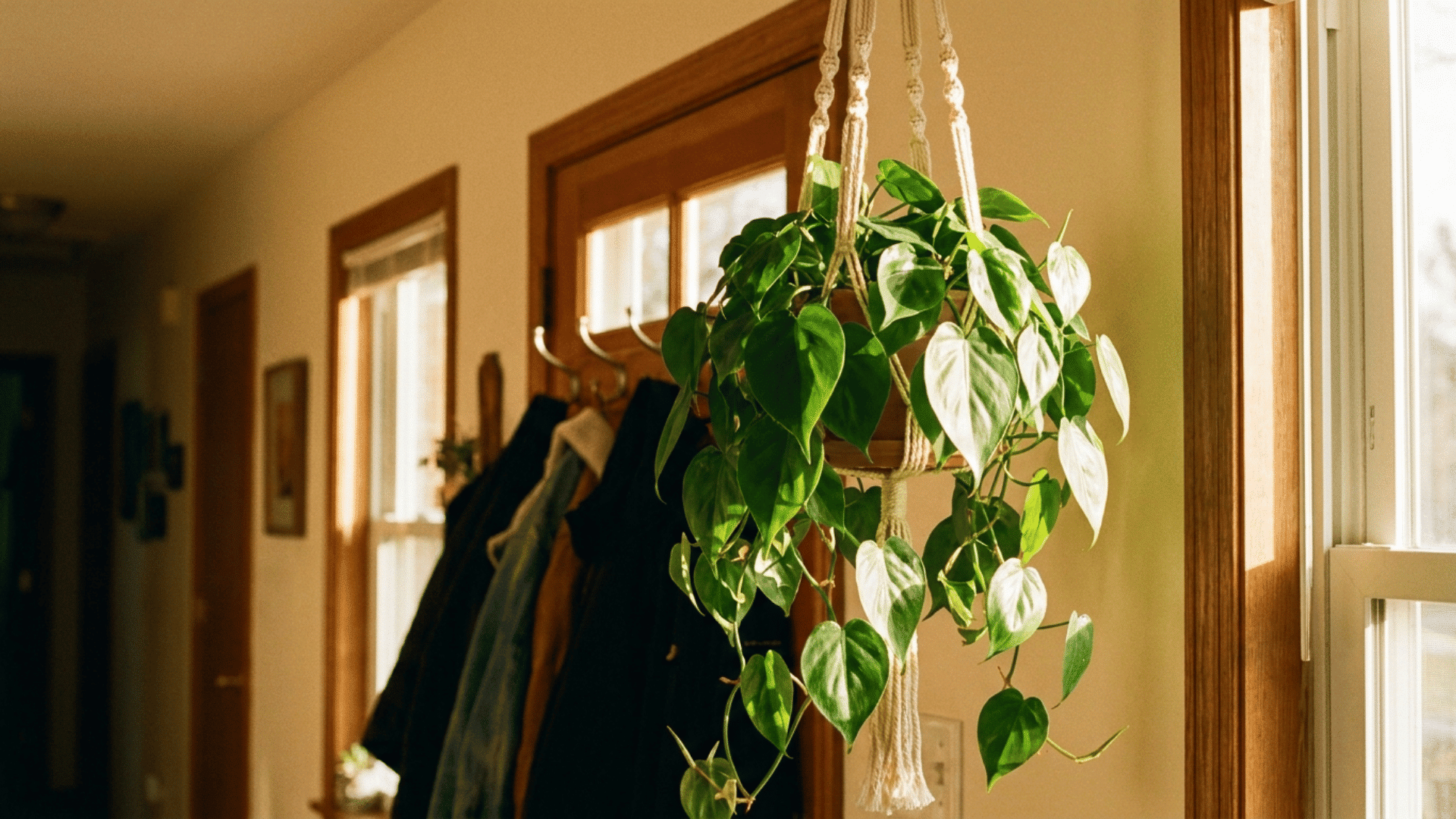
Heartleaf Philodendron has glossy, heart-shaped leaves and adapts well to a wide range of light conditions with minimal fuss for the grower.
It’s one of those plants that just quietly gets on with growing no matter where you put it, making it a great fit for busy households.
It trails nicely from a shelf, cascades well from a hanging pot, or can be trained upward with a simple support structure if you prefer a climbing look.
Quick Tip: Wipe the leaves down with a damp cloth every couple of weeks. Dust buildup on the glossy leaves blocks light absorption and slows growth more than most people realize.
6. Philodendron Brasil
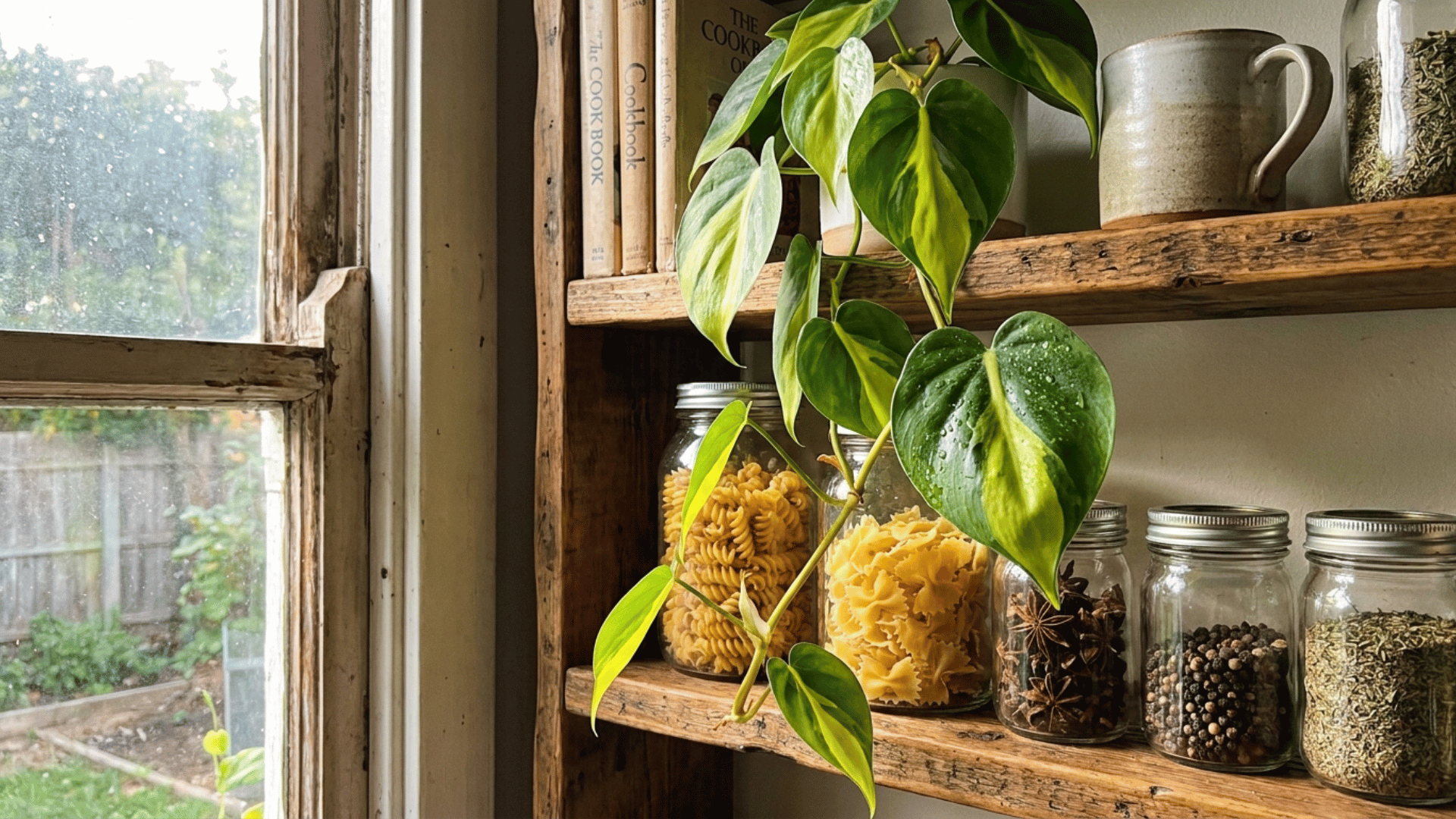
Philodendron Brasil is similar to the Heartleaf but with bold yellow-and-green striped leaves that make it look far more exotic than it actually is to care for day-to-day.
It suits both shelves and hanging pots equally well and grows at a satisfying pace throughout the year.
Even the most hands-off plant owners tend to do well with this one, which is part of why it keeps showing up on beginner plant lists consistently.
7. Spider Plant Bonnie
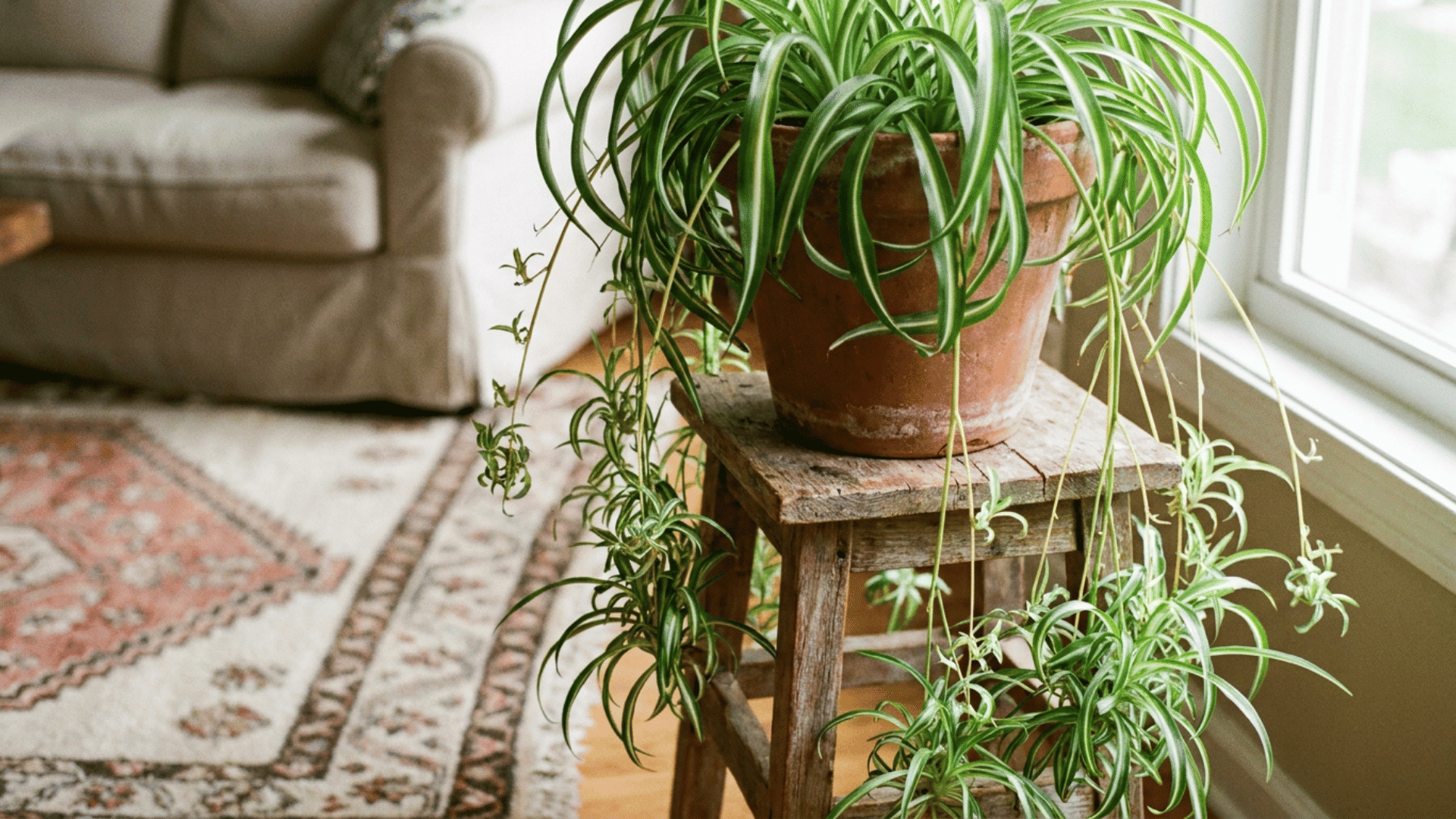
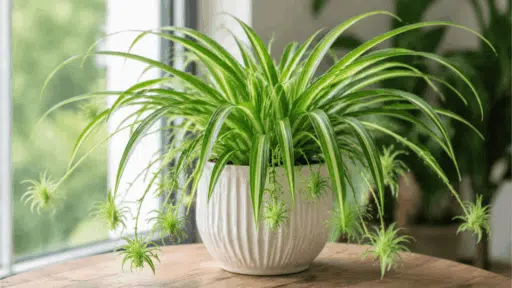
Spider Plant Bonnie is a curly, compact version of the classic Spider Plant, packed with personality in a small pot. It produces long arching stems with small offshoots called spiderettes that hang down gracefully as the plant matures.
It’s fully pet-safe, nearly indestructible under normal household conditions, and one of the best options for beginners seeking a trailing plant that adds real visual movement and charm to any space.
Quick Tip: Once the spiderettes develop small roots, you can snip them off and pop them in a glass of water to grow a whole new plant.
It’s one of the easiest propagation methods out there and a great way to fill up more spots around your home for free.
Bold Foliage Statement Makers
These are the plants that get noticed the moment someone walks in the moment they walk into a room. They grow bigger and need a little more care, but the visual payoff makes every bit of effort worth it.
8. Monstera Deliciosa
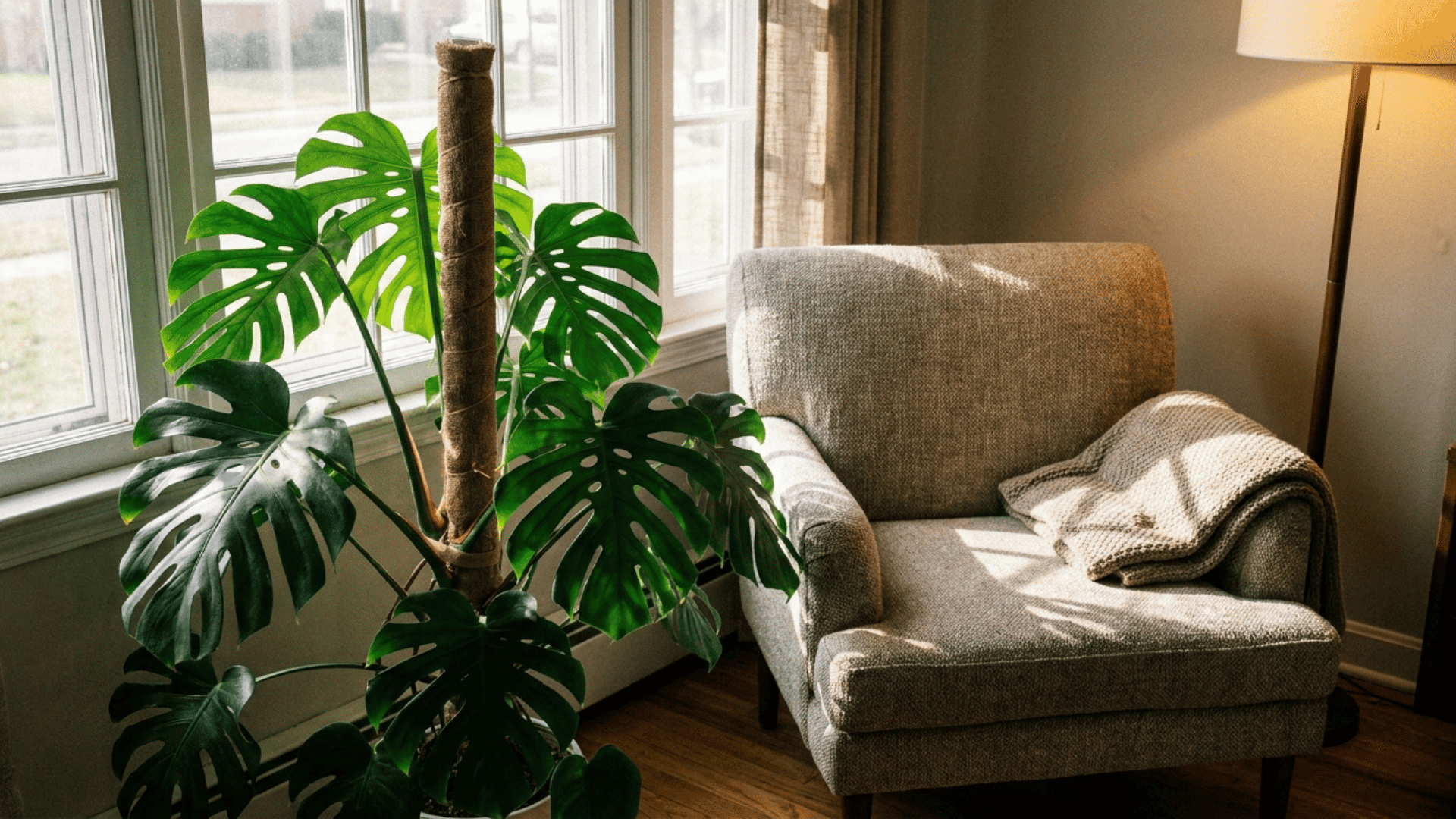
Monstera Deliciosa is probably the most recognizable houseplant around right now, and it earns that reputation easily.
Its large leaves with natural splits, called fenestrations, give it that bold tropical look most people are after when they want to make a real statement indoors.
It needs a moss pole or some kind of support to climb on as it gets bigger, and it appreciates good humidity to stay healthy and consistently produce those iconic split leaves.
Quick Tip: If your Monstera isn’t developing splits on its leaves, it usually means it needs more light or has outgrown its current pot. Move it closer to a bright window and check if it’s ready for a size up.
9. Monstera Adansonii
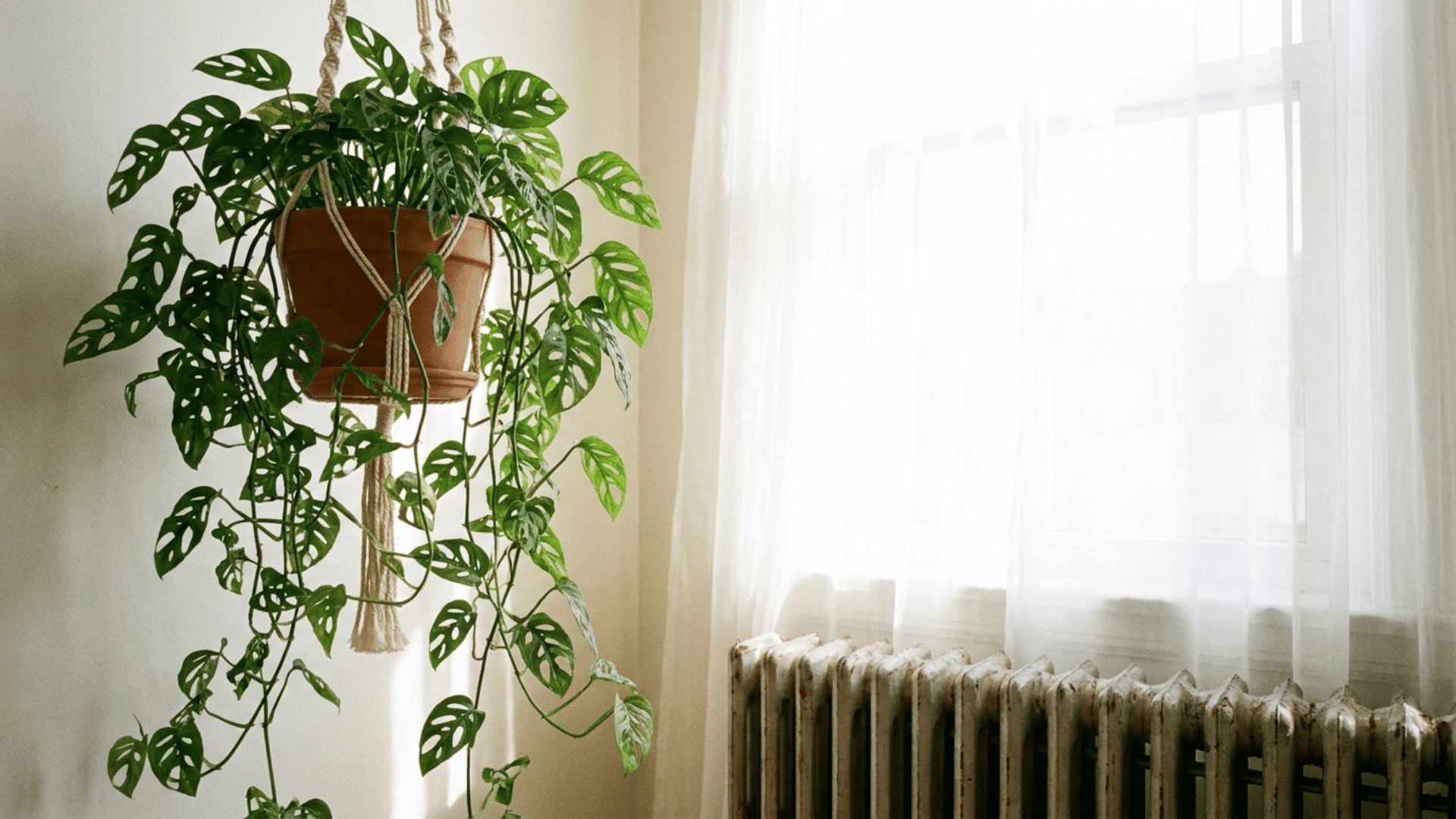
Monstera Adansonii, also called the Swiss Cheese Vine, has smaller leaves full of natural holes that give it a completely different character from its larger cousin.
It’s a fast-growing plant and works beautifully, either climbing a trellis or trailing from a hanging pot near a bright window. It’s smaller than Monstera Deliciosa, making it a better fit for smaller rooms.
I first noticed Monstera Adansonii at my friend’s house, where it was trailing from a hanging pot near the window, and it instantly made the room feel greener and more lively.
10. Thai Constellation Monstera
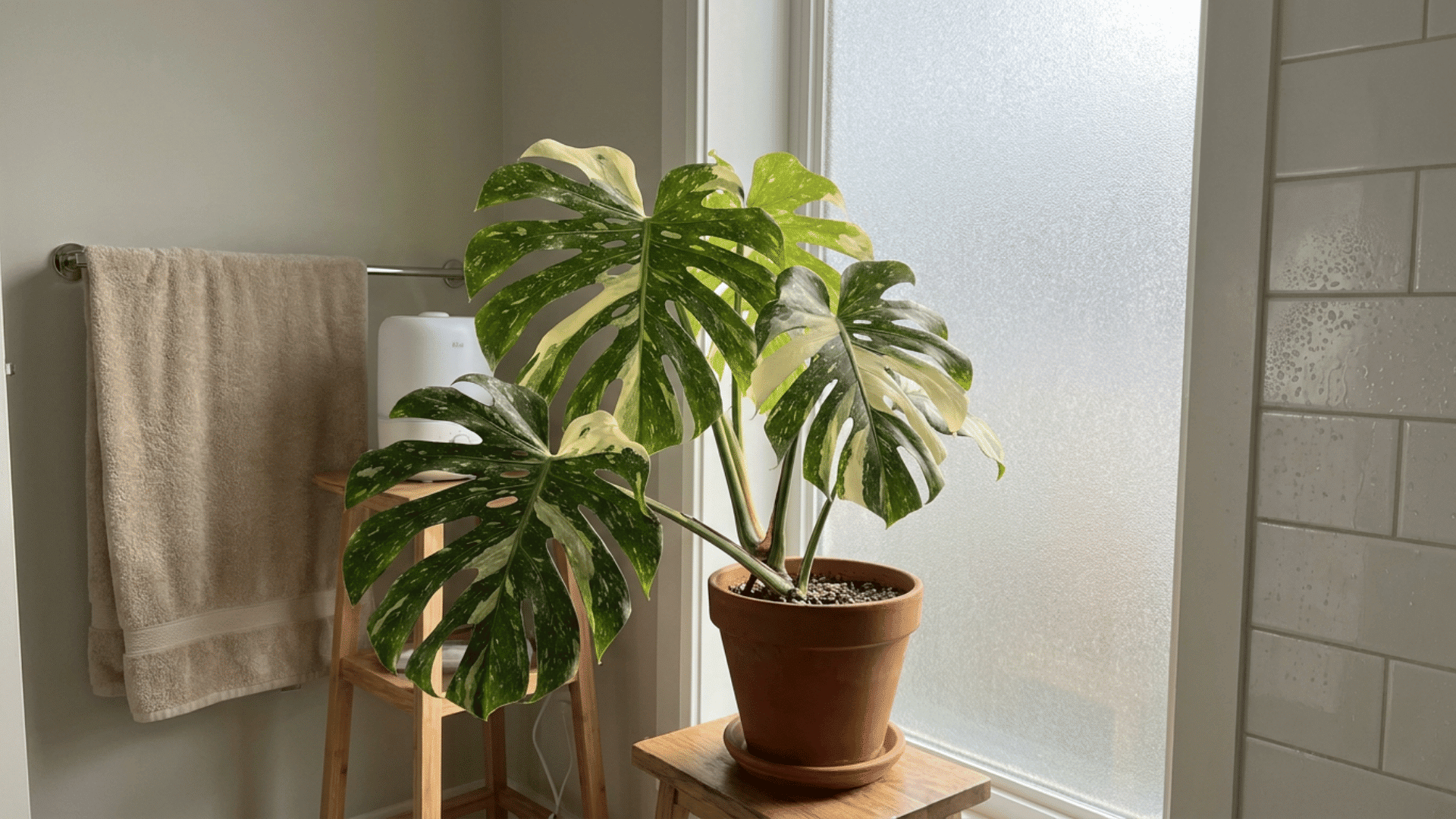
Thai Constellation Monstera is a rarer variety with creamy white variegation splashed across deep green leaves in a pattern that looks like a star map.
It needs warmer temperatures and higher humidity than most common houseplants, which means it does best in a bathroom or kitchen with good light.
The results are hard to beat when the conditions are right, and it rewards patient growers who take the time to get the environment just right.
Quick Tip: Keep a small humidifier near your Thai Constellation if your home tends to run dry, especially during winter months when indoor heating pulls moisture out of the air. It makes a noticeable difference in how the leaves develop.
11. Philodendron Micans
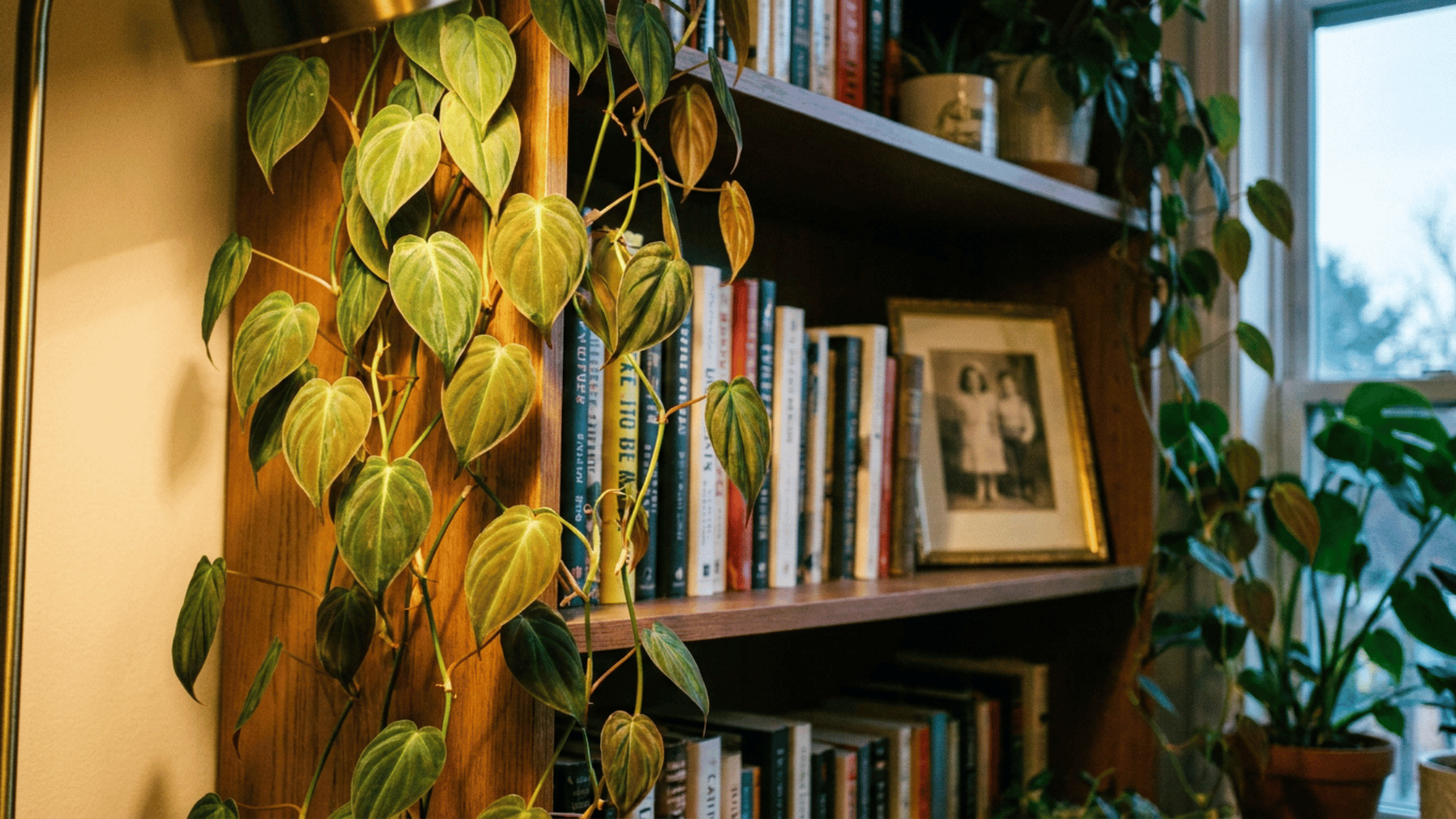
Philodendron Micans, also called Velvet Philodendron, has soft, velvety leaves with deep green color and warm bronze undertones that shift with the light.
It looks expensive and high-maintenance, but it is actually quite easygoing once it settles into a spot it likes.
The texture of the leaves is unlike that of most other houseplants and is something you really have to see in person to fully appreciate. It trails well and grows at a steady, satisfying pace.
12. Monstera Dubia
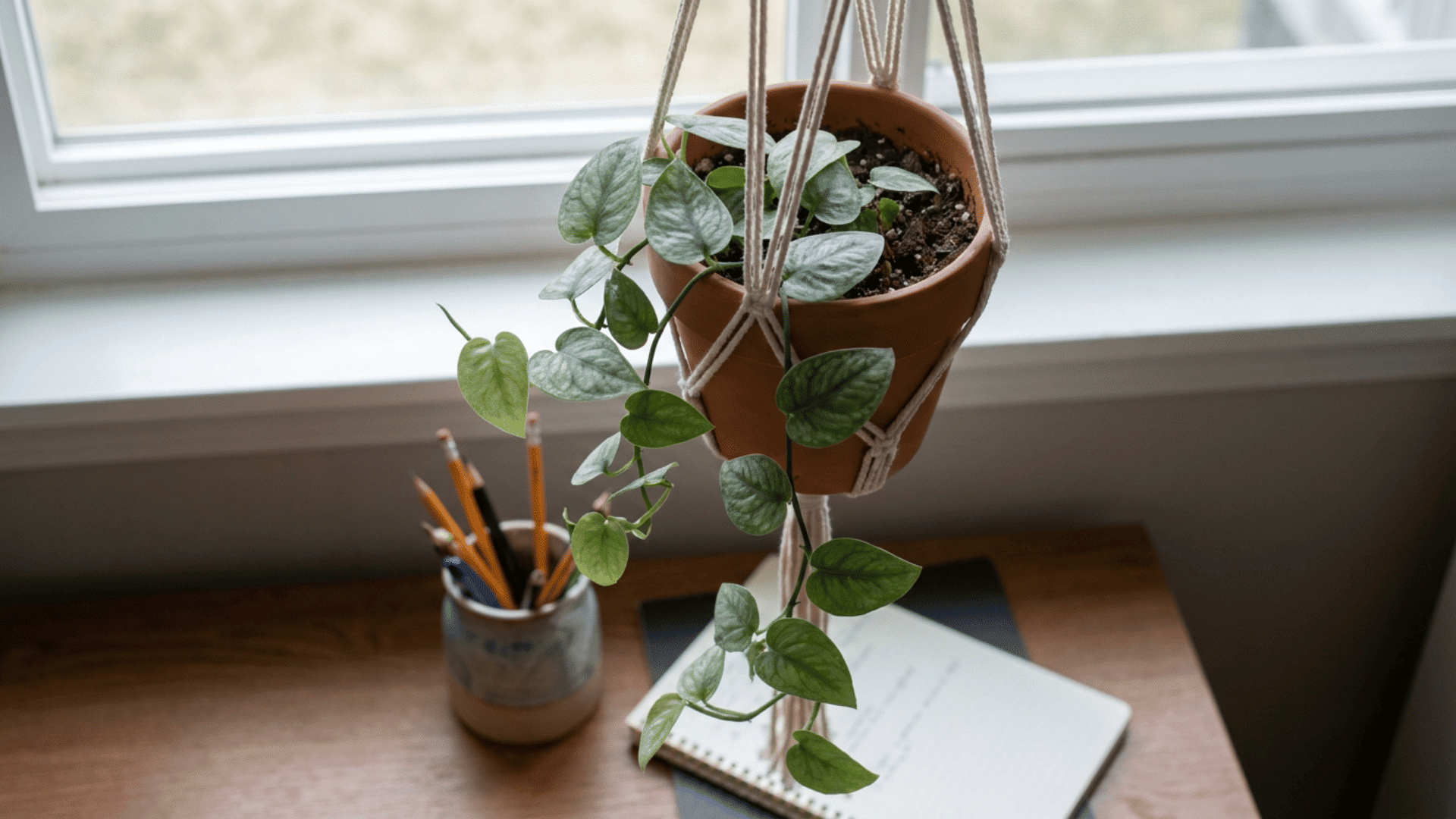
Monstera Dubia, also known as the Shingle Plant, is one of the lesser-known Monstera varieties but easily one of the most visually interesting ones available.
Young plants press their small, silvery-green leaves flat against whatever surface they climb, creating a shingled effect that looks almost sculptural.
As the plant matures, it develops larger, fenestrated leaves similar to those of other Monstera. It’s a slower grower, but completely worth it for anyone who wants something different on their wall.
Trailers for Shelves and Hanging Baskets
These plants are made for draping. Put them somewhere high and let them trail down naturally. They need very little training and look great with almost no effort on your end.
13. English Ivy
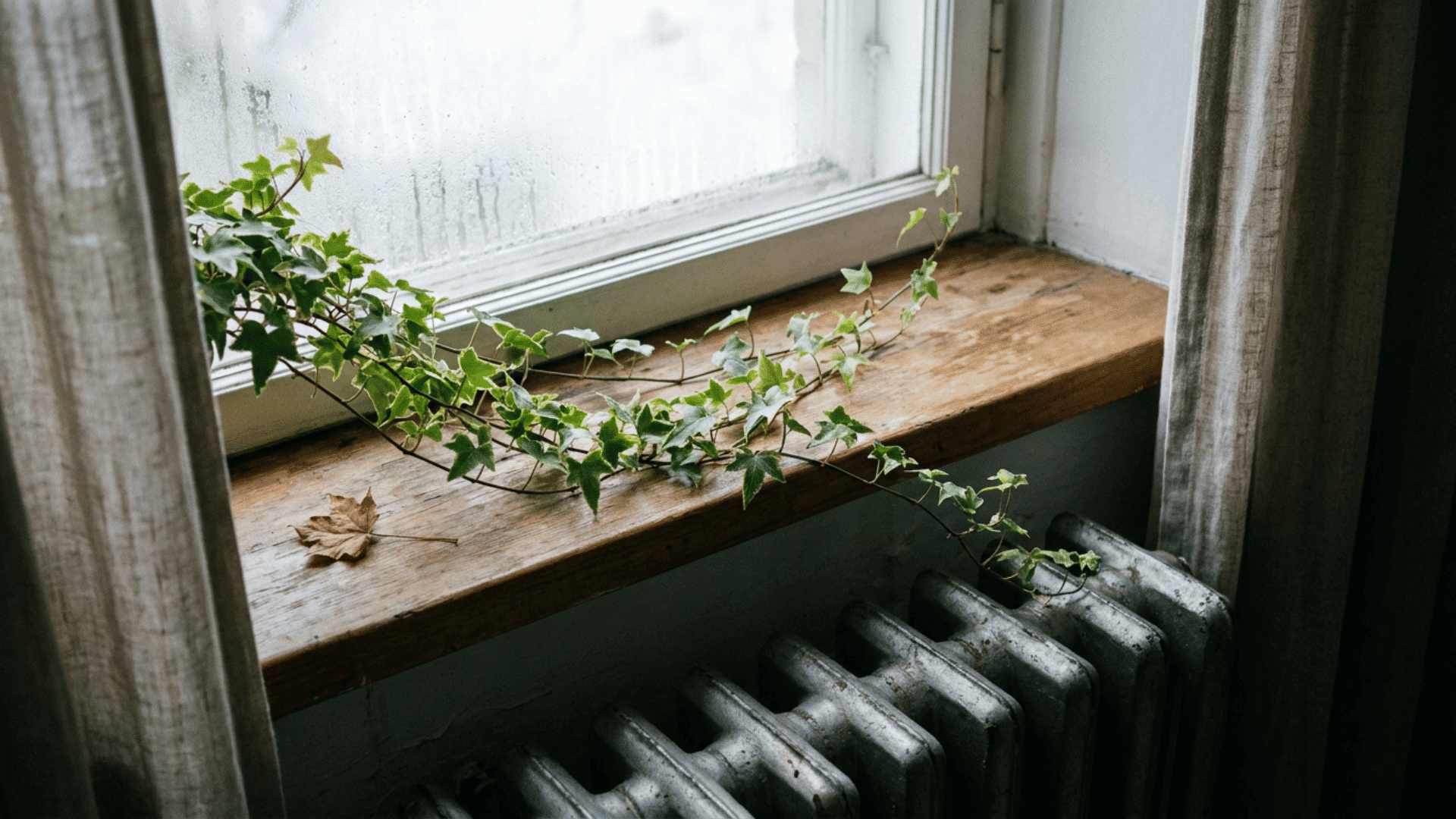
English Ivy grows well in low light, making it one of the most practical trailing plants for spots where other plants simply won’t survive.
It comes in several varieties, including Green California, Glacier, and Gold Child, each with slightly different leaf shapes and color patterns worth considering for different rooms.
It’s one of the few trailing plants that thrive in cooler rooms and shadier corners, giving you real flexibility in where you place it around the home.
Quick Tip: English Ivy can dry out faster than it looks. Consistent moisture without waterlogging is the sweet spot for keeping it looking full and healthy.
14. String of Pearls
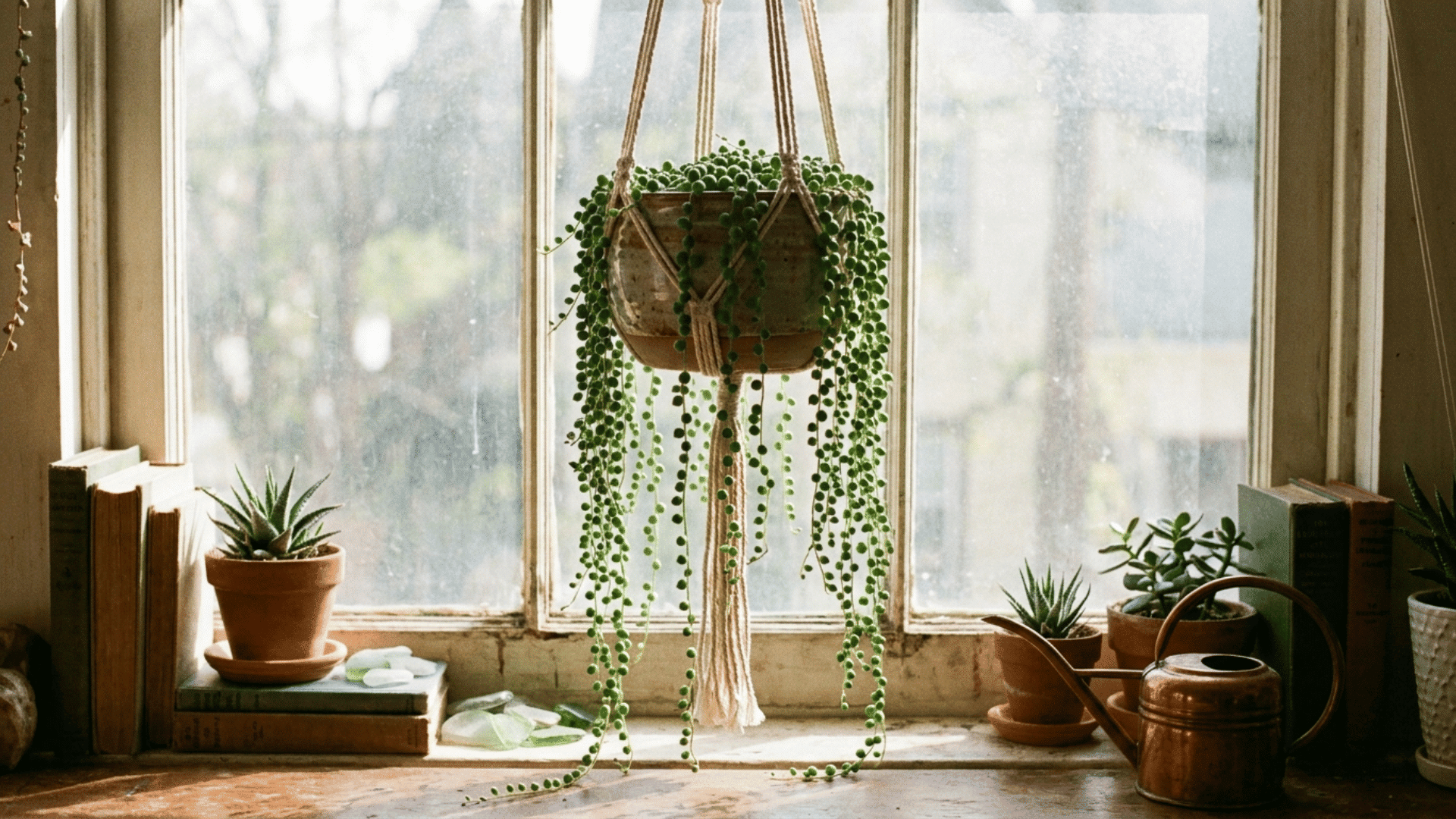
String of Pearls has long vines lined with small, perfectly round leaves that look exactly like a string of green beads cascading down from a pot.
It does best in bright light and stores moisture inside its leaves, so it needs far less watering than most houseplants.
It’s ideal for forgetful waterers who still want something visually striking in their space. Just make sure it gets enough light, or the pearl-like leaves will start to space out and lose their full, lush appearance.
15. String of Hearts
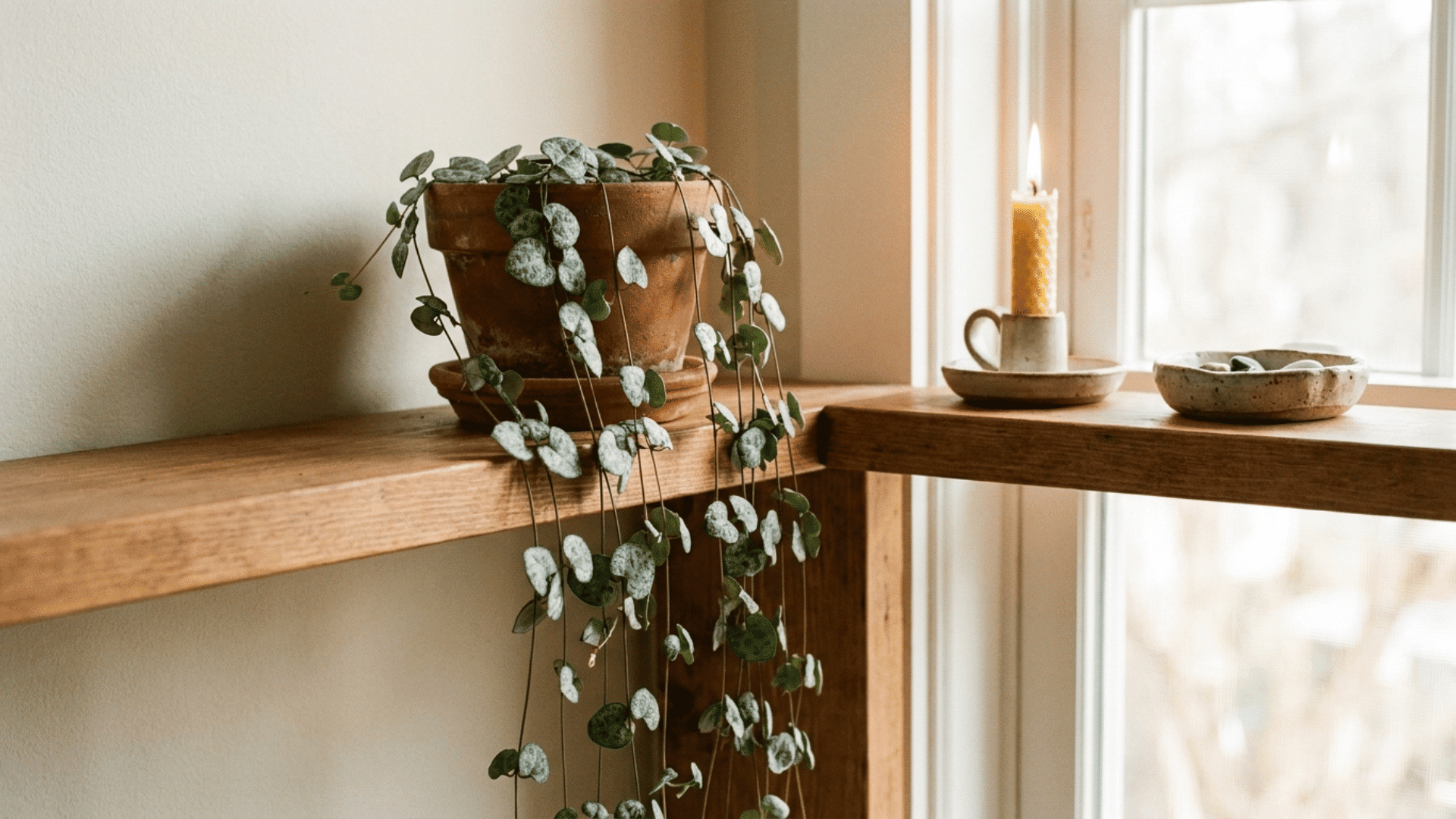
String of Hearts has small heart-shaped leaves with silver marbling on long, slender vines that trail beautifully from a hanging pot.
It’s a succulent-type plant that prefers to dry out completely between waterings, so it’s very forgiving if you miss a watering day.
It looks especially great near a bright window, where it gets plenty of indirect light and can develop longer, more impressive vines over the course of the growing season with minimal intervention from you.
16. String of Bananas
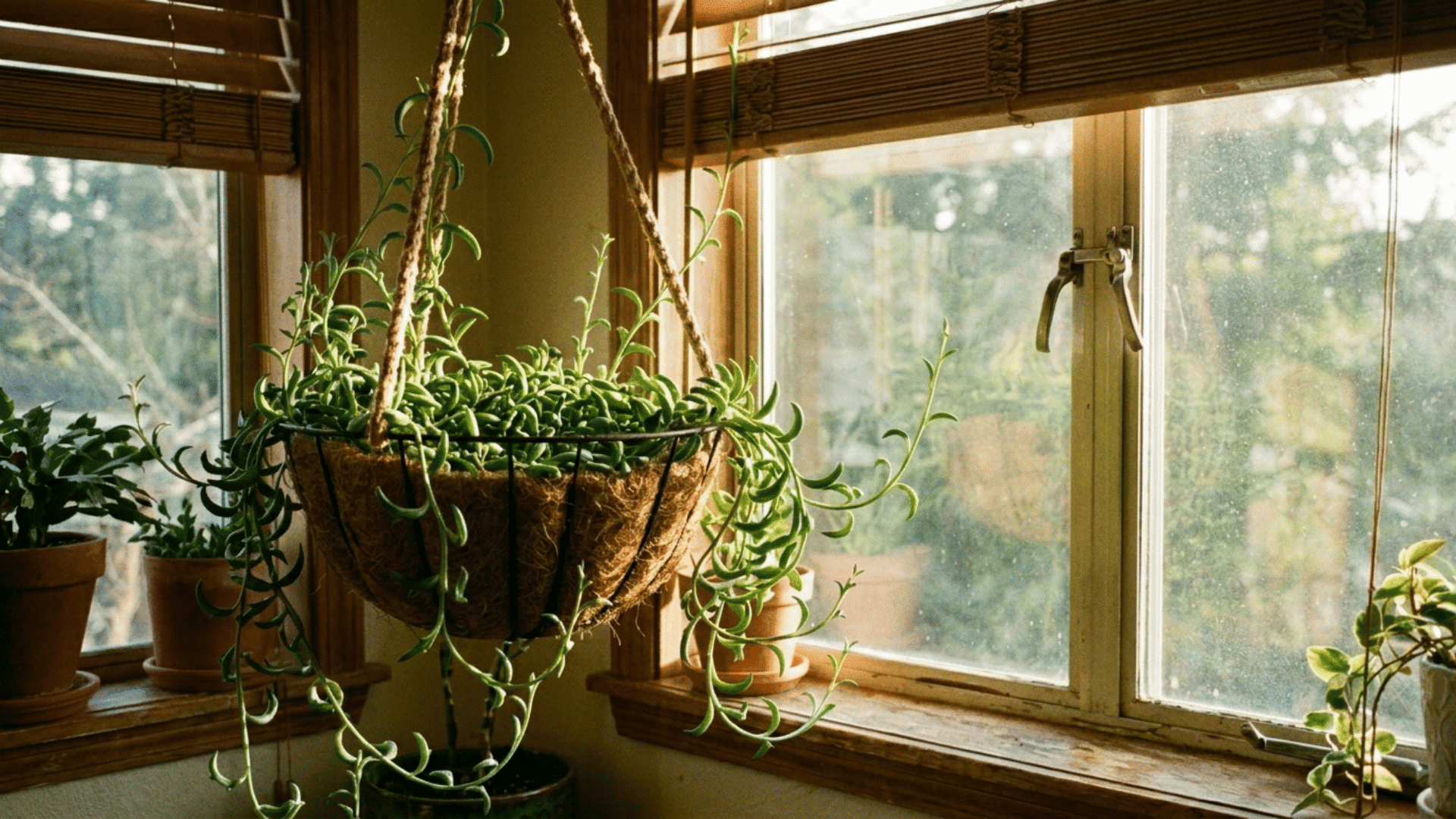
String of Bananas is a trailing succulent with small banana-shaped leaves that curve slightly as they grow along each vine. It’s faster-growing than most succulents, loves bright light, and needs very little water to stay looking healthy.
It works well in a hanging pot positioned near a south or east-facing window where it can get the strong light it prefers. It’s a low-effort, high-reward option that always gets questions from visitors who’ve never seen it before.
17. String of Dolphins
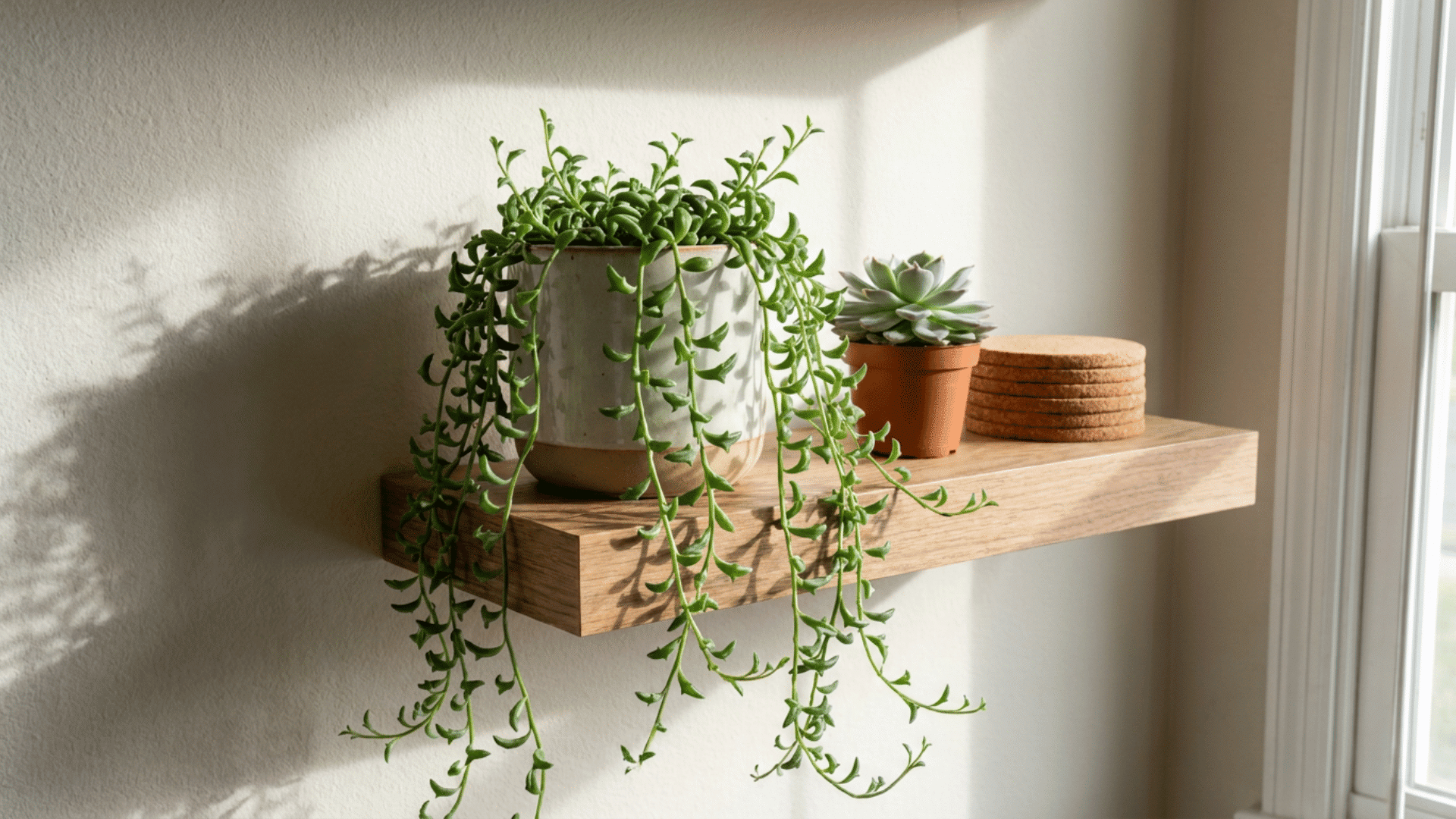
String of Dolphins has leaves shaped like tiny leaping dolphins, making it one of the most unique and talked-about trailing plants you can own indoors.
It’s a hybrid succulent that needs bright light and infrequent watering to stay at its best. It grows a little slower than some other trailing options, but the look of the foliage is worth the slower pace.
It’s the kind of plant people ask about the moment they spot it on your shelf.
Quick Tip: String of Dolphins is sensitive to overwatering more than almost any other plant on this list. When in doubt, skip the watering.
It handles dry spells far better than it handles sitting in wet soil, which can cause root rot surprisingly quickly.
18. Peperomia String of Turtles
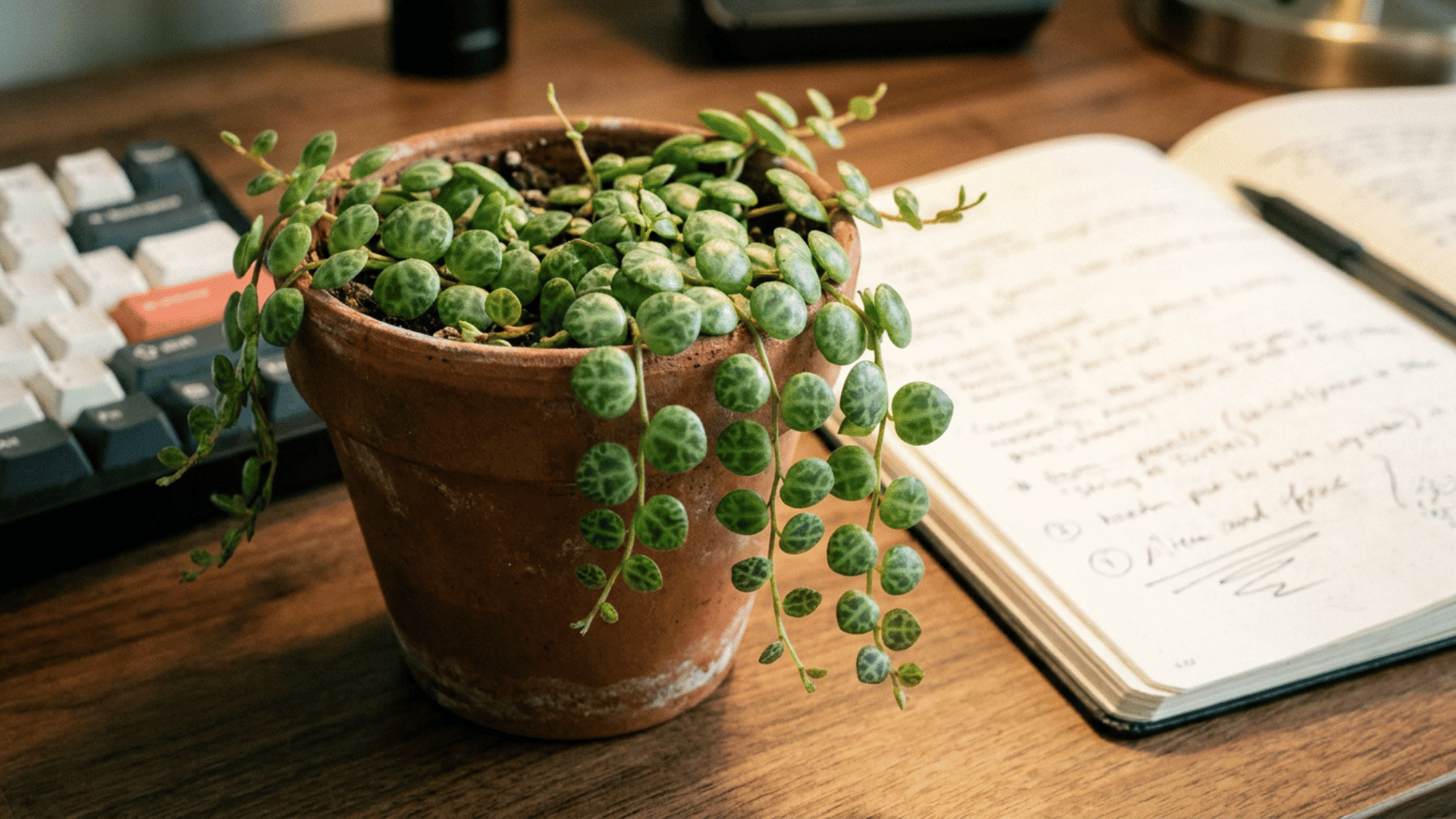
Peperomia String of Turtles is a tiny Brazilian native with small, round leaves covered in intricate patterns that resemble turtle shells up close.
It’s a slow grower, but that also means it stays manageable and doesn’t outgrow its pot quickly.
It works beautifully in a small hanging pot or spilling gently over the edge of a shelf in a spot with good indirect light. It’s the kind of plant that rewards patience with something truly special over time.
Flowering Picks Worth Growing
These go a step beyond just foliage and bring real character to any room. If you want a plant that does something extra, these are the ones worth adding to your collection next.
19. Hoya Carnosa Tricolor
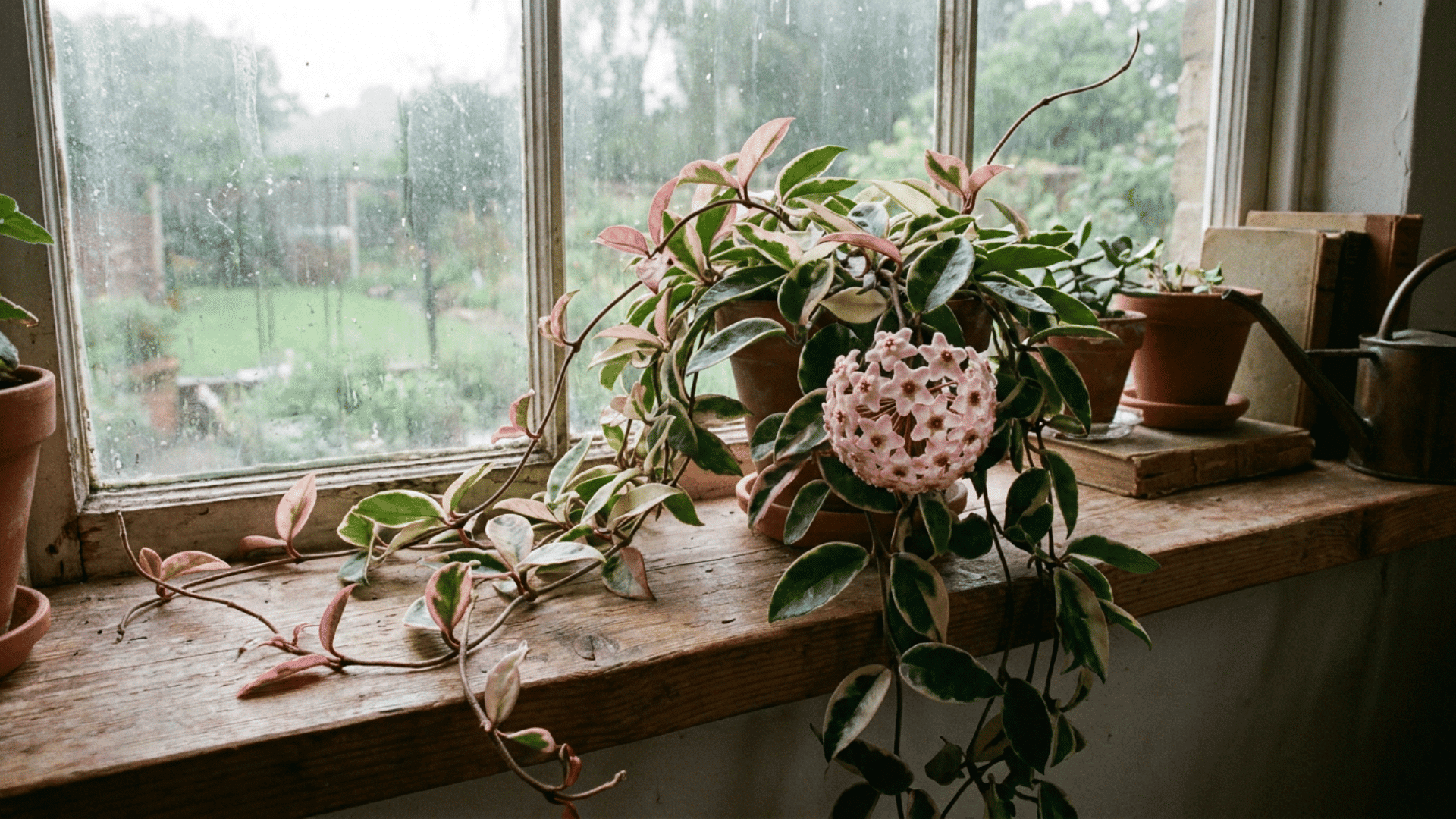
Hoya carnosa ‘ Tricolor ‘ has oval, glossy leaves with pink, white, and green coloring that runs along its slender vines, always catching the eye.
What truly makes it stand out is that it blooms, producing small clusters of sweetly scented, star-shaped flowers that fill a room with a light fragrance.
It also has air-purifying qualities, which is a quiet bonus most people appreciate once they find out. It’s one of the most rewarding vines you can grow indoors.
Quick Tip: Don’t move your Hoya once it starts budding. Shifting it to a new spot or rotating the pot can cause it to drop its buds before they ever open. Find a good bright spot and leave it there once you see flower clusters forming.
20. Hoya Bella
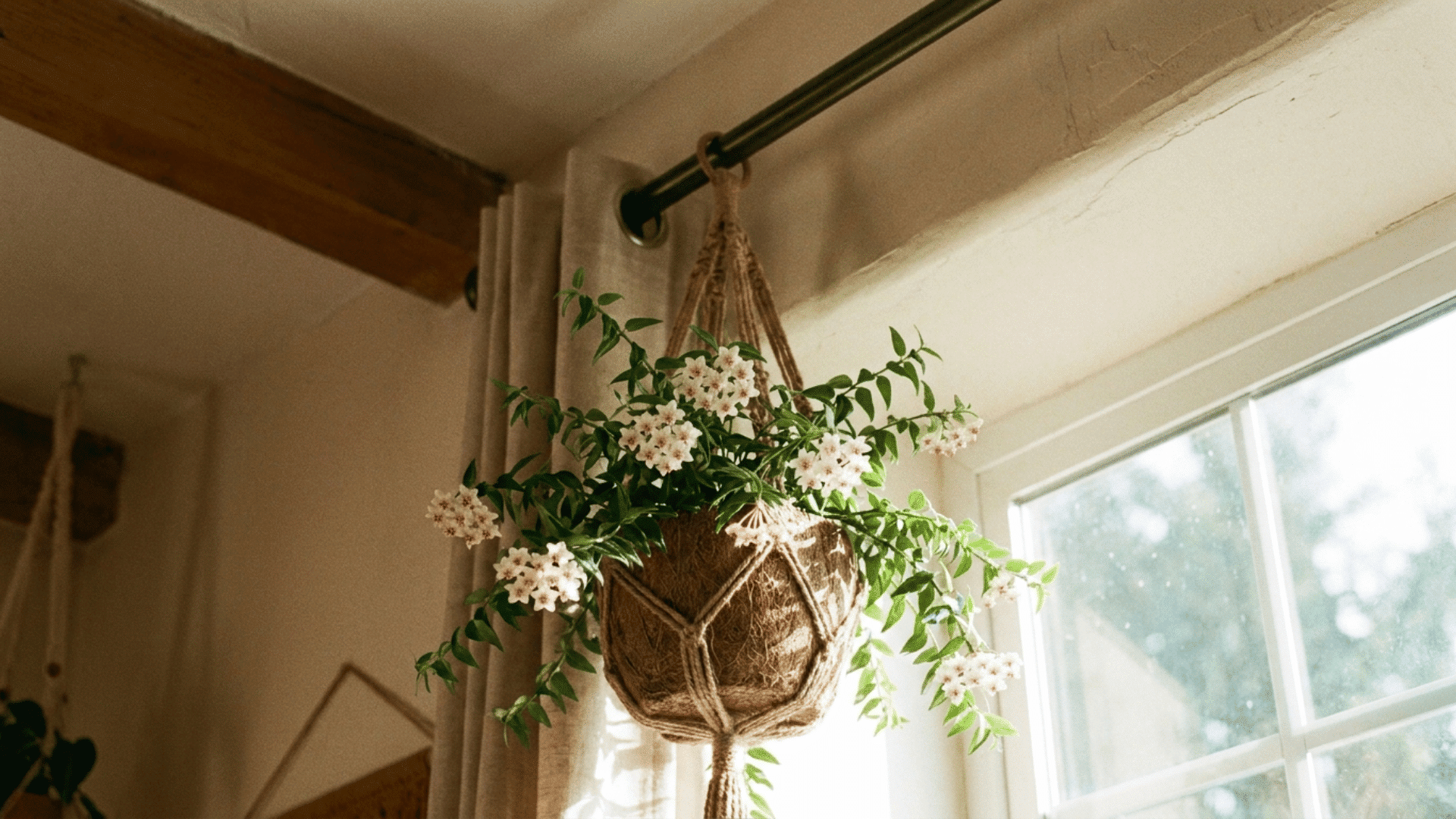
Hoya Bella blooms reliably from May to August, producing waxy, star-shaped white flowers with a subtle sweet scent that makes it feel like more than just a foliage plant.
It’s a smaller Hoya variety that stays compact and doesn’t take up much space on a shelf or in a hanging basket near a bright window.
It needs bright indirect light and doesn’t like sitting in soggy soil, so a well-draining mix and occasional watering are really all it takes to keep it thriving.
21. Hoya Obovata
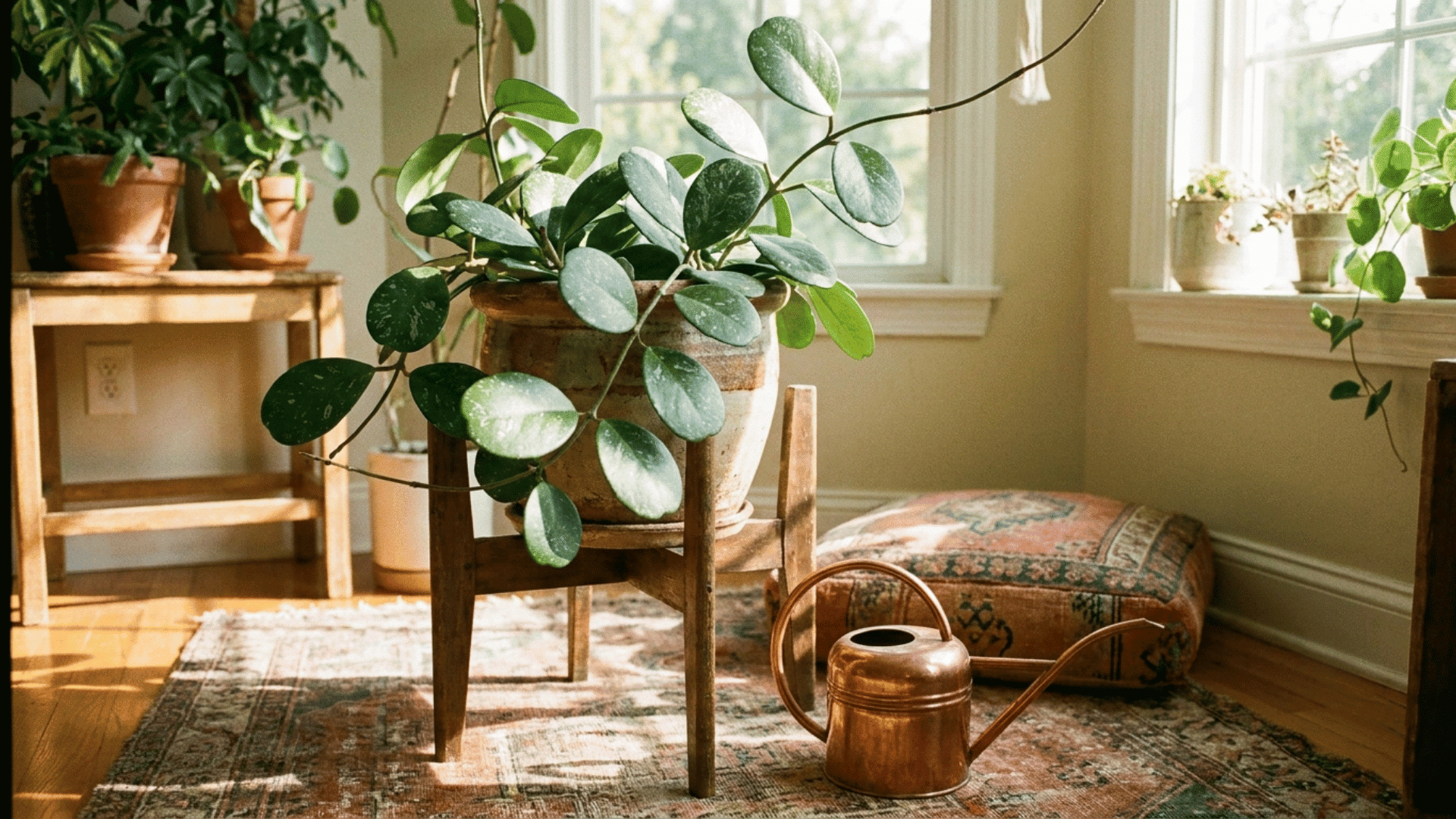
Hoya Obovata has large, round, deep green leaves with subtle silver flecking that catches the light in a really appealing way.
It’s one of the easier Hoyas to grow and responds well to consistent bright indirect light by eventually producing clusters of pink, star-shaped blooms that are well worth waiting for.
The plant gets better and more impressive-looking the longer it’s been growing in its pot, making it one of those slow-burning favorites that keeps rewarding you over time.
22. Lipstick Plant
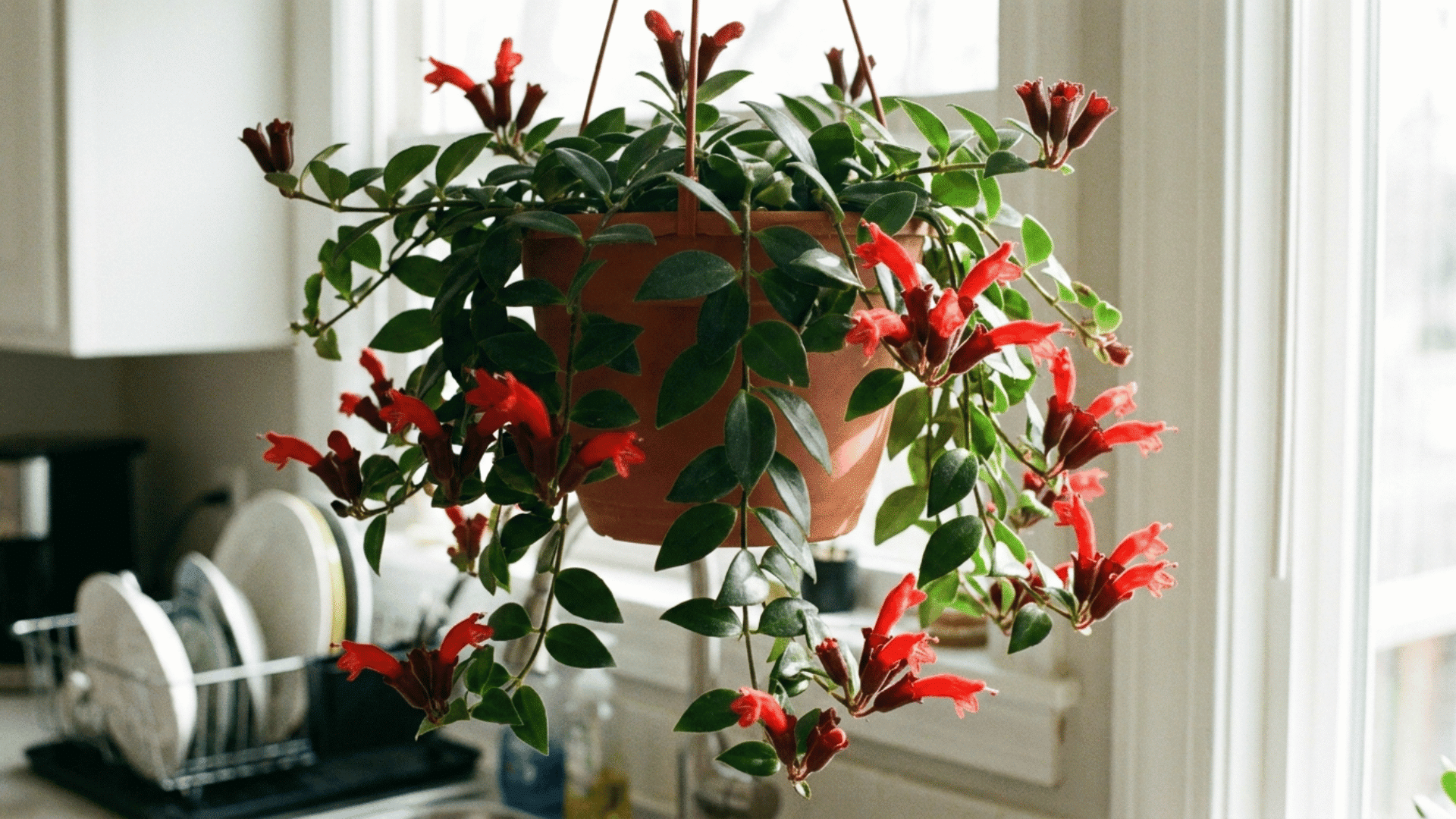
Lipstick Plant produces bright red tubular flowers that emerge from dark burgundy casings and look almost exactly like a tube of lipstick being pushed up, which is exactly how it got its memorable name.
It’s one of my personal favorites for anyone who wants a flowering vine that surprises visitors.
On top of the looks, it’s fully pet-safe and more tolerant of occasional missed waterings than most flowering houseplants, which makes it a very practical choice for busy households.
Quick Tip: To encourage more blooms on your Lipstick Plant, give it a slightly cooler and drier period in late autumn. Dropping the temperature slightly and cutting back on watering for a few weeks mimics its natural growing cycle and tends to trigger a stronger flush of flowers come spring.
Rare and Collector Picks
These are for plant lovers who want something harder to find. They take a little more searching and sometimes extra care, but each one brings something unique that standard houseplants simply can’t match.
23. Silver Satin Pothos
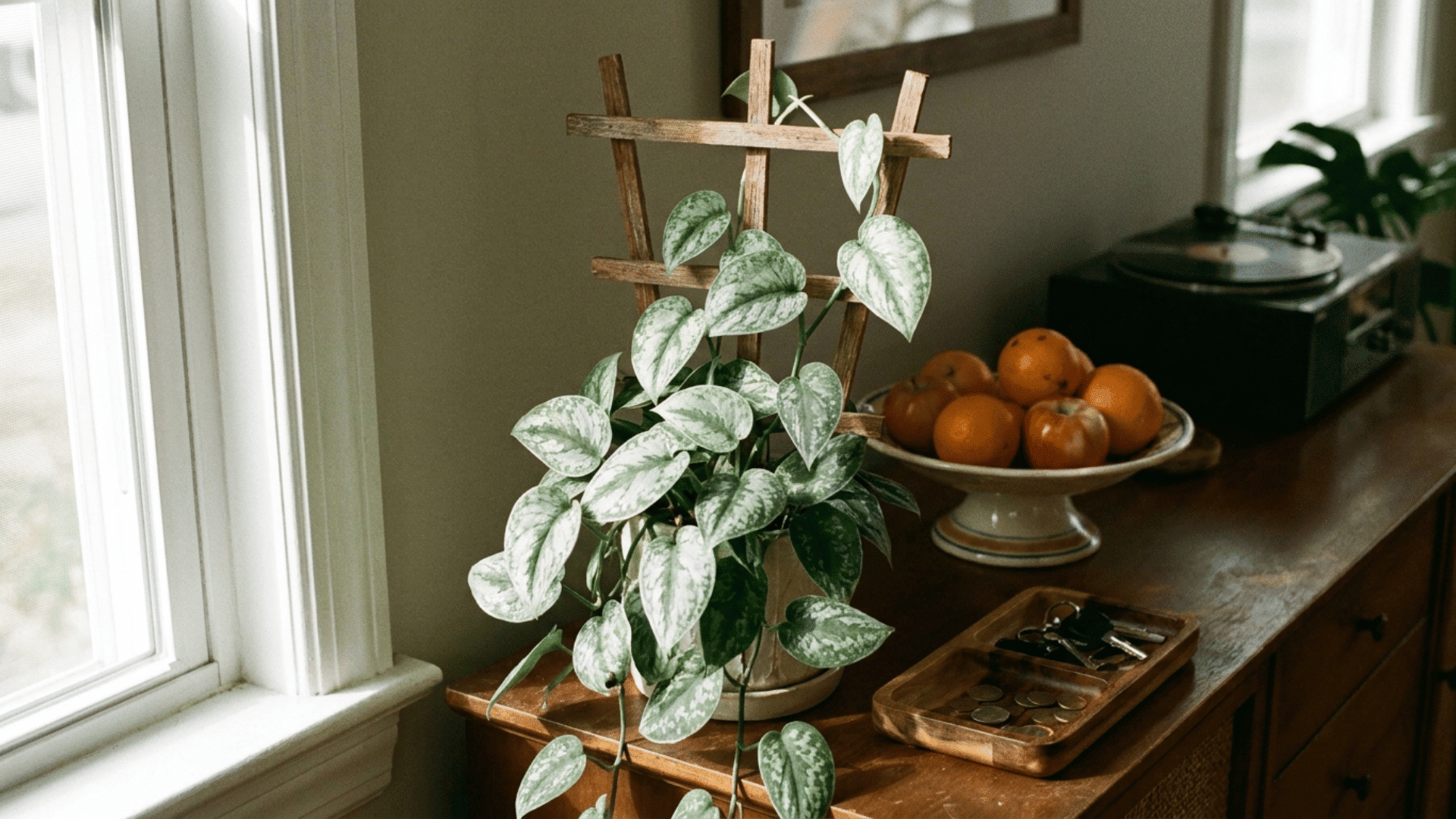
Silver Satin Pothos has silky, heart-shaped leaves covered in silvery markings that shimmer and shift as the light changes throughout the day.
Despite the name, it’s actually a Scindapsus rather than a true Pothos, which explains why the leaves have that distinctive velvety texture most Pothos don’t have.
It looks especially great on a trellis where the leaves can spread out fully and show off their natural shimmer. It’s easy to grow and one of the most visually rewarding plants in this category.
24. Syngonium Strawberry
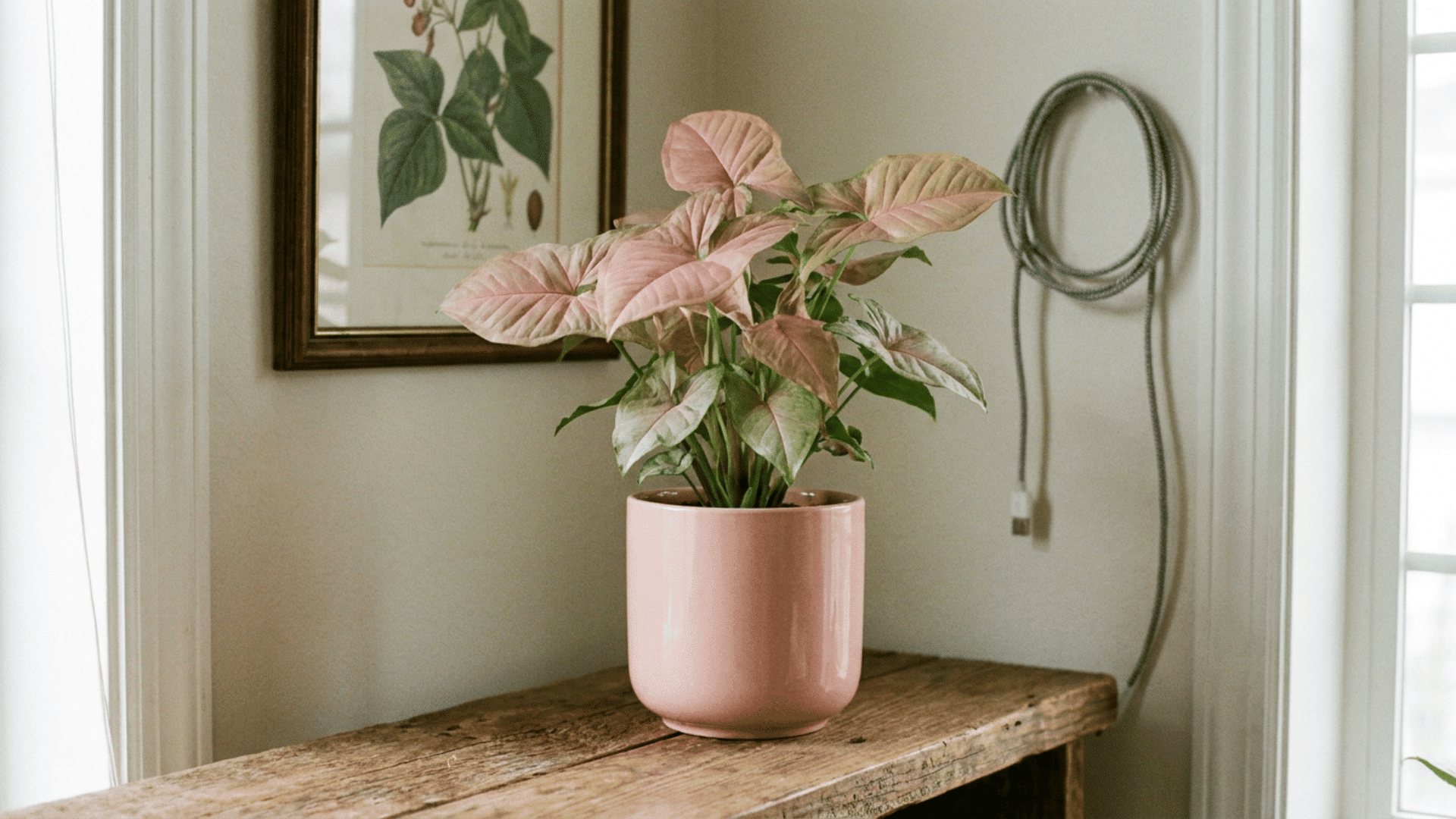
Syngonium Strawberry starts out as a compact, upright plant but gradually develops longer trailing vines as it matures, giving you two different looks from one plant over time.
Its soft pink and green leaves are striking and hold their color well when grown in bright indirect light.
It’s easy to care for, grows at a steady and rewarding pace, and looks great both on a shelf and in a hanging pot. It’s one of those plants that quietly becomes a favorite the longer you grow it.
25. Mini Monstera
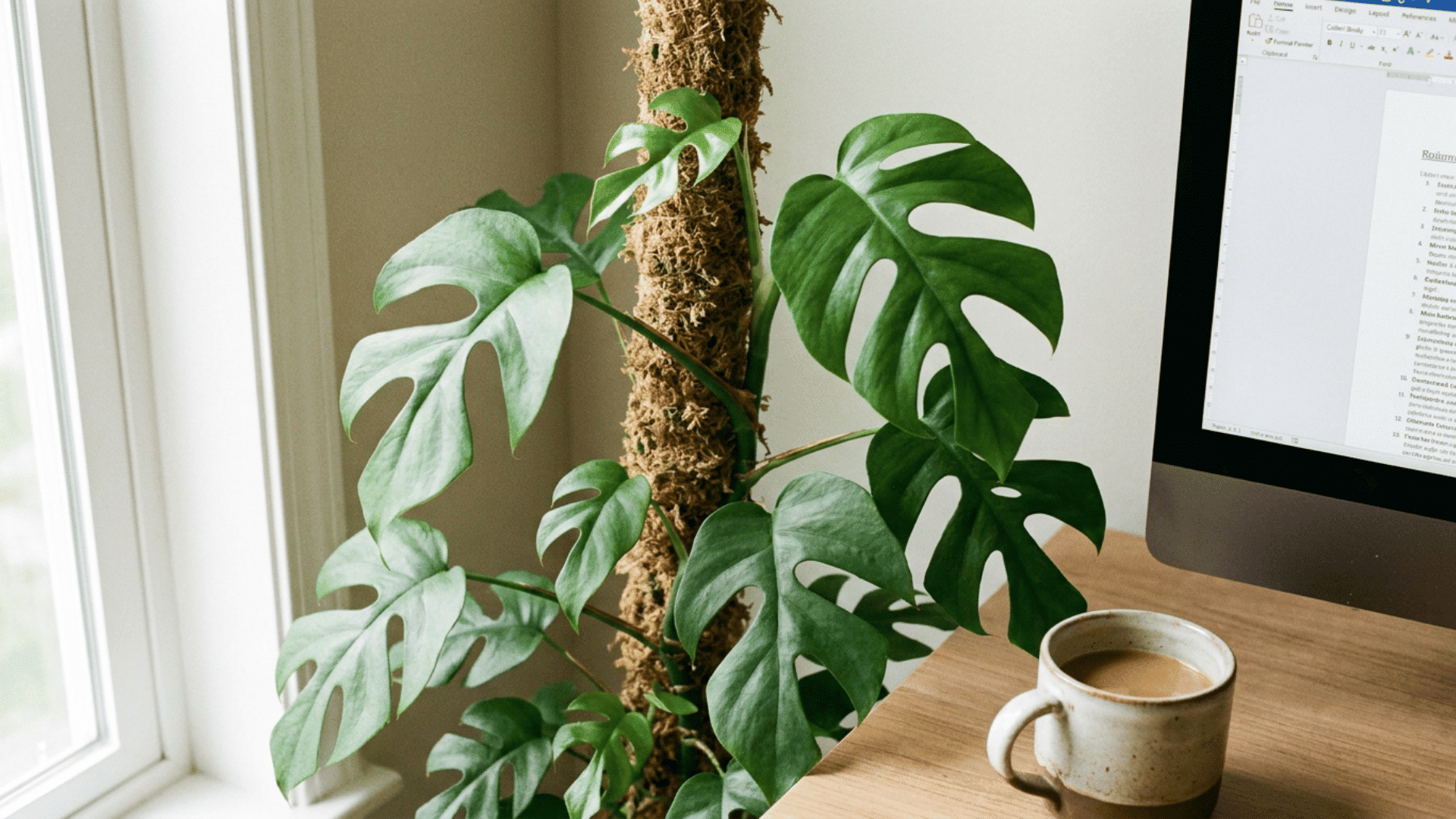
Mini Monstera, also known as Philodendron Ginny, looks remarkably like a smaller version of Monstera Deliciosa, but is actually a completely different plant in a different family altogether.
It develops the same kind of split leaves as it matures, but stays far more compact and manageable in an everyday home setting.
It’s great for training up a small trellis in an apartment or home office where a full-sized Monstera simply wouldn’t fit, and it grows quickly enough to feel rewarding without getting out of hand.
Quick Tip: Give your Mini Monstera a small moss pole early on, even before it looks like it needs one. Getting it used to climbing from a young age encourages faster growth and produces larger, more developed leaves much sooner than letting it trail without support.
How to Choose the Right Vine Plant for Your Space
With so many options available, picking the right plant comes down to matching it to your home’s actual conditions and your personal style.
A plant that looks great but doesn’t suit your light levels or lifestyle won’t stay looking great for long. Use the table below to quickly find the best fit for your space, skill level, and household needs.
By Light Conditions
Light is the single biggest factor that determines whether a plant thrives or just barely survives indoors. Before buying anything, take an honest look at where you plan to put it and how much natural light that spot actually gets.
Here’s a quick breakdown of which plants work best in each light condition and what you can expect from them long-term.
| Light Level | Best Plants | What To Expect |
|---|---|---|
| Low Light | Golden Pothos, Heartleaf Philodendron, English Ivy | Slower growth but stays healthy and decorative in dim corners, hallways, and north-facing rooms |
| Bright Indirect Light | Monstera, Hoya, Silver Satin Pothos, Philodendrons | Best colors, largest leaves, and most lush growth |
| Direct Sun | Lipstick Plant, Hoya Australis | Thrives on a sunny windowsill; most other vines will scorch in these conditions |
Quick Tip: Not sure how much light a spot gets? Hold your hand a foot above white paper during peak daylight. A sharp shadow means bright light, a soft shadow means medium light, and no shadow at all means low light.
By Skill Level
The right plant is also the right plant for your experience level. A beautiful plant that struggles because the care requirements don’t match your routine isn’t doing anything good for your space or your confidence as a grower.
Here’s a simple breakdown to help you match the right vine to where you are.
| Experience Level | Best Plants | Why They Work |
|---|---|---|
| Beginner | Golden Pothos, Heartleaf Philodendron, Spider Plant Bonnie | Forgiving, fast-growing, and look full and lush even when care isn’t perfect |
| Intermediate | Hoya varieties, English Ivy, Syngonium | Slightly more specific needs but reward attention with richer colors and flowers |
| Experienced | Thai Constellation Monstera, String of Pearls, Peperomia String of Turtles | Narrower care windows but deliver serious visual impact and rarity that makes the effort worthwhile |
Simple Care Tips for Vine House Plants
Most vine plants are easier to care for than people expect. These are the core care principles that apply across almost every plant on this list.
- Watering: Overwatering is the most common cause of plant problems. Allow the soil to dry partially between waterings and check about an inch below the surface with your finger. For succulent trailing plants such as String of Pearls and String of Hearts, let the soil dry completely before watering again.
- Pruning: Trim stems just above a leaf node to encourage new growth, branching, and a fuller appearance.
- Propagation: Most cuttings will develop roots in water within two weeks when placed on a bright windowsill. Transfer them to soil once the roots are about one to two inches long.
- Humidity: Tropical trailing plants such as Monstera and Hoya grow better with higher humidity levels. Placing several plants together can help create a more humid environment around them.
- Feeding: Apply a balanced liquid fertilizer once a month from spring through early autumn. Pause fertilizing during autumn and winter when plant growth naturally slows down.
Final Thoughts
After years of growing these plants, I can tell you one thing with confidence: there is no single best vine plant. There is only the best one for your home. A Golden Pothos in a dim hallway will always outperform a rare Monstera fighting for light in the wrong spot.
So start with your conditions, not the plant. Check your light, think about your routine, and pick something that fits both. Get one plant settled and thriving first.
Once it starts trailing down a shelf or climbing its pole, adding the next one feels natural, and your collection grows from there.
Got a vine plant already winning hearts in your home? Drop its name in the comments below. And if this guide helped, share it with a friend who keeps saying they want more greenery.
Frequently Asked Questions
Which Vine Plant is Best for Beginners?
Golden Pothos is the easiest vine plant for beginners because it grows fast, handles low light, and recovers quickly from missed waterings.
How Often Should Indoor Vine Plants ve Watered?
Most vine plants need water once the top inch of soil dries out, which usually means every 7 to 10 days indoors.
Do Vine Plants Need Sunlight to Grow Indoors?
Most vine plants grow well in bright indirect light, though Pothos, Heartleaf Philodendron, and English Ivy also tolerate low-light corners.
Are Vine House Plants Safe for Pets?
Spider Plant Bonnie, Lipstick Plant, and Peperomia varieties are pet-safe, while Pothos, Philodendron, and Monstera are toxic to cats and dogs.
Why are My Vine Plant Leaves Turning Yellow?
Yellow leaves usually mean overwatering, so let the soil dry out fully before the next watering and check for proper drainage.

Jordan Mathews, who has a degree in horticulture from Texas A&M University, has been a guiding force in plant health and sustainable gardening for over 16 years. His career began with a role at a renowned botanical garden, where he deepened his understanding of plant physiology and eco-friendly cultivation methods. Jordan joined our website as a freelancer in 2020, becoming a go-to expert for readers seeking advice on nurturing diverse plant species apart from offering insights grounded in scientific knowledge and practical experience. Beyond his professional achievements, Jordan is a keen nature photographer, capturing the beauty of flora in its immensely diversified forms.