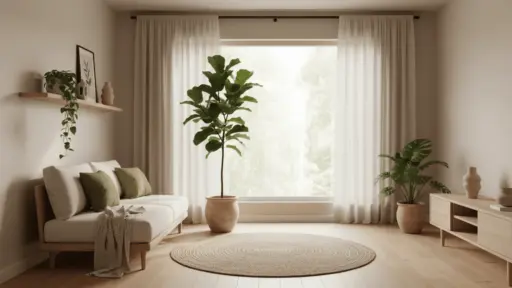
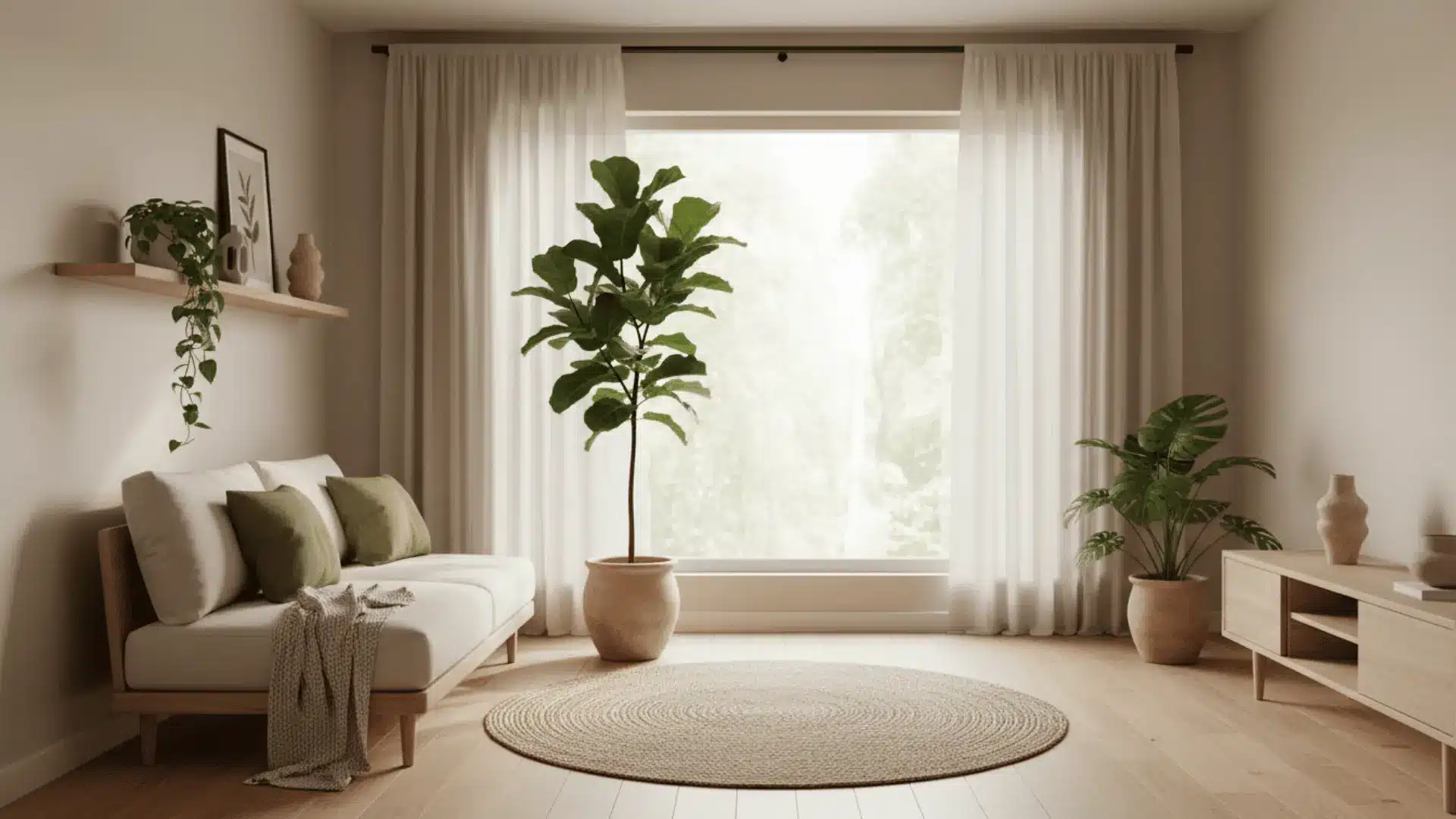

I used to think a few houseplants were enough to make my home feel natural. Then I learned about biophilic interior design, and it changed how I look at every room.
This approach brings nature indoors in ways that go far beyond a fern on a windowsill. You probably spend most of your day indoors, and that can wear you down without you even noticing.
Natural light, plants, wood textures, and fresh air all play a part in how calm or stressed you feel at home. In this article, I will show you simple ways to add these elements to your space.
You will learn about lighting, materials, layout, and small changes that make a big difference. By the end, you will have real ideas you can use in your own home, no matter your budget or skill level.
What is Biophilic Interior Design?
Biophilic interior design is the practice of bringing natural elements into indoor spaces to create a stronger connection with nature. It focuses on natural light, plants, wood, stone, and airflow in homes and offices.
This design style is based on a simple idea: humans feel better in spaces that remind them of the outdoors. Instead of just adding decor, biophilic design changes how a room is built and arranged.
It looks at window placement, material choices, and even room layout. The goal is to reduce stress and improve daily comfort. Common features include large windows, indoor plants, natural textures, and views of greenery.
Some spaces also include water elements or natural airflow patterns. Biophilic interior design is not a trend. It reflects a growing understanding of how the environment shapes mood, focus, and overall well-being.
Core Elements of Biophilic Interior Design
Every biophilic interior design plan relies on a few key building blocks. These elements work together to bring nature indoors in a practical, livable way.
- Natural Light: Large windows, skylights, and open layouts let sunlight fill a room throughout the day.
- Indoor Plants: Greenery placed on shelves, floors, or walls adds life and improves air quality.
- Natural Materials: Wood, stone, bamboo, and clay bring texture and warmth that mimic the outdoors.
- Views of Nature: Windows facing trees, gardens, or open sky help create a visual link to the outside world.
- Water Features: Small fountains or fish tanks add movement and calming sound to a space.
- Fresh Airflow: Operable windows and good ventilation keep indoor air feeling clean and natural.
- Natural Colors: Earth tones like green, brown, and beige reflect colors found in nature.
- Organic Shapes: Curved furniture and irregular forms replace harsh, rigid lines.
Best Biophilic Interior Designs Ideas
These ideas show how biophilic interior design works in real homes and everyday spaces. Each one offers a different way to bring nature indoors.
1. Living Green Walls
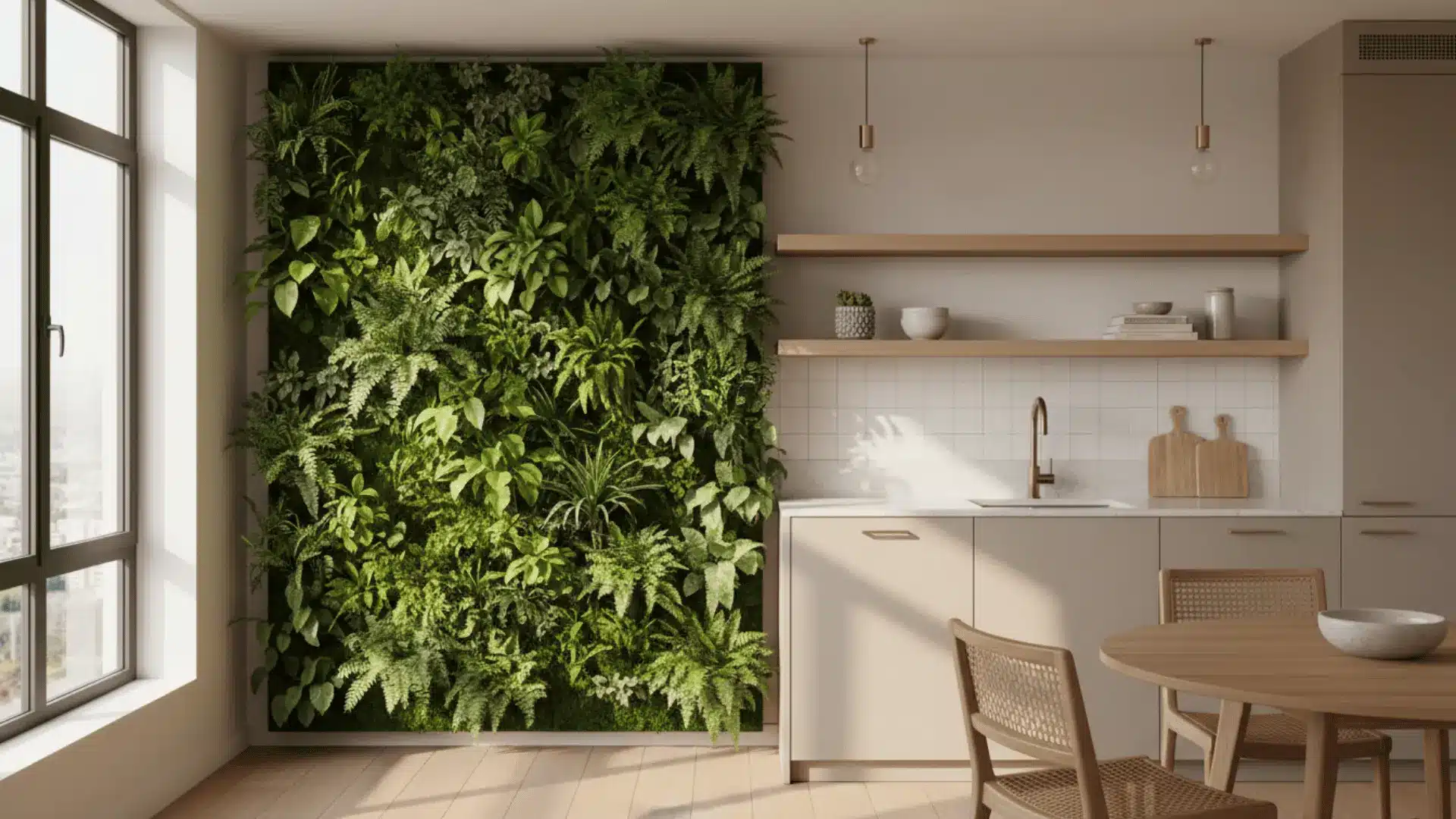
A living green wall turns a plain wall into a small garden. It uses vertical planters filled with ferns, pothos, or moss to create a lush, layered look. This idea works well in small apartments where floor space is limited.
I saw one installed in a friend’s kitchen, and it completely changed the feel of the room. Biophilic interior design often uses green walls as a bold focal point that also improves air quality.
- Best for kitchens, hallways, and home offices
- Requires a simple irrigation system for easy upkeep
- Works with both real and preserved plants
2. Wood-Accented Ceilings
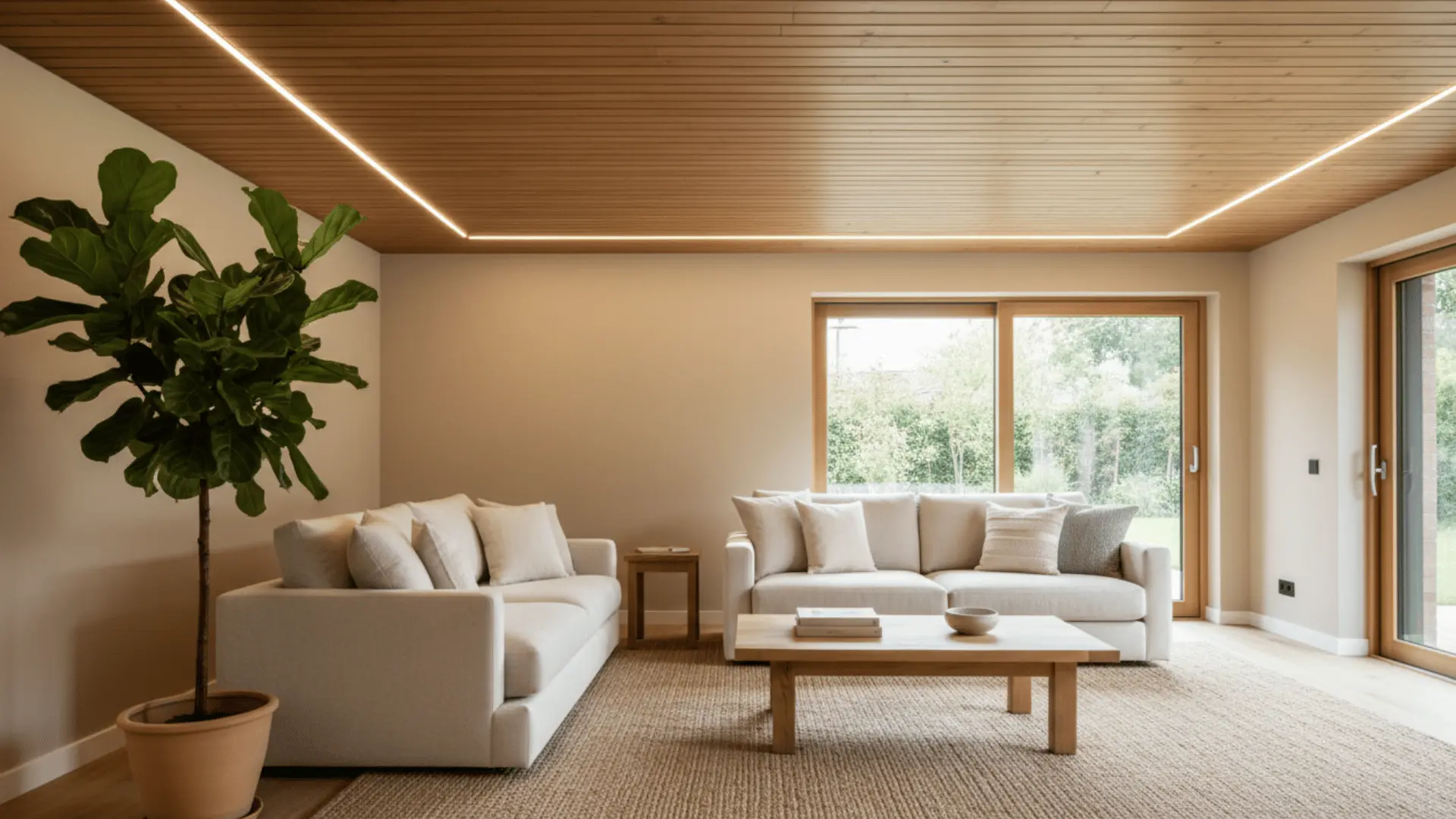
Wood ceilings bring warmth to a space that most people overlook. Slatted wood panels or exposed beams add texture without cluttering the floor or walls.
This approach pairs well with minimal furniture and soft lighting. Unlike walls or floors, ceilings offer an untouched canvas for natural materials.
- Pine and cedar are common choices
- Pairs well with recessed lighting
- Works in bedrooms, living rooms, and studies
Wood ceilings can make a room feel taller and more open, even in tight spaces.
3. Indoor Water Features
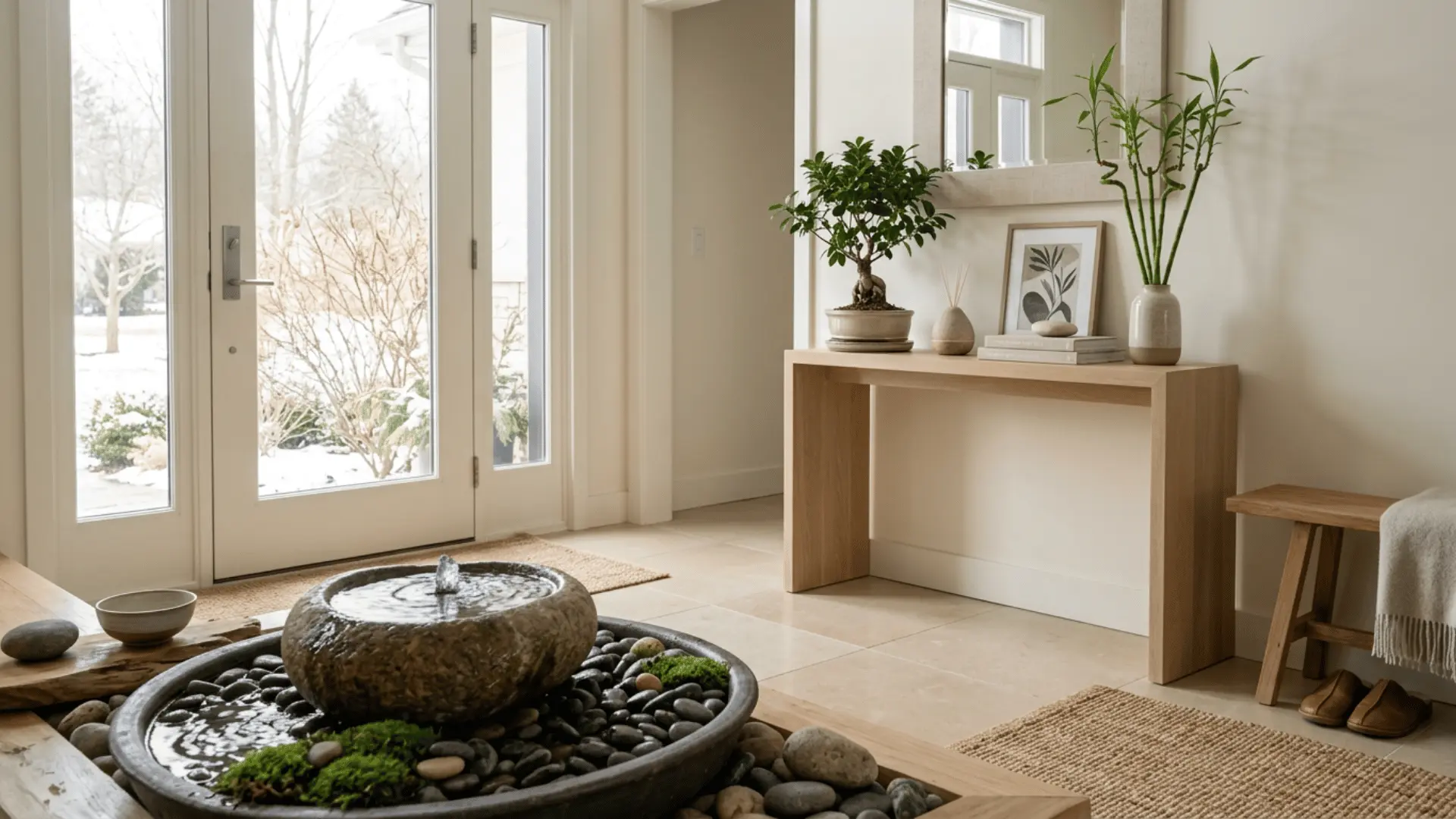
A small fountain or shallow pond brings sound and movement into a room. Water features don’t need to be large to make an impact.
Even a small tray with pebbles and flowing water can create a calming effect throughout the day.
- Choose quiet motors for indoor use
- Place away from electronics
- Works well in entryways and offices
4. Nature-Facing Window Nooks
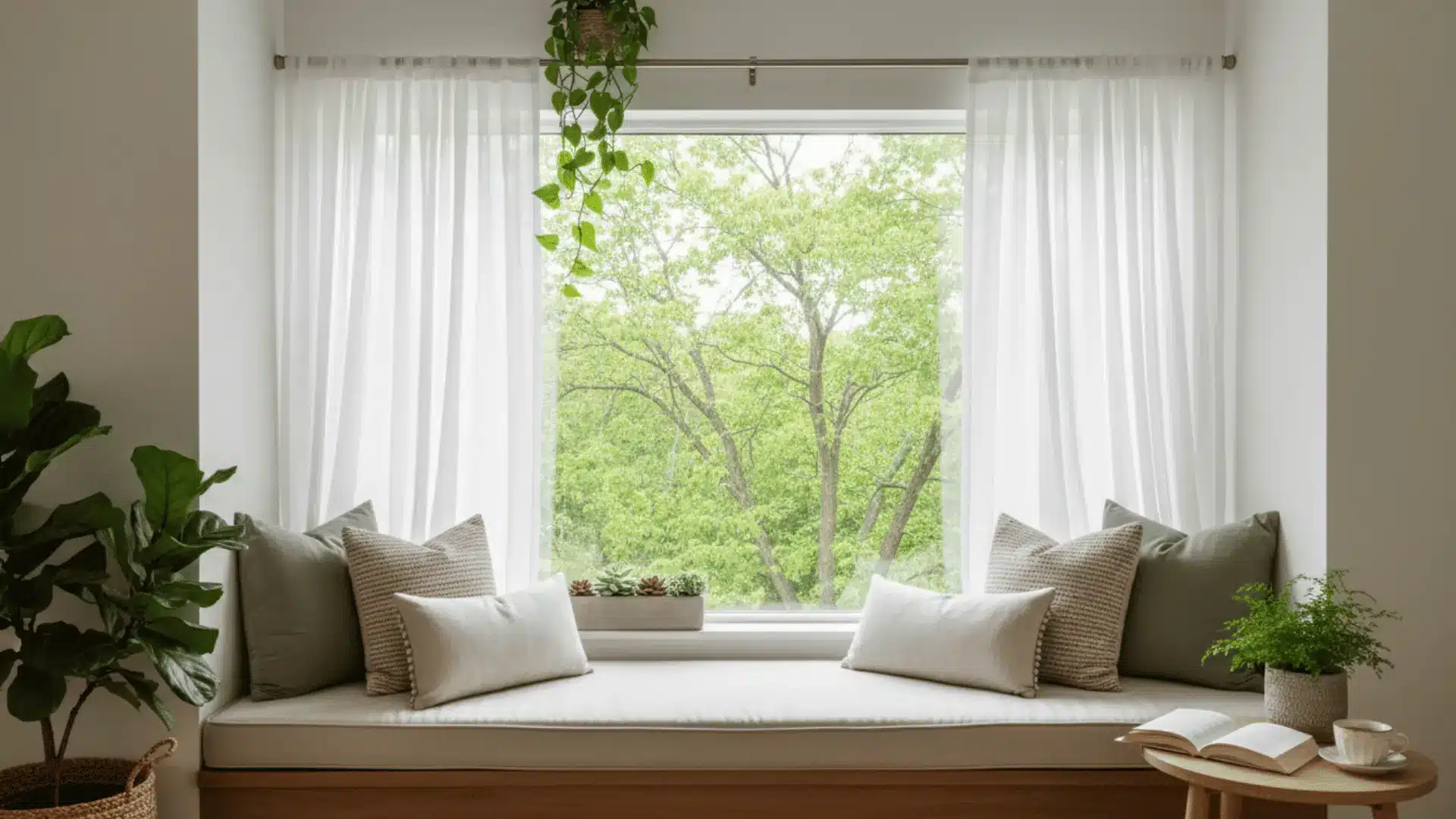
This idea centers on one simple habit: sitting where you can see outside. A window nook with cushions and soft light creates a quiet, restful corner in a room.
I built one in my own living room last year, using an old bench and a few pillows. It became my favorite spot within days.
Biophilic interior design often highlights these small changes because they require little cost but offer a big shift in daily comfort.
- Add a small side table for books or tea
- Use sheer curtains to soften direct sunlight
- Position near east or south-facing windows
5. Stone and Clay Textures
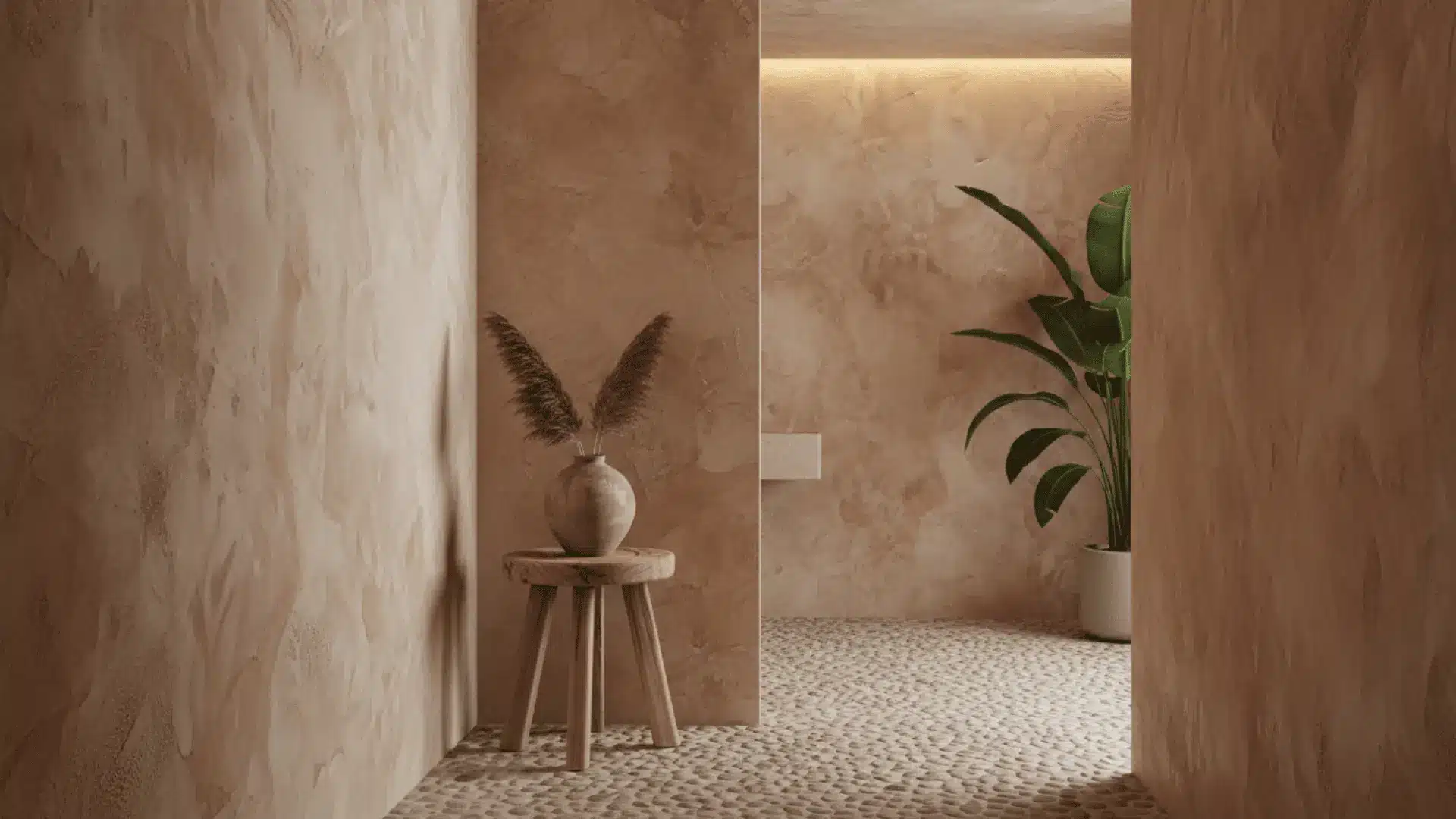
Stone and clay bring an earthy, grounded feel to interiors. Exposed stone walls, clay tiles, or textured plaster work well in bathrooms, kitchens, and entryways.
These materials age naturally and develop character over time, unlike synthetic finishes. This idea suits homes going for a rustic or minimalist look.
- Limewash paint mimics natural clay texture
- Stone tiles work well in high-traffic areas
- Pairs nicely with wood and metal accents
6. Courtyard-Style Layouts
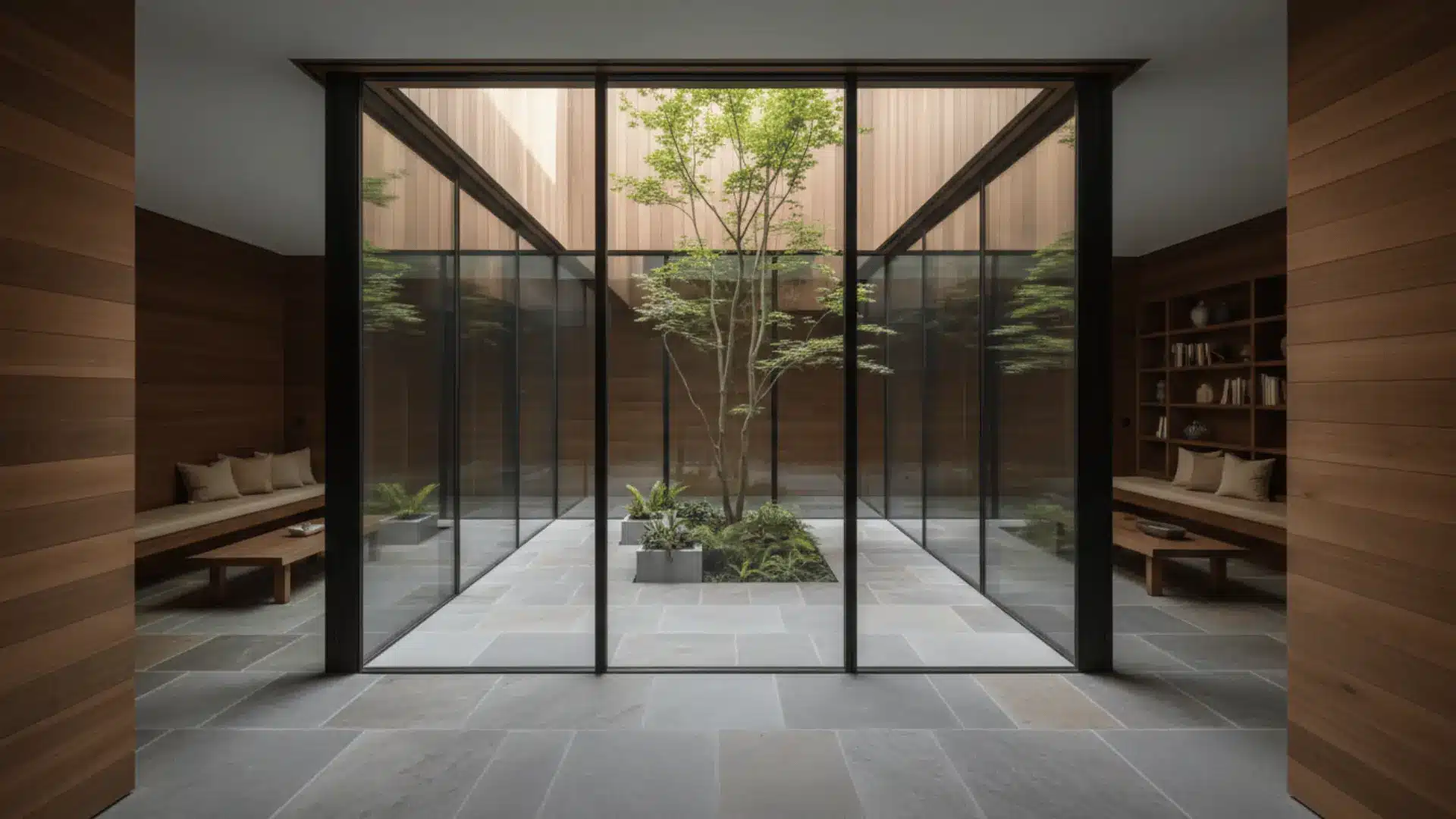
Some homes use a central courtyard to bring the outdoors into everyday life. This layout places a garden, a tree, or an open-sky view at the heart of the house, visible from multiple rooms.
It works especially well in warmer climates. Courtyard designs are a classic example of biophilic interior design used at an architectural level, not just through decor.
- Common in Mediterranean and Southeast Asian homes
- Adds natural light to interior rooms
- Can include seating, plants, or a small pond
7. Botanical Print Wallpaper
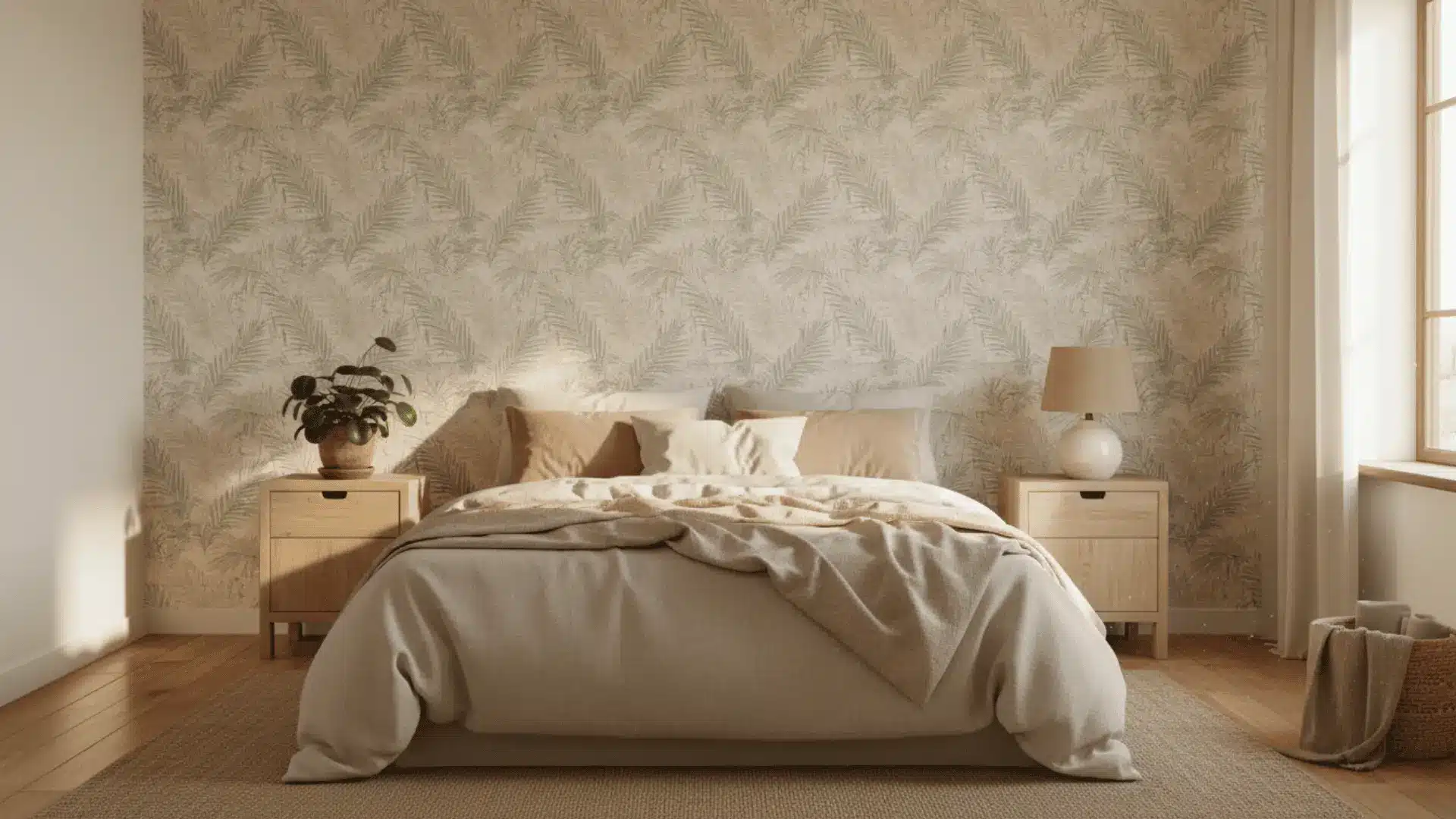
Not every home has room for real plants, and that’s fine. Botanical print wallpaper offers a budget-friendly way to bring nature indoors without any upkeep.
Large leaf patterns or soft floral prints work well in bedrooms and powder rooms. This idea proves biophilic interior design doesn’t always require live greenery to feel authentic and calming.
- Choose matte finishes for a natural look
- Pair with wood furniture for balance
- Works well as an accent wall
8. Skylights Over Living Spaces
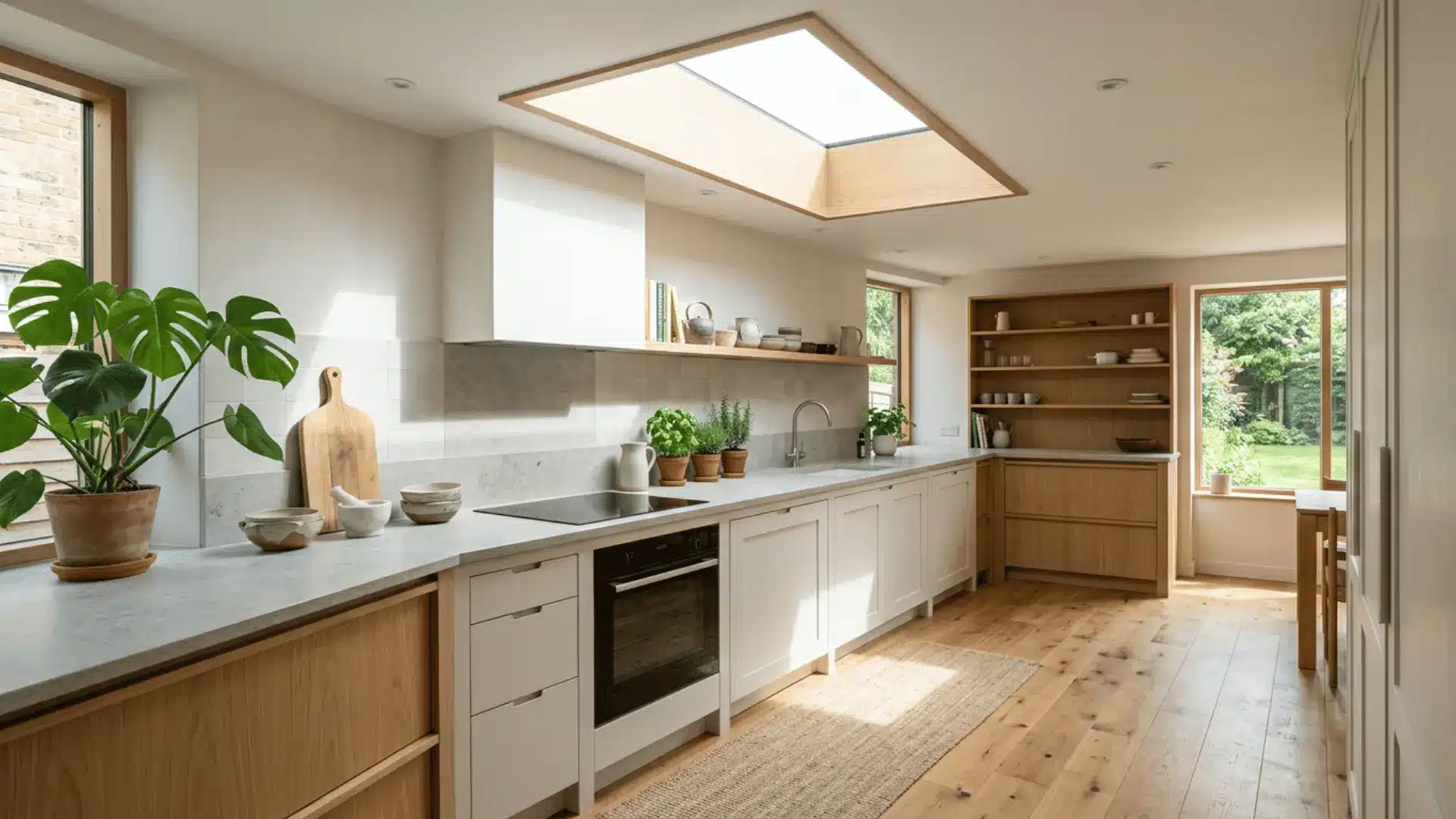
Adding a skylight changes how a room feels throughout the day. Sunlight shifts and moves across the floor, connecting the space to the sky above.
This works especially well over kitchens, staircases, and reading areas where extra light is welcome. Skylights are a structural way to practice biophilic interior design without adding furniture or decor.
- Reduces the need for artificial lighting
- Best suited for top-floor rooms
- Can include shades for temperature control
9. Terrariums as Decor
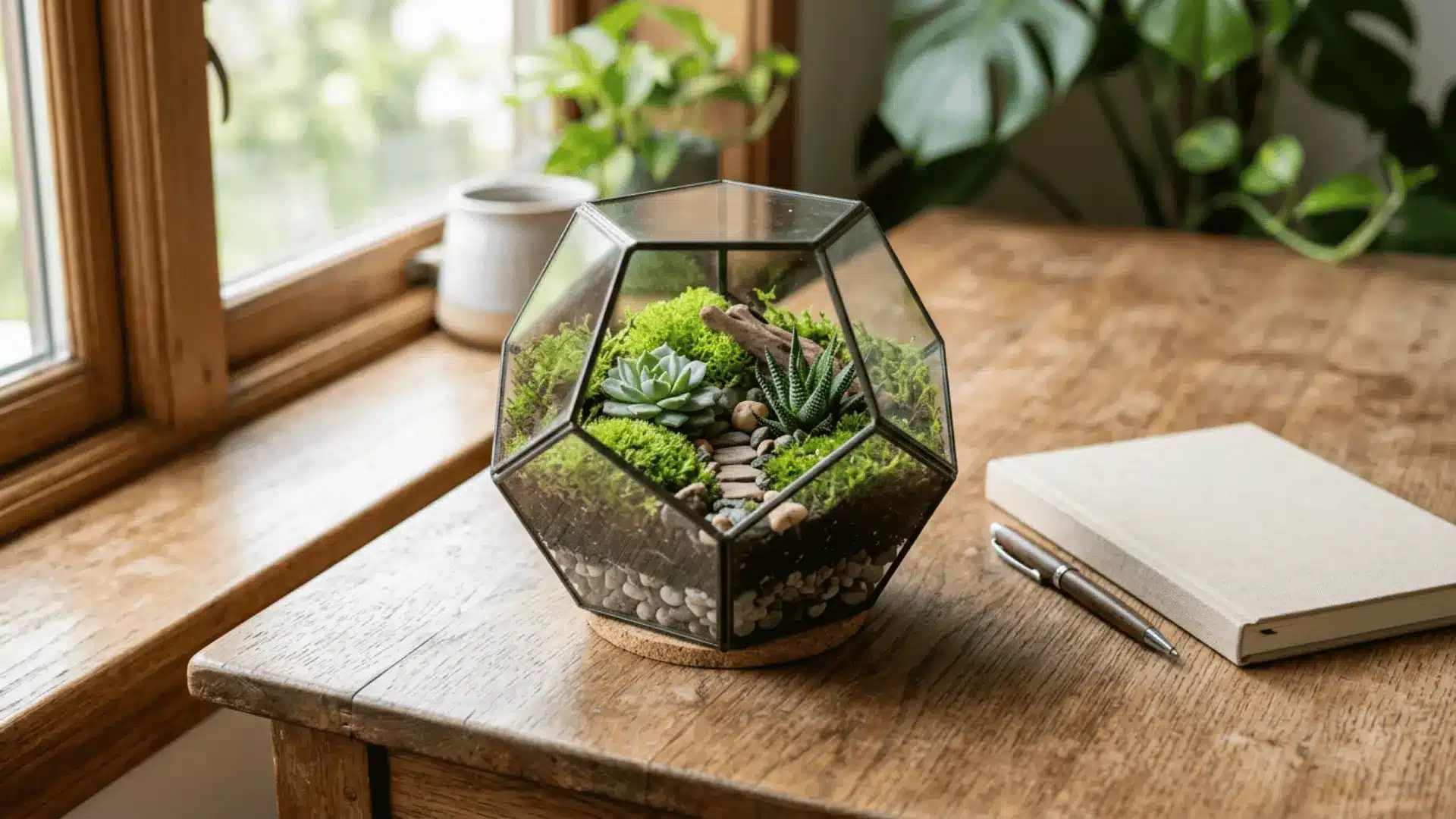
I keep a small terrarium on my desk, and it has become the first thing I check on each morning. These enclosed glass gardens hold moss, succulents, or ferns and need very little care.
They bring a piece of nature into tight spaces like shelves, desks, or windowsills. Terrariums are a low-effort entry point into biophilic interior design for beginners.
- Choose glass containers with wide openings
- Use pebbles for drainage at the base
- Ideal for offices and small apartments
10. Natural Fiber Textiles
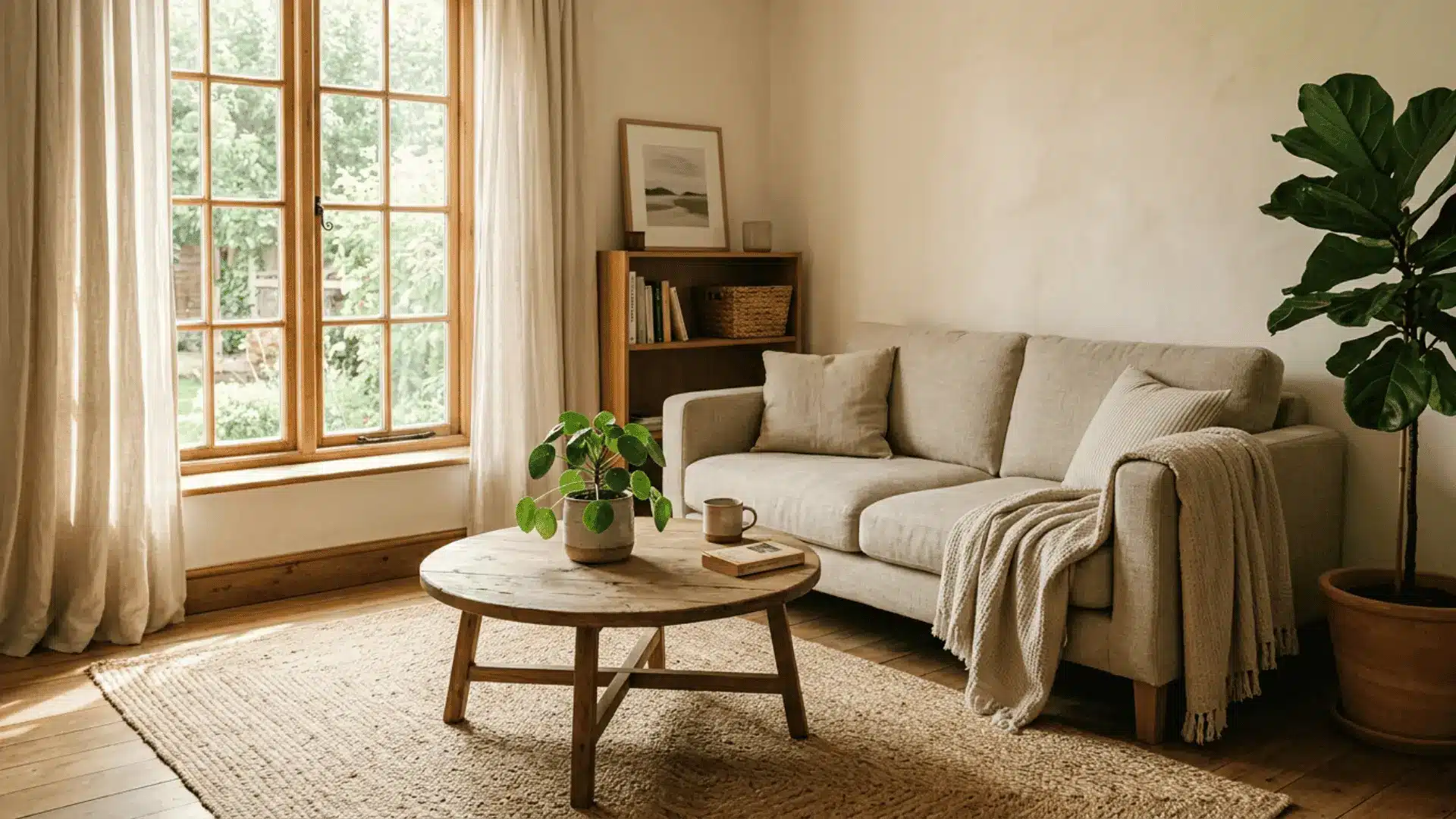
Jute rugs, linen curtains, and cotton throws add texture without visual clutter. These materials feel different from synthetic fabrics and often hold up better over time.
Swapping out synthetic textiles is one of the simplest updates within biophilic interior design, especially for renters who cannot make structural changes.
- Jute and sisal work well for high-traffic rugs
- Linen curtains allow soft natural light through
- Cotton throws add texture to seating areas
11. Rooftop and Balcony Gardens
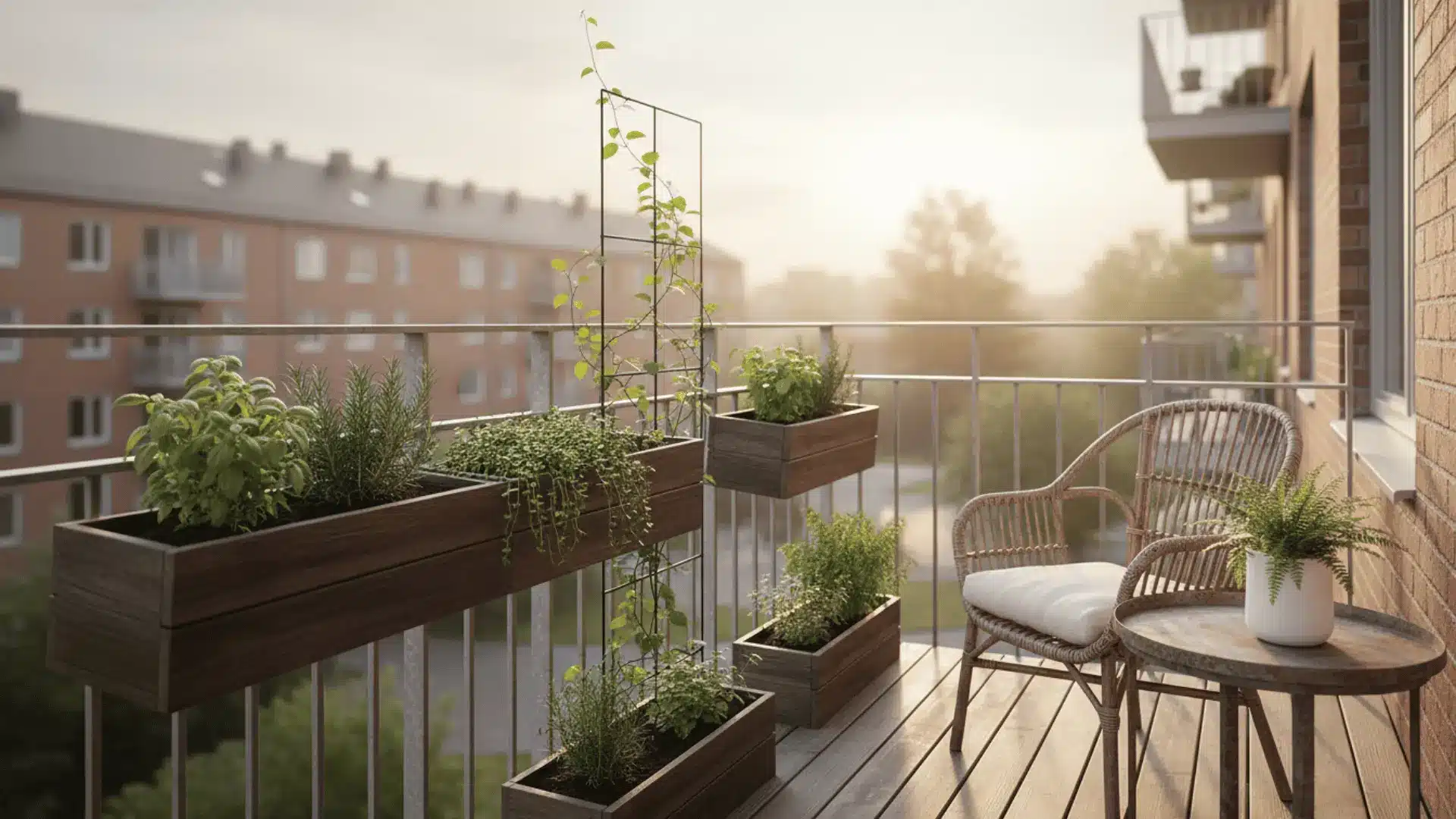
My neighbor turned her small balcony into a mini garden with potted herbs and climbing vines, and now it’s the best-looking spot in the building.
Rooftop and balcony spaces offer a direct way to practice biophilic interior design outside the main living area. Even a few pots can shift how a home feels from the inside out.
- Use railing planters to save floor space
- Choose drought-tolerant plants for easier care
- Add a small chair for outdoor seating
12. Open Shelving With Natural Objects
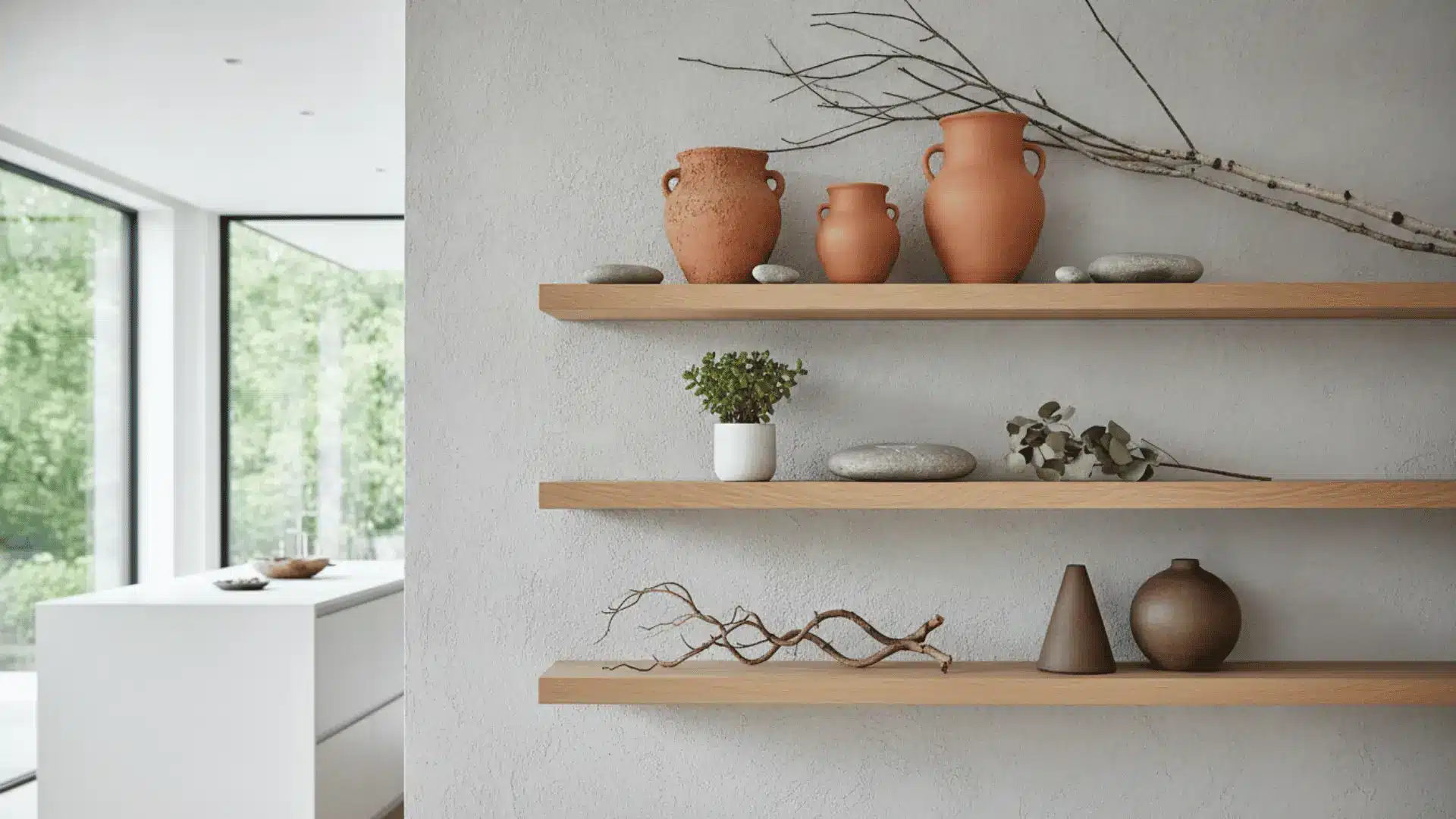
Open shelves filled with dried branches, stones, or clay pottery bring texture without heavy decorating. This approach works in kitchens, living rooms, and hallways where storage doubles as display.
Unlike closed cabinets, open shelving keeps natural materials visible and part of the daily view, which is central to biophilic interior design.
- Mix heights and shapes for visual interest
- Avoid overcrowding shelves
- Rotate items seasonally for a fresh look
13. Reclaimed Wood Furniture
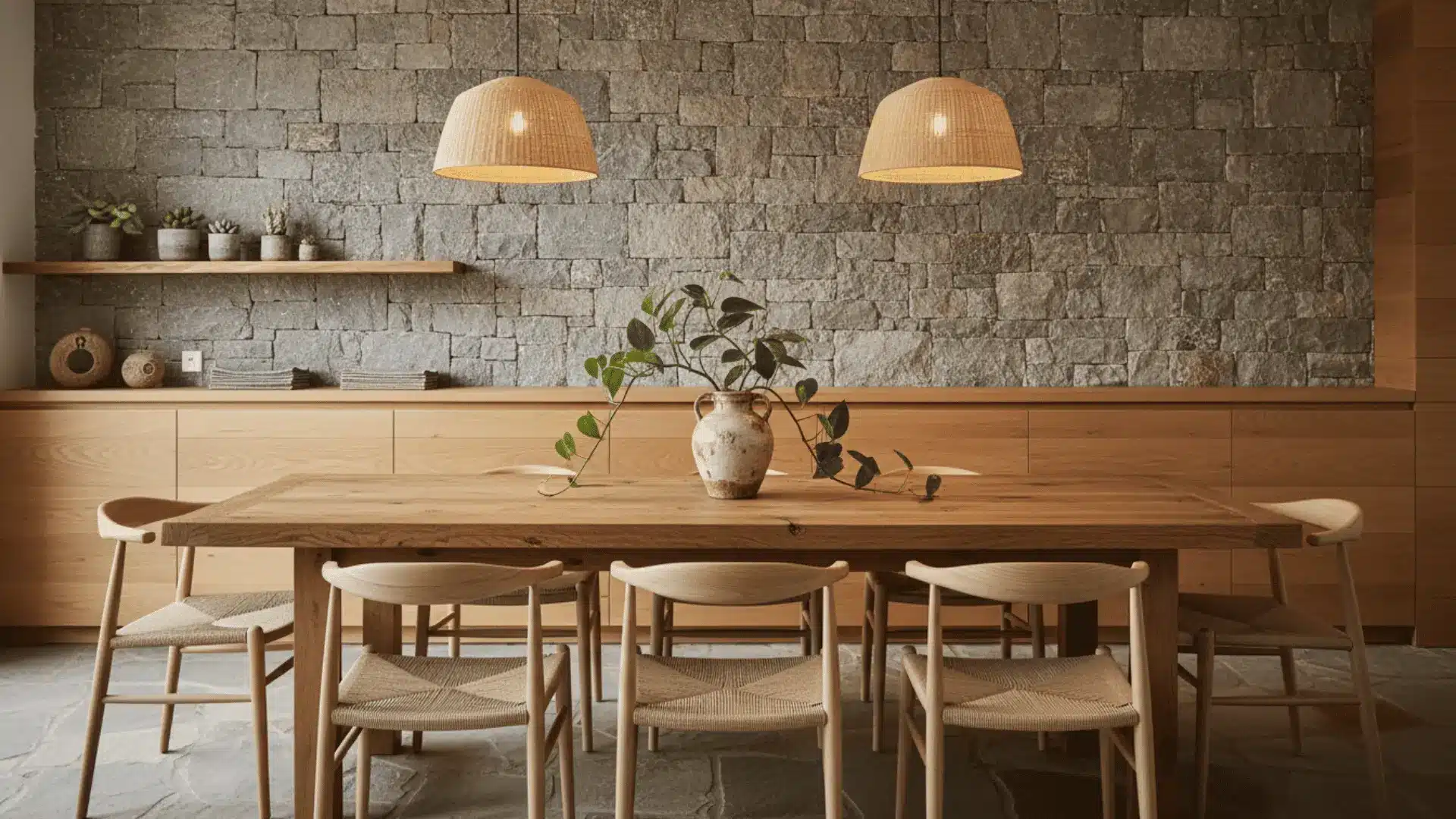
Furniture made from reclaimed wood carries marks and grain patterns that new lumber simply can’t match. Each scratch or knot tells a small story about where the piece came from.
This furniture style pairs naturally with stone, plants, and soft lighting. Choosing reclaimed pieces is one of the more sustainable approaches in biophilic interior design, as it reduces waste while adding warmth.
- Look for barn wood or salvaged pallets
- Sand lightly to avoid losing character
- Works well as dining tables or shelving units
14. Moss Art Panels
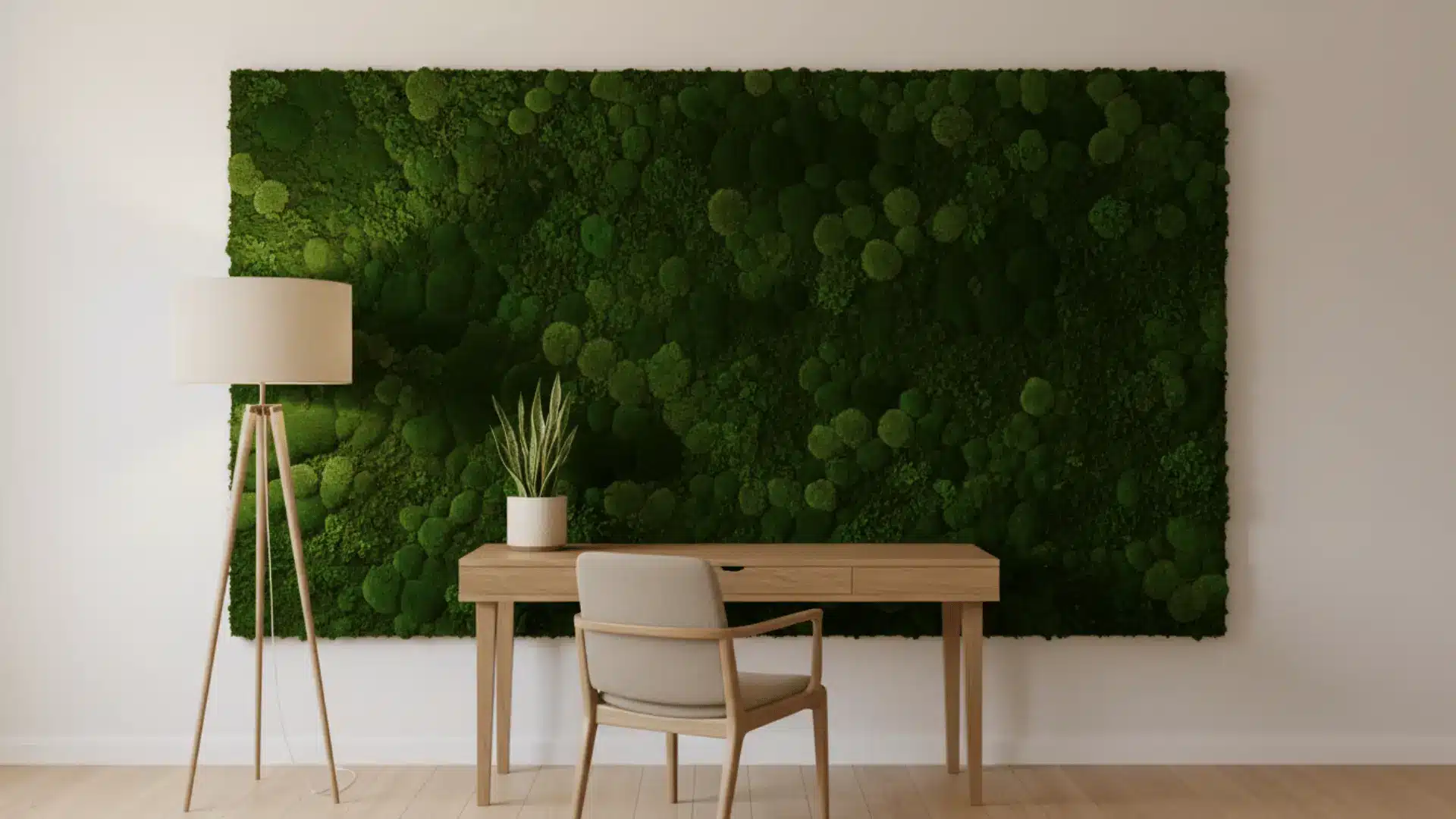
Preserved moss panels need no water, sunlight, or maintenance, yet they still deliver a soft, green texture on walls. These panels slightly absorb sound, making them useful in home offices or living rooms.
Moss art has grown in popularity because it solves a common problem: the desire for greenery without the responsibility of plant care.
- Lasts several years without watering
- Comes in tiles or custom shapes
- Best kept away from direct sunlight
15. Herb Gardens in the Kitchen
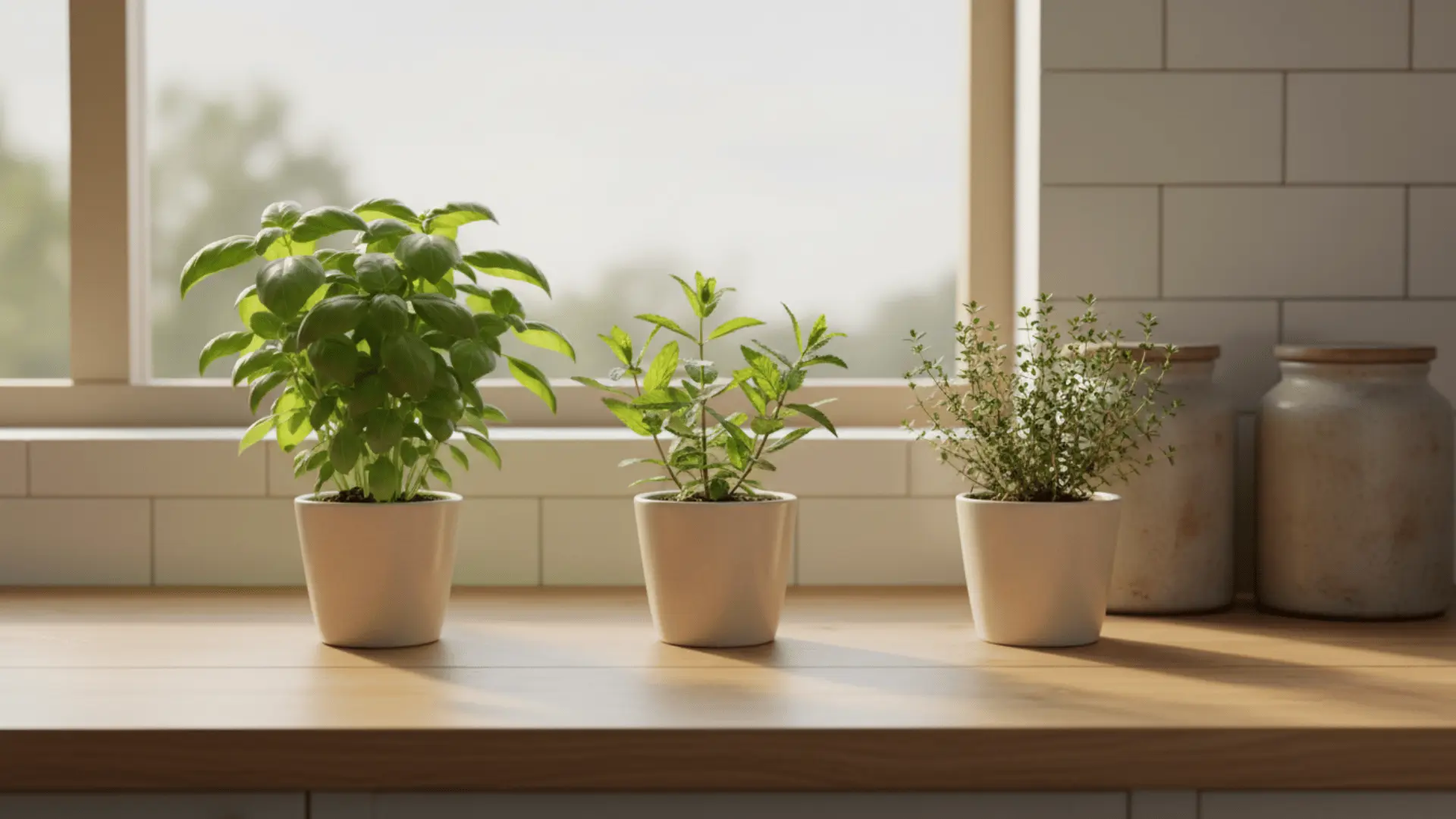
I keep a small row of potted basil and mint on my kitchen windowsill, and cooking feels different when the ingredients are right there.
Kitchen herb gardens combine functionality with a natural look, since the plants are used regularly rather than left untouched.
This idea fits well into biophilic interior design because it ties nature directly to daily routines.
- Choose a sunny, south-facing window
- Basil, mint, and thyme are easy starters
- Use matching pots for a tidy look
16. Curved Furniture Silhouettes
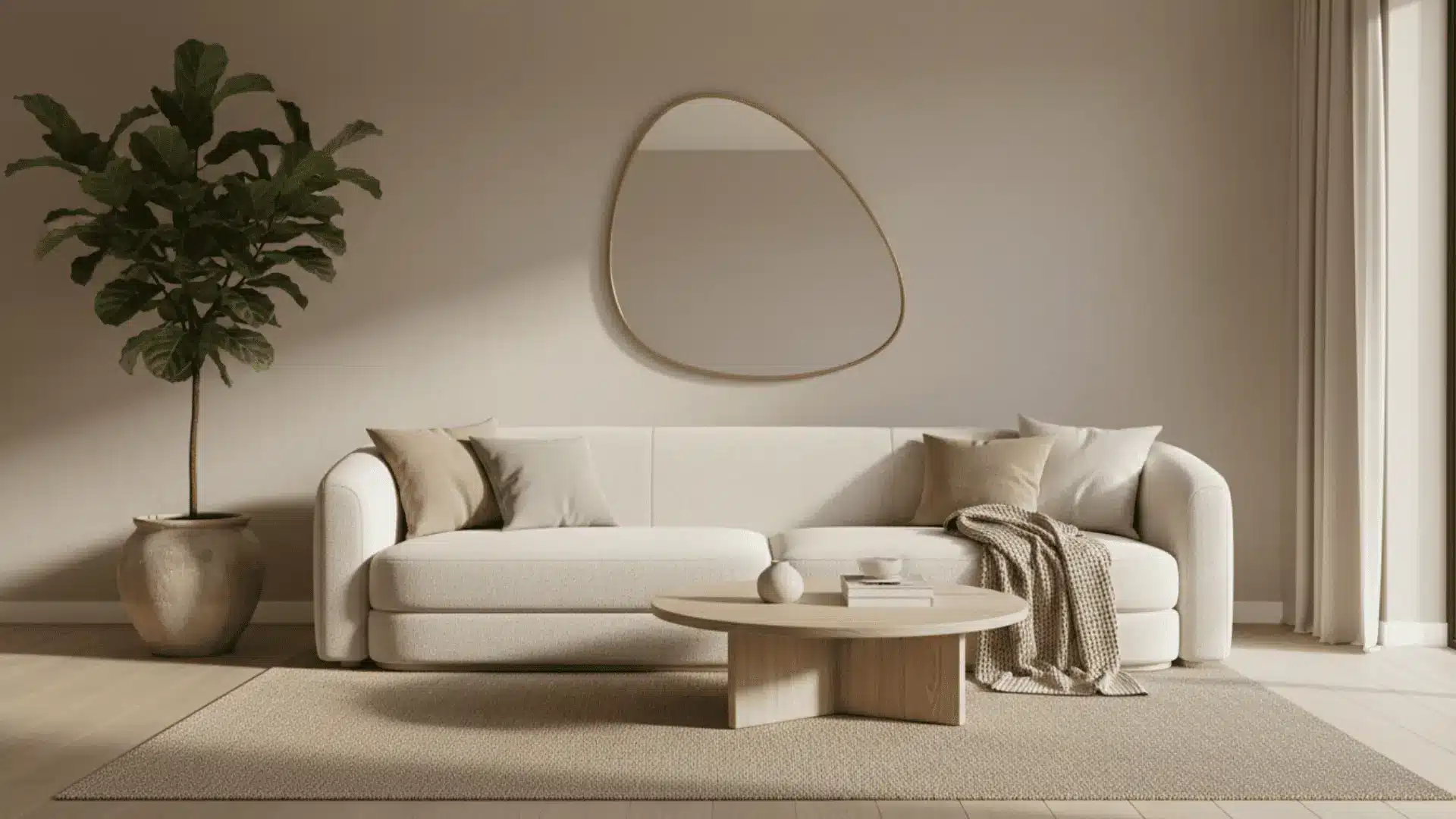
Sharp corners and rigid lines rarely appear in nature. Curved sofas, round coffee tables, and organic-shaped mirrors soften a room and mimic natural forms like river stones or tree branches.
This shift away from boxy furniture is subtle, but it changes how a space feels to move through. Many modern homes use curved pieces as an entry point into biophilic interior design.
- Round tables work well in small dining areas
- Curved sofas suit open floor plans
- Pair with soft, natural fabrics
17. Cork Wall Panels
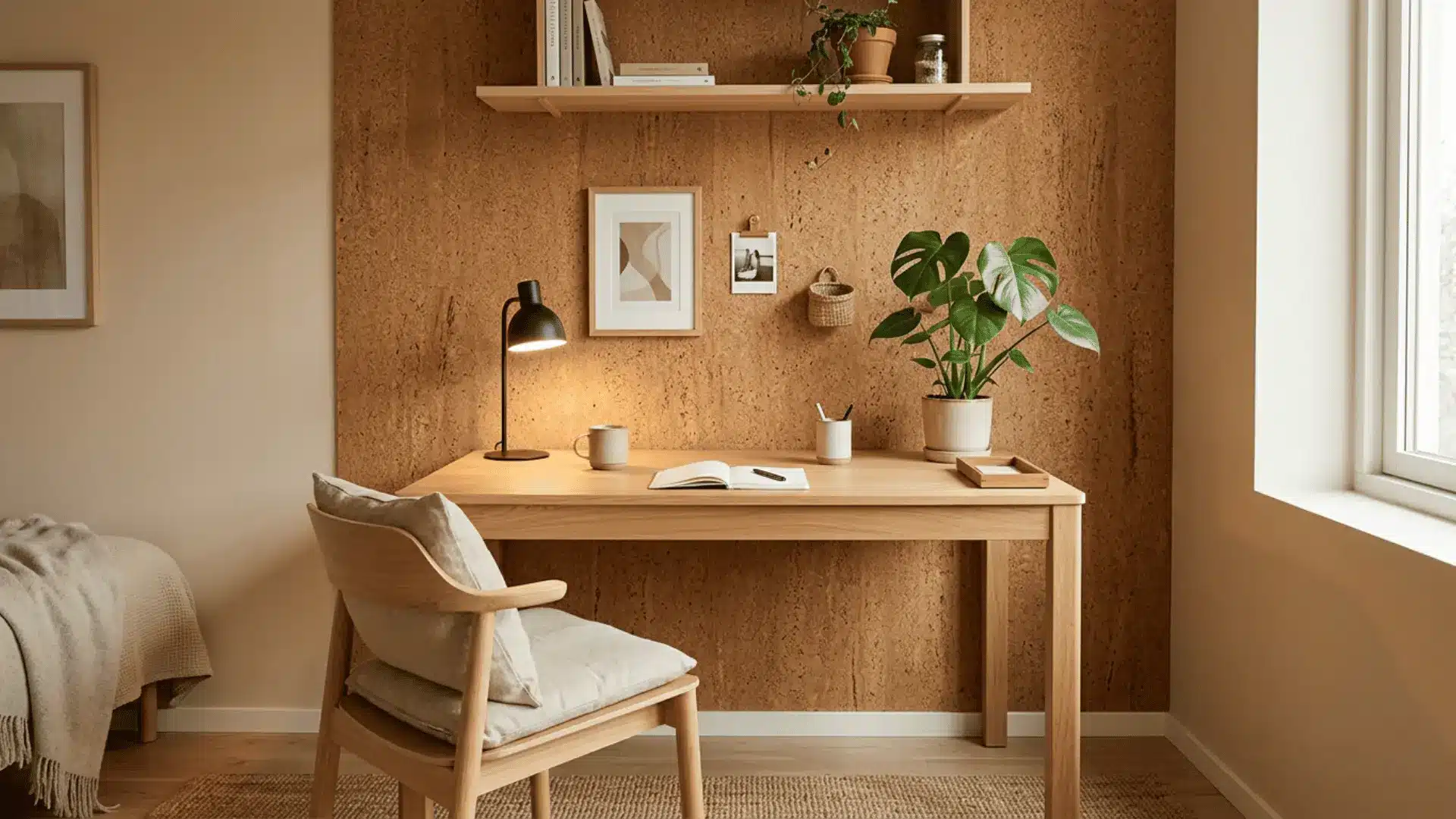
Cork is a natural material that offers texture, warmth, and even sound insulation. Wall panels made from cork bring a soft, earthy tone to a room while also softening noise from hallways or shared walls.
This makes cork a practical choice for apartments. It fits within biophilic interior design as a material that serves both form and function.
- Available in tiles or large sheets
- Naturally resists mold and moisture
- Works well in home offices and bedrooms
18. Garden View Home Offices
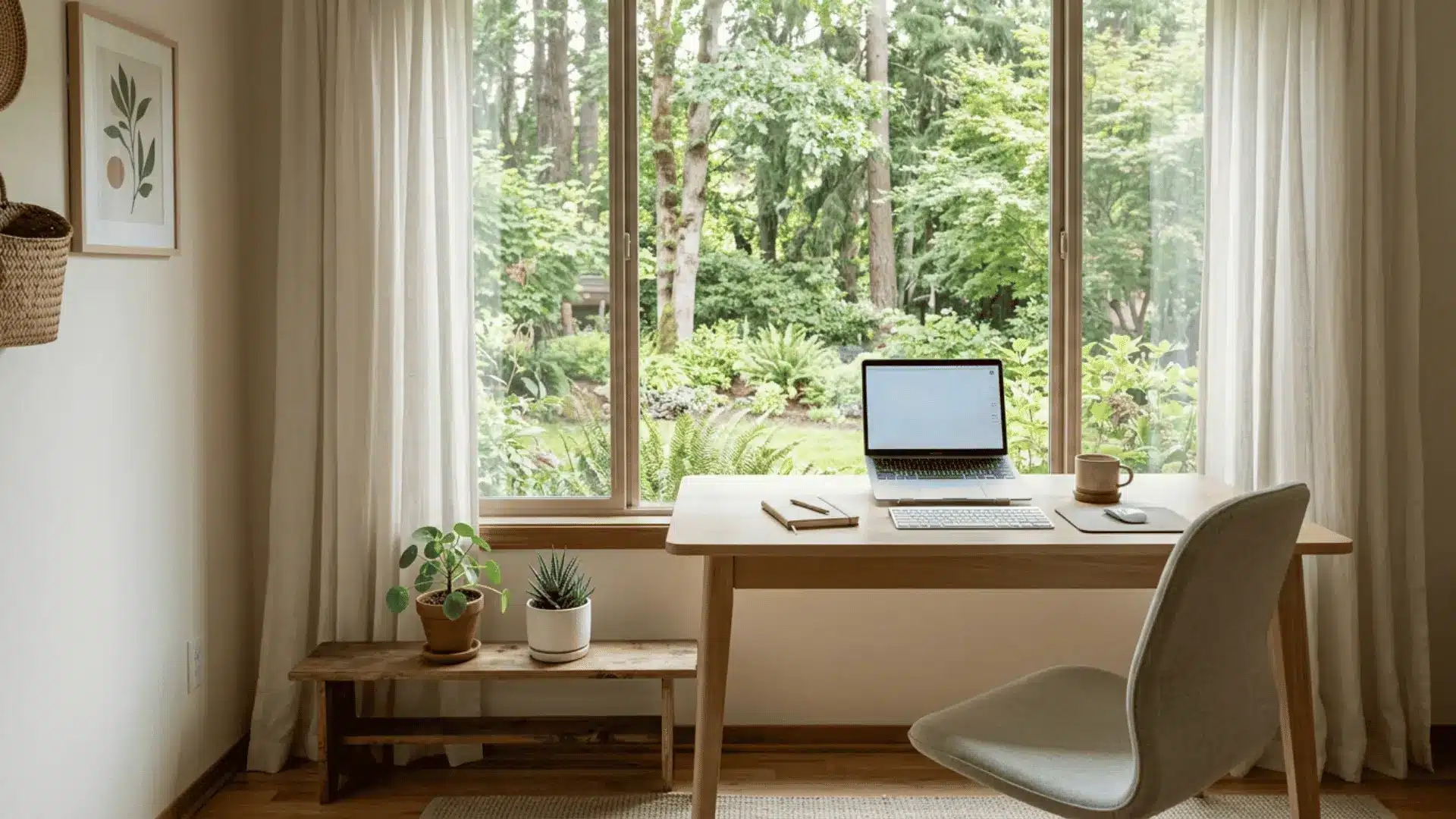
My friend moved her desk next to a window facing her backyard, and she says she gets fewer headaches by the end of the workday.
Positioning a home office to face a garden or tree line gives the eyes a natural break during long hours. This setup shows how biophilic interior design can directly support health, not just appearance.
- Position the desk perpendicular to the glare
- Add a low shelf of plants nearby
- Use sheer curtains to soften harsh light
19. Bamboo Room Dividers
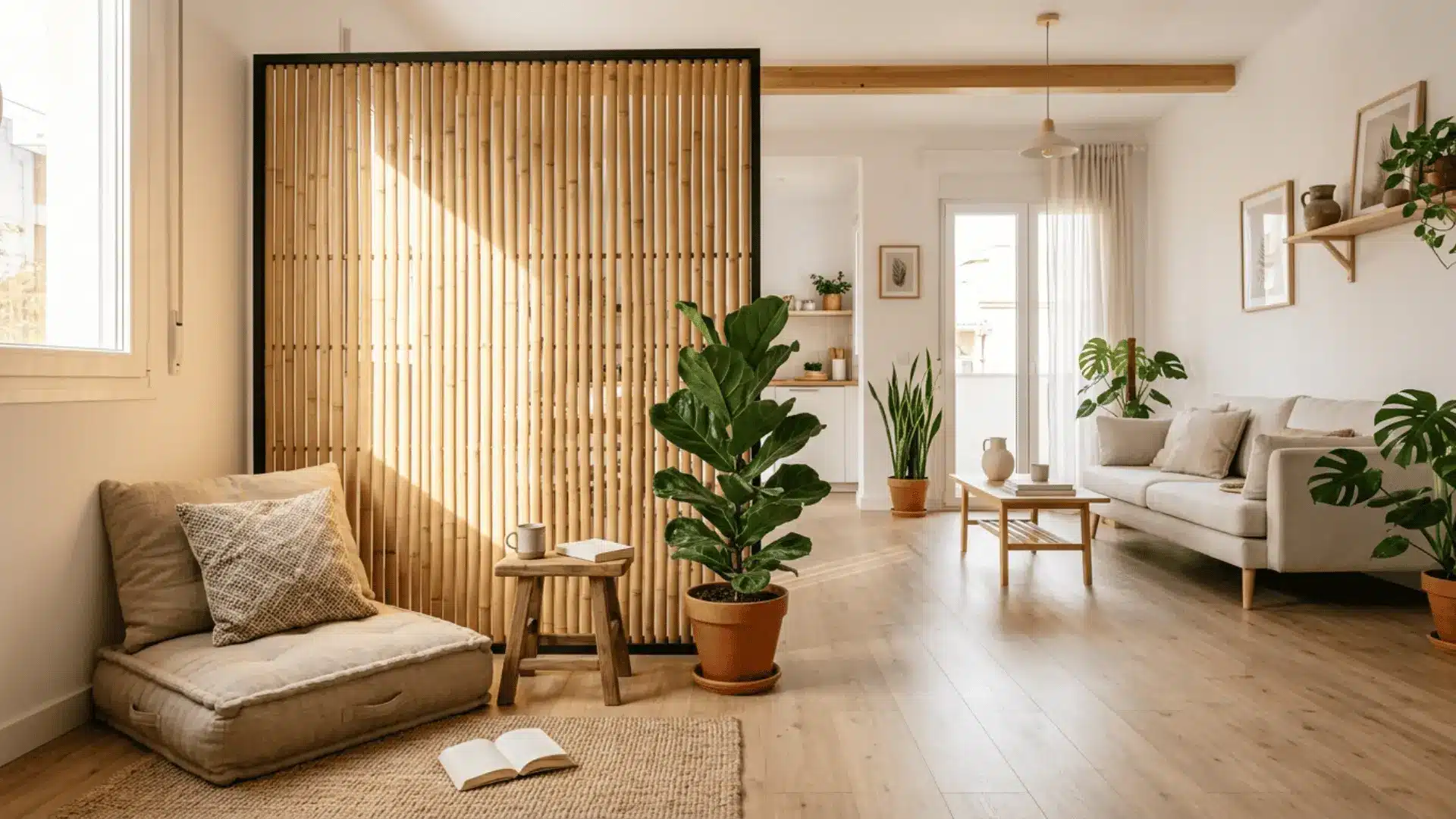
Bamboo dividers create separation in open floor plans without closing off light or airflow. The thin, natural slats let sunlight through while still defining a reading nook or workspace.
This material choice fits well within biophilic interior design because it uses a renewable resource that ages gracefully over time.
- Choose foldable panels for flexible layouts
- Pair with floor cushions for a relaxed feel
- Works well in studios and open-plan homes
20. Pebble and River Rock Flooring Accents
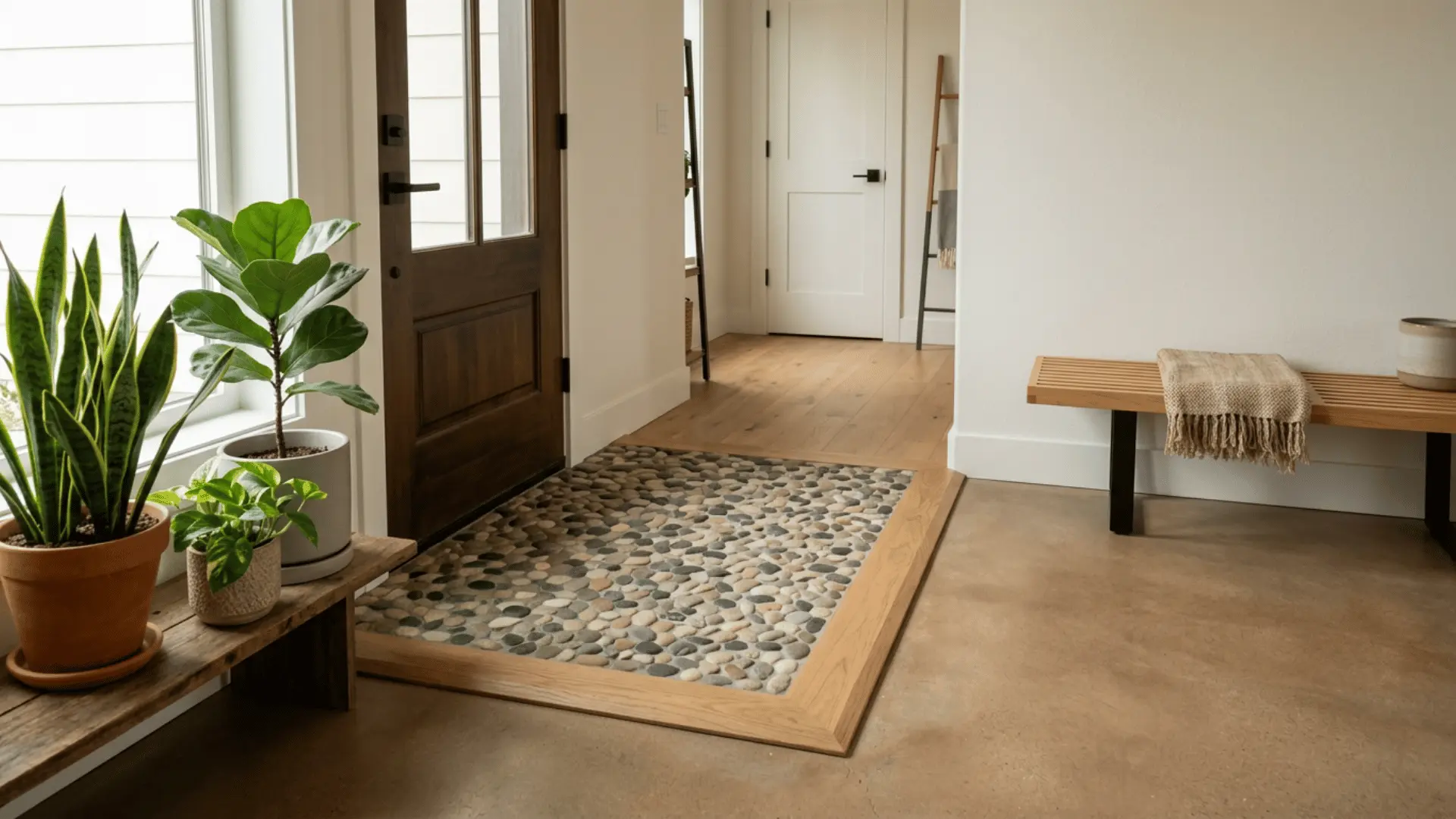
Small sections of pebble flooring, often placed near entryways or under plant displays, add texture underfoot that most homes skip entirely.
These accents work best in transitional spaces rather than full rooms, since they draw attention without overwhelming the layout.
This detail shows how biophilic interior design can appear in unexpected, small doses.
- Best suited for entryways and mudrooms
- Pairs well with wood threshold strips
- Requires a flat, sealed base for stability
21. Sunroom Extensions
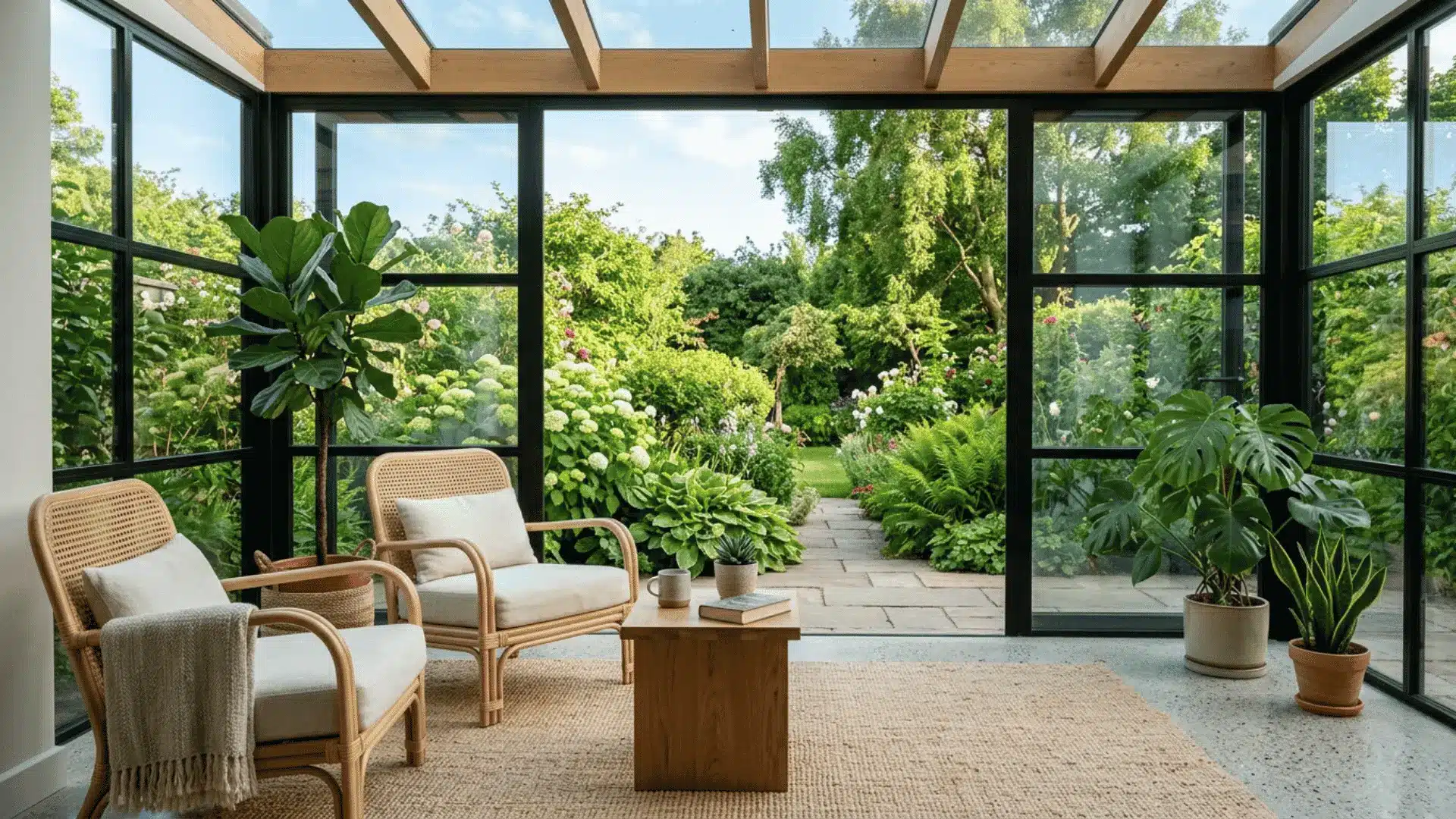
I visited a friend’s sunroom last spring, and the glass walls made the space feel as if it were floating between the house and the yard.
Sunroom additions surround a room with windows on most sides, blurring the line between indoor and outdoor living.
This is one of the more ambitious applications of biophilic interior design, since it involves construction rather than decor alone.
- Best facing south or east for light
- Add ceiling fans for airflow in warmer months
- Furnish with natural fiber seating for comfort
How to Start Biophilic Interior Design on a Budget
A tight budget doesn’t have to keep you from bringing nature indoors. Small, low-cost changes can still make a real difference in how a room feels.
- Start With One Plant: A single low-maintenance plant, such as a pothos or snake plant, is an affordable first step toward biophilic interior design.
- Use Natural Light Better: Move furniture away from windows and swap heavy curtains for sheer ones to let more sunlight in for free.
- Add Natural Textures With Textiles: A cotton throw, jute rug, or linen pillow cover adds texture without any major spending.
- Repurpose Old Wood: Sand down an old shelf or table instead of buying new furniture with synthetic finishes.
- Bring in Dried Botanicals: Dried branches, pampas grass, or preserved leaves offer a natural look with zero upkeep cost.
- Open Windows When Possible: Fresh airflow costs nothing and instantly makes a space feel more connected to the outdoors.
- Shop Secondhand for Natural Materials: Thrift stores often carry pieces made of wood, stone, or clay at a fraction of retail prices.
- DIY a Terrarium: A glass jar, some pebbles, and a small succulent create an easy, low-cost display.
Biophilic Decor Ideas for Small Spaces
The Biophilic Decor Ideas focus on height, walls, and light instead of square footage.
- Use Vertical Planters: Wall-mounted planters or hanging shelves add greenery without taking up any floor space.
- Choose Multi-Level Shelving: Layered shelves let you display plants and natural objects at different heights in one small area.
- Add a Single Statement Plant: One large plant, like a fiddle leaf fig, can have more impact than several small ones scattered around.
- Hang Botanical Art Instead of Live Plants: Framed leaf prints or pressed botanicals bring a natural look when floor space is limited.
Common Mistakes to Avoid With Biophilic Interior Design
A few common missteps can hold back an otherwise good plan. Knowing what to avoid saves time, money, and wasted effort.
| Common Mistake | Better Approach |
| Overcrowding a room with too many plants | Choose a few well-placed plants for a balanced biophilic interior design |
| Ignoring the amount of natural light a room gets | Match plant and material choices to actual light conditions |
| Using only fake plants for convenience | Mix real and artificial greenery to keep the space feeling authentic |
| Choosing synthetic materials over natural ones | Use wood, stone, or clay wherever the budget allows |
| Forgetting about proper ventilation | Keep windows operable or add fans to support fresh airflow |
| Placing plants without checking their care needs | Pick species that match your schedule and lighting setup |
| Focusing only on decor and skipping structure | Consider window placement and layout, not just accessories |
| Copying trends without personal function | Design around how the space is actually used day to day |
Final Thoughts
Biophilic interior design isn’t about following every idea at once. It’s about choosing what fits your space, budget, and daily habits.
Maybe you start with one plant on a windowsill. Maybe you swap out heavy curtains for something lighter. Small changes add up faster than you might expect, and you don’t need a full renovation to feel the difference.
What matters most is how your home makes you feel once you’re in it. A room with natural light, a bit of greenery, and honest materials tends to feel calmer than one without.
Have you tried any of these ideas already, or are you planning your first step? Share your experience in the comments below.
Frequently Asked Questions
What are the 14 Patterns of Biophilic Design?
A framework of 14 nature-based design strategies grouped into Nature in the Space, Natural Analogs, and Nature of the Space.
What are Biophilic Wall Colors?
Soft, natural tones like greens, earthy browns, muted blues, warm neutrals, and stone-inspired shades that echo nature.
What are the Disadvantages of Biophilic Design?
Biophilic design can be costly to install and maintain, may require additional water/HVAC/pest control, and can create issues such as allergies or poor performance if natural elements are not managed well.

With a Master in Architectural Studies from University of Pennysylvania, Marwa Haydar has pioneered living spaces since 2005. Her expertise, initially honed in a prestigious architectural firm, is evident in her approach to creating environments. Marwa became part of our team in 2019 and has since been a driving force in our home improvement section, known for her practical yet stylish solutions. She’s been spearheading our design workshops since then, infusing her passion for teaching into her work. In her leisure time, Marwa enjoys exploring historic architecture and is an enthusiastic pottery hobbyist, further enriching her understanding of form and texture.