
If you’ve ever stood in a furniture showroom wondering if you need a chest of drawers or a dresser, you’re not alone.
The terms get used interchangeably by shoppers, salespeople, and even some product listings, which only adds to the confusion.
But the pieces aren’t identical, and knowing the difference can save you from a purchase that doesn’t fit your room. As a furniture consultant with years of experience helping homeowners plan rooms that actually work, both visually and practically.
In this guide, I’ll break down the chest of drawers vs dresser question by shape, size, storage style, cost, and room fit.
By the end, you’ll know exactly which piece suits your space, storage habits, and budget, so you can walk into your next furniture decision with confidence rather than guesswork.
What is a Chest of Drawers?
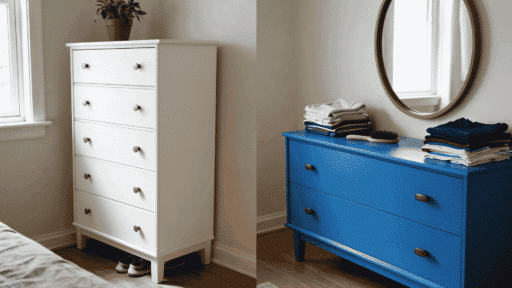
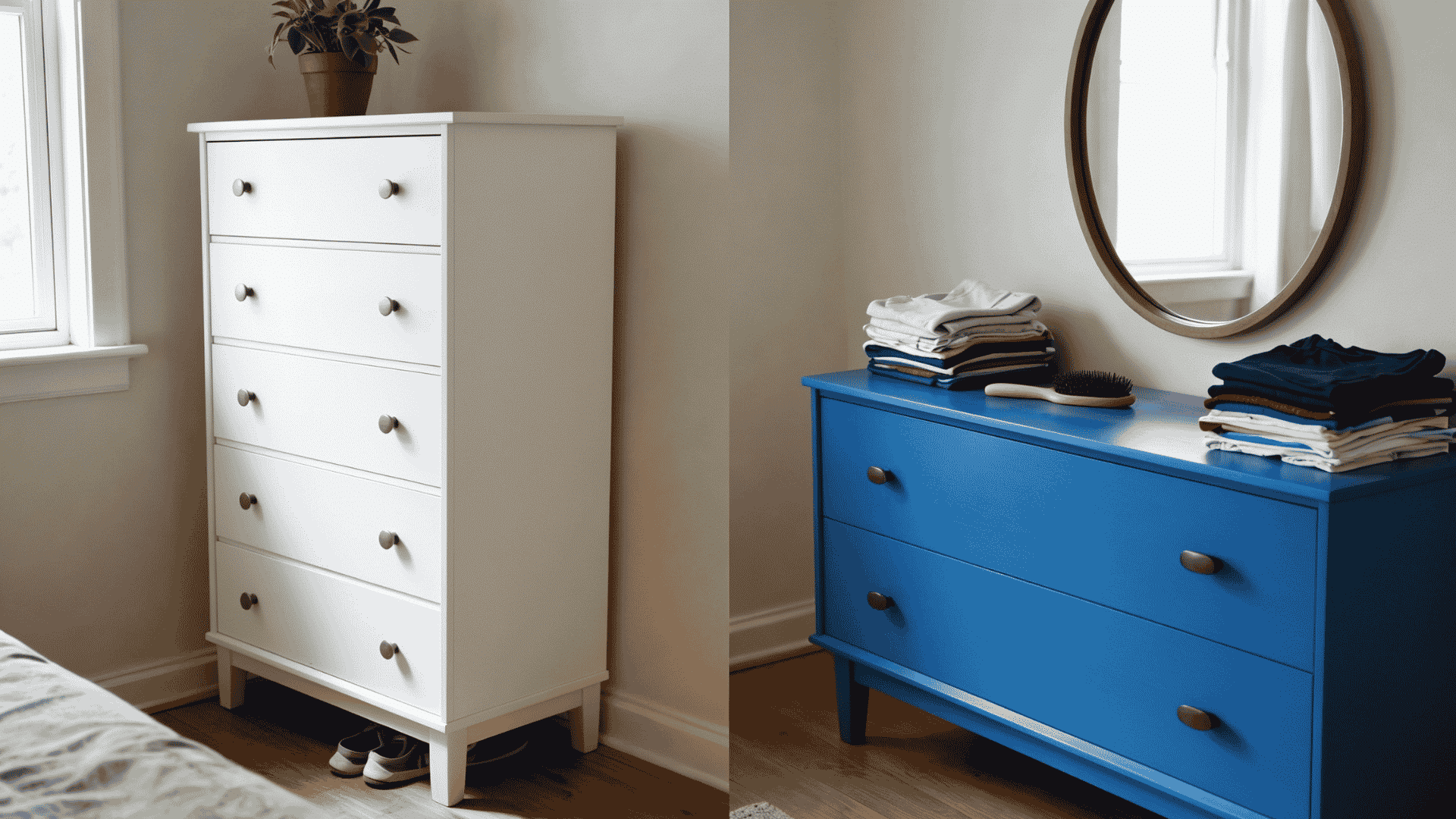
A chest of drawers is a tall, narrow storage cabinet with drawers stacked directly on top of each other. It’s built for vertical efficiency rather than width, which makes it useful in rooms with tight floor space.
Most chests of drawers stand between 44 and 60 inches tall and 24 to 38 inches wide, according to Lowe’s buying guide.
Because the drawers stack vertically, each one tends to hold a specific clothing category, like socks in one and folded shirts in another.
This layout works well for people who prefer sorted, compact storage rather than a single large open drawer.
Chests of drawers are also common in closets, since their narrow frames slide into tight corners that other furniture can’t reach.
Now that we’ve covered what a chest of drawers actually is, let’s look at how a dresser differs in shape and function.
What is a Dresser?
A dresser is a lower, wider piece of bedroom furniture with drawers arranged side by side instead of stacked.
Wayfair lists a standard dresser at around 33 inches high, 52 inches wide, and 19 inches deep, which is noticeably lower and broader than a typical chest.
Dressers are often paired with a mirror, which is part of why people associate them with dressing and grooming.
The wider drawers also tend to be deeper, giving more flexibility for folded clothes, linens, or accessories that don’t fit neatly into a narrow chest drawer.
Some dressers also come as matching bedroom sets, paired with nightstands or a headboard for a coordinated look.
Understanding both pieces individually sets up the next section, where we compare them directly in terms of shape, depth, and space.
Chest of Drawers vs Dresser: Key Differences
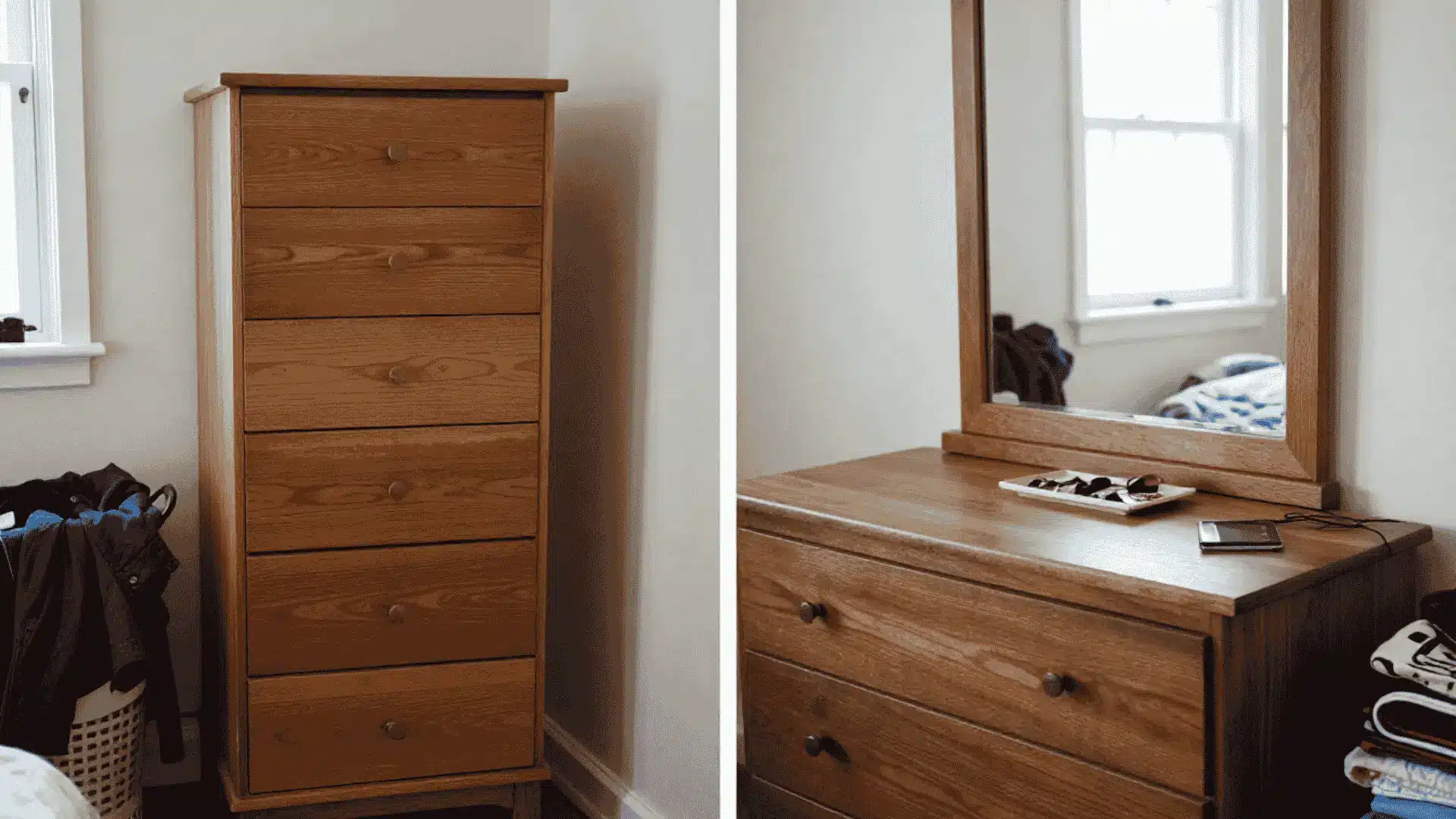
The core difference between a chest of drawers vs nd dresser comes down to shape and proportion.
A dresser is wide and low, while a chest of drawers is tall and narrow, and that single distinction drives almost every other difference between them.
1. Shape and Footprint
Shape and footprint describe how much floor and wall space each piece needs in a bedroom layout.
| Chest of Drawers | Dresser |
|---|---|
| Stays narrow and compact. | Spreads out horizontally. |
| Fits well in tight corners, small bedrooms, or awkward spaces. | Usually needs a wider open wall. |
| Works where larger furniture may not fit. | Often runs about 30 to 70 inches long. |
| Best for saving floor space. | Best for rooms with more wall space. |
2. Drawer Layout and Depth
Drawer layout and depth affect how well each piece handles different types of clothing, linens, and everyday accessories.
| Chest of Drawers | Dresser |
|---|---|
| Has more uniform and shallower drawers. | Has deeper and more varied drawers. |
| Works best for sorted items like socks, folded shirts, and undergarments. | Gives more room for bulkier items like sweaters and thicker clothing. |
| Helps keep clothing organized by category. | Works better for storing a mix of clothing types in one piece. |
3. Surface Space and Mirror Use
Surface space and mirror use come down to how much tabletop function you actually want from the furniture.
| Chest of Drawers | Dresser |
|---|---|
| Has a smaller top surface because the design focuses on vertical storage. | Offers a much wider top surface for daily use. |
| Gives limited space for decor or display items. | Can hold lamps trays folded clothes or accessories. |
| Usually does not work as well for a morning routine area. | Often pairs with a mirror and works well for getting ready. |
4. Material and Build
Material and build determine how sturdy each piece feels over time and how well it holds up.
| Chest of Drawers | Dresser |
|---|---|
| Usually has a lighter frame because of its narrow shape. | Often needs stronger internal support because of its wider body. |
| Does not need as much bracing to stay stable. | Needs better support to prevent sagging or warping. |
| Works well for lighter vertical storage. | Handles more everyday weight across a wider surface. |
5. Style and Weight
Style and weight shape how each piece feels visually within a bedroom’s overall layout and design balance.
| Chest of Drawers | Dresser |
|---|---|
| Feels compact and upright. | Feels heavier and more grounded. |
| Works like a vertical accent piece. | Anchors the wall with a wide presence. |
| Fits neatly into corners or smaller spaces. | Makes a stronger visual statement in the room. |
Which Fits Your Room Best?
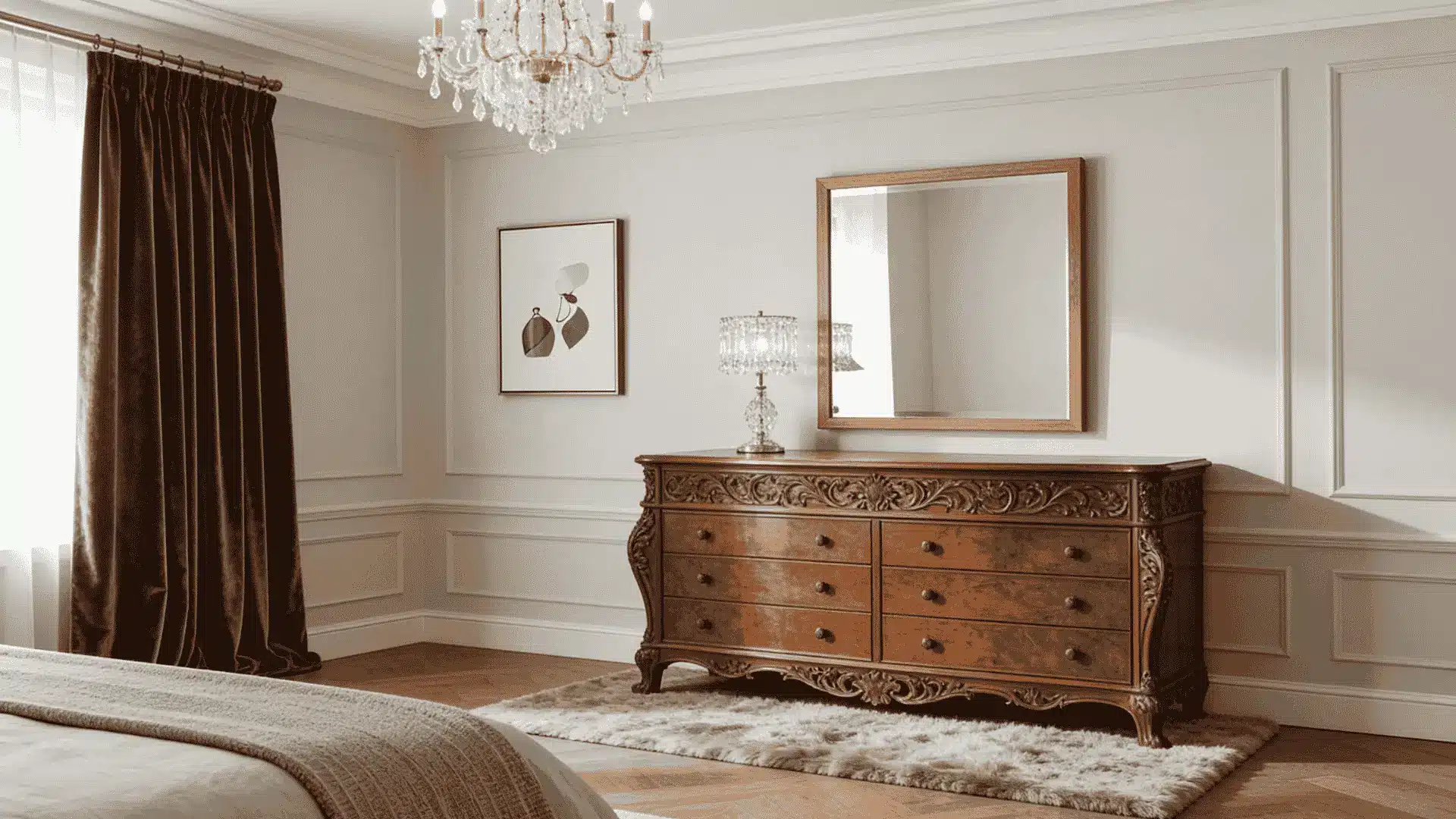
Room size is usually the deciding factor.
A chest of drawers works well in small bedrooms, guest rooms, or narrow alcoves where a wide dresser wouldn’t fit comfortably. Its vertical shape keeps the floor clearer.
A dresser tends to work better in larger primary bedrooms, where a wide piece can anchor a wall and double as a display surface.
If you have space for both a bed and a sizable dresser without crowding the room, the dresser is often the more functional choice.
Small Bedrooms
In a small bedroom, every inch of floor space matters more than most people realize when planning furniture. A chest of drawers lets you store just as many clothes without eating into the walking path around your bed.
This keeps the room feeling open rather than cramped, since the vertical design uses height rather than width to store your belongings.
Larger Bedrooms
Larger bedrooms can accommodate a dresser’s width without feeling crowded or off-balance in the overall layout. The extra wall space also means a dresser can pair with a mirror, artwork, or a small lamp above it.
This creates a more cohesive visual layout for the room, giving the space a finished, intentional look rather than a scattered one.
Shared Rooms
In shared bedrooms, two narrower chests of drawers often work better than one wide dresser placed against a single wall.
This setup gives each person their own dedicated storage without forcing one large piece to dominate the shared wall space.
It also helps avoid arguments over drawer space, since each chest clearly belongs to one person. Room fit naturally leads into how each piece performs for everyday storage habits, which matters just as much as size.
Typical Dimensions Compared
Numbers help make the chest-of-drawers vs. dresser comparison concrete.
- Wayfair’s standard chest example measures 47.5 inches high, 31.5 inches wide, and 15.7 inches deep.
- Its standard dresser example measures 33 inches high, 52 inches wide, and 19 inches deep.
- That’s a meaningful gap;the dresser is roughly 20 inches wider but 14 inches shorter than the chest.
If your room has a narrow wall but decent height clearance, the chest of drawers’ dimensions are likely to work better for your layout.
Keep in mind these are averages, not fixed rules, since sizes vary by brand and collection.
But here is a quick comparison you shows how a chest of drawers and a dresser differ in size, shape, storage capacity, and room fit.
| Feature | Chest of Drawers | Dresser |
|---|---|---|
| Shape | Tall and narrow | Wide and low |
| Typical height | 44 to 60 inches | Around 33 inches |
| Typical width | 24 to 38 inches | 30 to 70 inches |
| Drawer depth | Shallower | Deeper |
| Top surface | Smaller | Larger |
| Mirror use | Less common | More common |
| Best room type | Small bedrooms | Larger bedrooms |
Storage Function and Daily Use
Beyond size, think about what you’ll actually store. A chest of drawers works best for folded, sorted items like shirts, pants, and socks, since its drawers are narrower and more uniform.
It’s a strong fit for people who like categorized storage. A dresser’s wider, deeper drawers handle mixed storage better, including linens, accessories, or bulkier folded items.
If your storage needs vary a lot, the dresser’s flexibility often wins out over the chest’s tighter organization.
- Clothing Storage: If most of what you own is foldable clothing, a chest of drawers keeps things simple and easy to manage.
Each drawer becomes its own category, if that’s socks, undergarments, or folded shirts stacked neatly on top of each other.
This cuts down on digging around in the morning and helps you find items faster, since everything has a clear, dedicated spot rather than a crowded space.
- Mixed Storage: If you store a mix of clothes, linens, and odds and ends, a dresser’s deeper drawers give you far more flexibility. You won’t need to squeeze bulky items into a shallow space built for uniform stacks of folded shirts.
The wider drawers can hold sweaters, towels, or seasonal items side by side, making a dresser the more practical choice for varied, everyday storage needs.
Cost Considerations
Cost should be weighed against material, size, storage value, and room style, not just the sticker price.
- Price usually depends on material, size, and build quality, not just on the type of furniture.
- Dressers may cost more because their wider frames often use more material.
- Chests of drawers can be more affordable because they are narrower.
- A dresser with a mirror or a bedroom set may offer better value when bought as a bundle.
- Compare the price per cubic foot of storage instead of looking only at the sticker price.
- The best choice should balance cost, storage space, and how the piece looks in your room.
Style and Design Options
Both chests of drawers and dressers come in many finishes, from painted wood and natural grain to metal-accented frames. Your existing room decor should guide the finish, hardware, shape, and overall style you choose.
Traditional Styles
Traditional chests of drawers and dressers usually feel classic, decorative, and more formal. They often feature ornate hardware, curved legs, raised details, and darker wood tones.
A traditional dresser may also come with a matching mirror or nightstands, creating a coordinated bedroom set. This style works best when you want warmth, detail, and a timeless look for your furniture.
- Traditional Wood Dresser With Mirror
- Classic Upholstered Dresser
- Classic Chest of Drawers
- Chest of Drawers with a Marble Top
Modern Styles
Modern chests of drawers and dressers focus on clean lines, simple shapes, and minimal details.
They often use flat-panel fronts, smooth hardware, light wood tones, or matte finishes. Modern dressers usually skip the mirror for a cleaner, low-profile look.
This style works best in contemporary bedrooms where you want storage that feels sleek, simple, and space-saving.
- Minimalist Wide Dresser
- Modern Six-Drawer Dressers
- Modern Tall Chest of Drawers
- Modern Glass Chest of Drawers
How to Choose Between a Chest of Drawers and a Dresser
Use these quick checks to match the right storage piece with your room size, layout, and everyday needs.
- Measure your wall space and walking clearance before choosing.
- Pick a dresser if you need wider drawers and more storage depth.
- Choose a chest of drawers if you want vertical storage in a smaller footprint.
- Go with a dresser if you want a mirror or display surface.
- Choose based on your room size, storage needs, and the amount of floor space you can spare.
Common Mistakes to Avoid
A few simple checks can prevent sizing problems, storage frustration, and style mismatches before you buy.
| Mistake | Why It Matters | What To Do Instead |
|---|---|---|
| Not measuring the wall first | The dresser or chest may look too large for the room. | Measure the wall before buying. |
| Ignoring drawer clearance | Drawers may not open fully in tight spaces. | Check width, height, and walking space. |
| Overlooking drawer depth | Shallow drawers may not hold bulky clothes or bedding. | Match drawer depth with what you need to store. |
| Comparing them as the same piece | A chest and dresser store items differently. | Choose based on your storage style. |
| Picking the wrong finish | The furniture may clash with the rest of the room. | Match the finish with your existing pieces. |
Bottom Line
Choosing between a chest of drawers vs dresser really comes down to your room’s size and how you like to store clothes.
A chest of drawers saves floor space and suits sorted, vertical storage, making it ideal for smaller bedrooms or narrow corners.
A dresser offers a wider surface, deeper drawers, and often a mirror, making it better suited for larger primary bedrooms where display space matters.
Neither option is universally better, since the right choice depends entirely on your room’s layout and your daily storage habits.
Measure your space, think about what you actually need to store, and pick the piece that matches both. Consider drawer depth, wall width, and whether a mirror or tabletop surface adds real value to your routine.
If you’re still unsure, start with a tape measure and your wall space before you shop, since that single step prevents most furniture-fit regrets.
Frequently Asked Questions
Does a Chest of Drawers Take Less Floor Space than a Dresser?
Yes. A chest of drawers is narrower and taller, so it uses less horizontal floor space. A dresser spreads out more, which requires a wider open wall to fit comfortably.
Can a Dresser Work in a Small Bedroom?
It can, but only if the wall is wide enough. In tight bedrooms, a chest of drawers usually fits more comfortably than a standard-width dresser.
Is a Bureau the Same as a Chest of Drawers?
In American English, bureau is often used as another name for a chest of drawers. The terms overlap enough that retailers sometimes use them interchangeably in listings.
Why do Some Dressers Cost More than Chests?
Dressers often include more material for their wider frame and sometimes a matching mirror. That added size and hardware can raise the price compared to a narrower chest.
What is Chest Vs Dresser Confusion Mostly About?
Most confusion comes from casual American usage, where dresser covers both types. Retailers separate them by shape, but everyday speech often treats the terms as interchangeable.
Do Chests of Drawers Work Well in Closets?
Yes. Their narrow frame often slides into closet corners better than a wide dresser, making them a practical choice for maximizing storage in tight closet spaces.

With a Master in Architectural Studies from University of Pennysylvania, Marwa Haydar has pioneered living spaces since 2005. Her expertise, initially honed in a prestigious architectural firm, is evident in her approach to creating environments. Marwa became part of our team in 2019 and has since been a driving force in our home improvement section, known for her practical yet stylish solutions. She’s been spearheading our design workshops since then, infusing her passion for teaching into her work. In her leisure time, Marwa enjoys exploring historic architecture and is an enthusiastic pottery hobbyist, further enriching her understanding of form and texture.