
Ceilings do a lot more work than most people give them credit for.
A well-textured ceiling quietly hides imperfections, adds depth to a room, and pulls the whole space together in a way that smooth walls simply cannot.
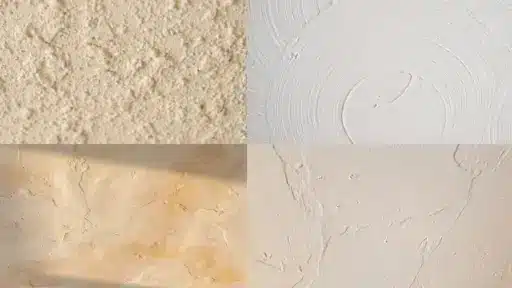
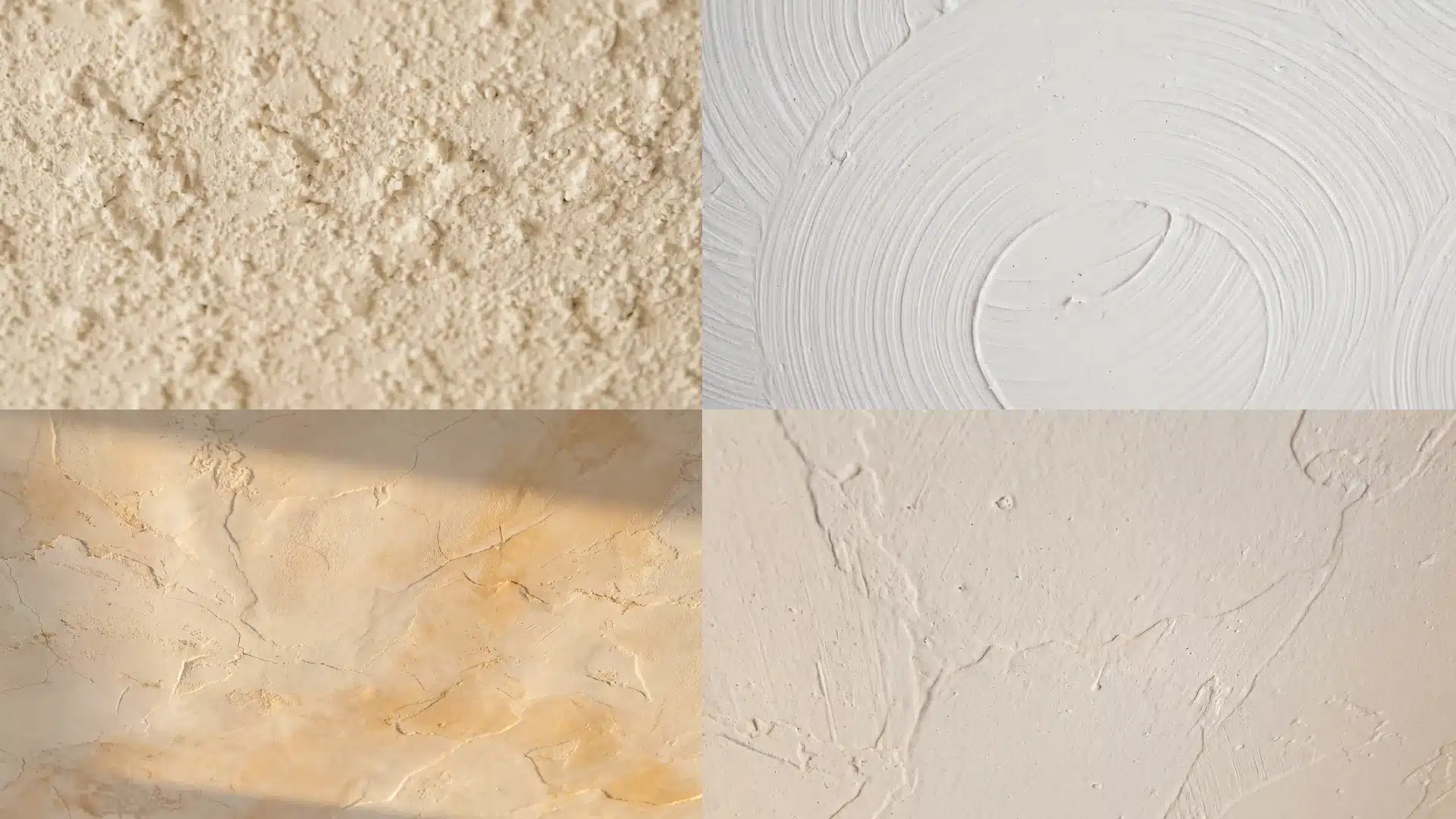
Some textures lean traditional, while others fit right into modern interior design. Knowing the difference matters more than you’d think, especially before a repair or renovation.
For anyone updating an older home or trying to identify what’s already up there, understanding ceiling texture types is a genuinely good place to start.
What is a Ceiling Texture and Why Does It Matter?
Ceiling texture is any finish applied to a ceiling that is not completely flat. It can be sprayed, rolled, or hand-applied using joint compound or plaster.
The purpose is both practical and visual. Texture hides imperfections like drywall seams and nail pops, and it can dampen sound in busy rooms. It also changes how light behaves.
Heavy textures scatter light, making a space feel warmer. Smooth ceilings reflect light evenly, making rooms feel more open.
Knowing when to act matters. Add texture when drywall work is rough or uneven. Change it when the existing finish feels dated or no longer suits the room.
Remove it when a cleaner look is the goal, or consider switching to a smooth finish, which often requires differentiation between ceiling paint vs. wall paint to ensure proper coverage and a flawless end result.
Different Ceiling Texture Types
Ceiling textures come in a wide range of finishes, each with its own look, application method, and ideal setting.
Knowing the differences helps you identify what is already in your home and make better decisions when renovating.
1. Popcorn (Acoustic) Texture
Skill Level: Beginner
Suitable For: Bedrooms, basement ceilings, older homes
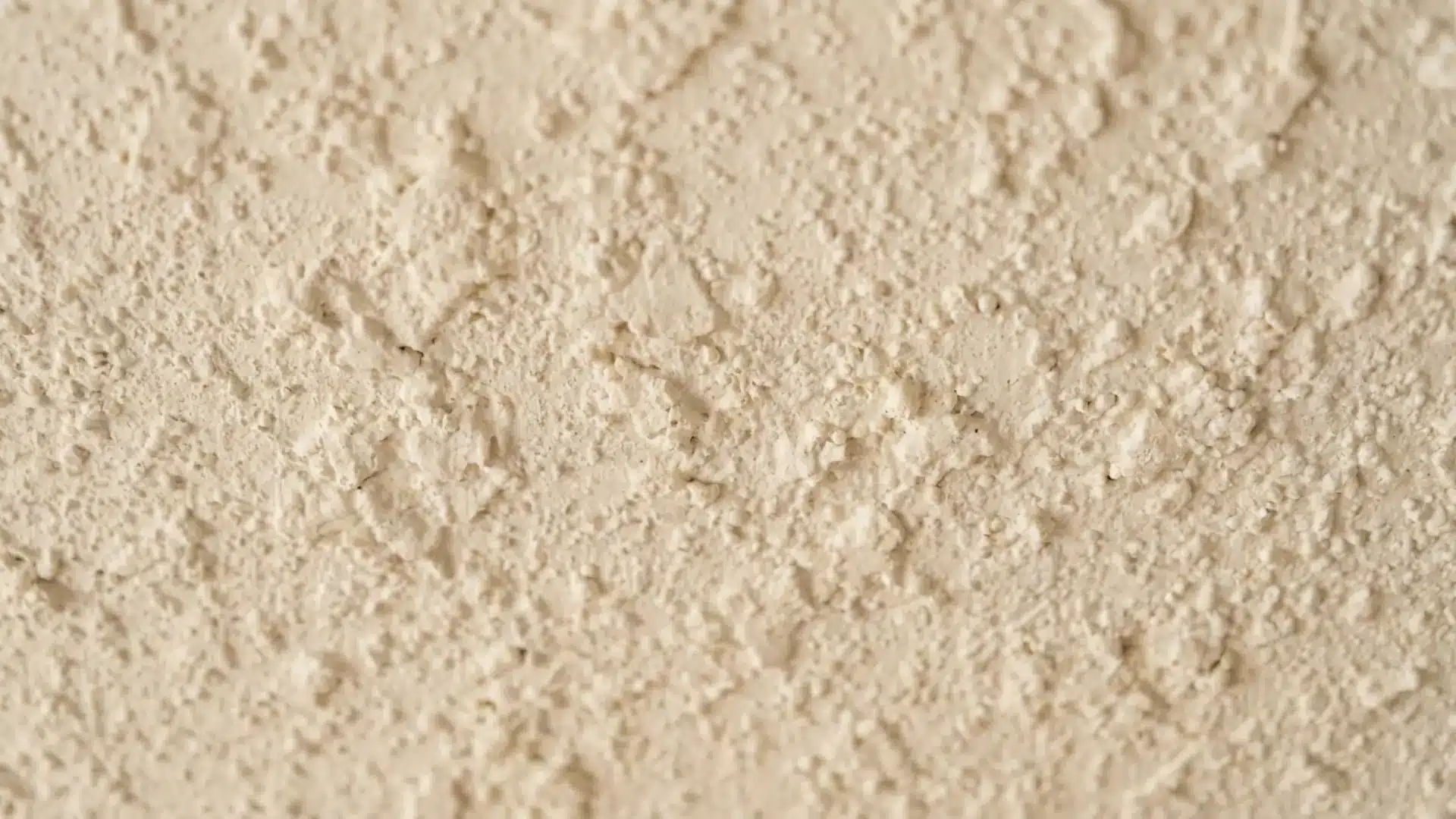
Popcorn texture has a bumpy, cottage-cheese-like surface created by spraying a mix containing styrofoam beads or vermiculite.
It was widely used in homes built between the 1950s and 1980s for its sound-absorbing qualities. Homes built before 1980 may contain asbestos, so professional testing is recommended before removal.
2. Orange Peel Texture
Skill Level: Intermediate
Suitable For: Living rooms, hallways, modern homes
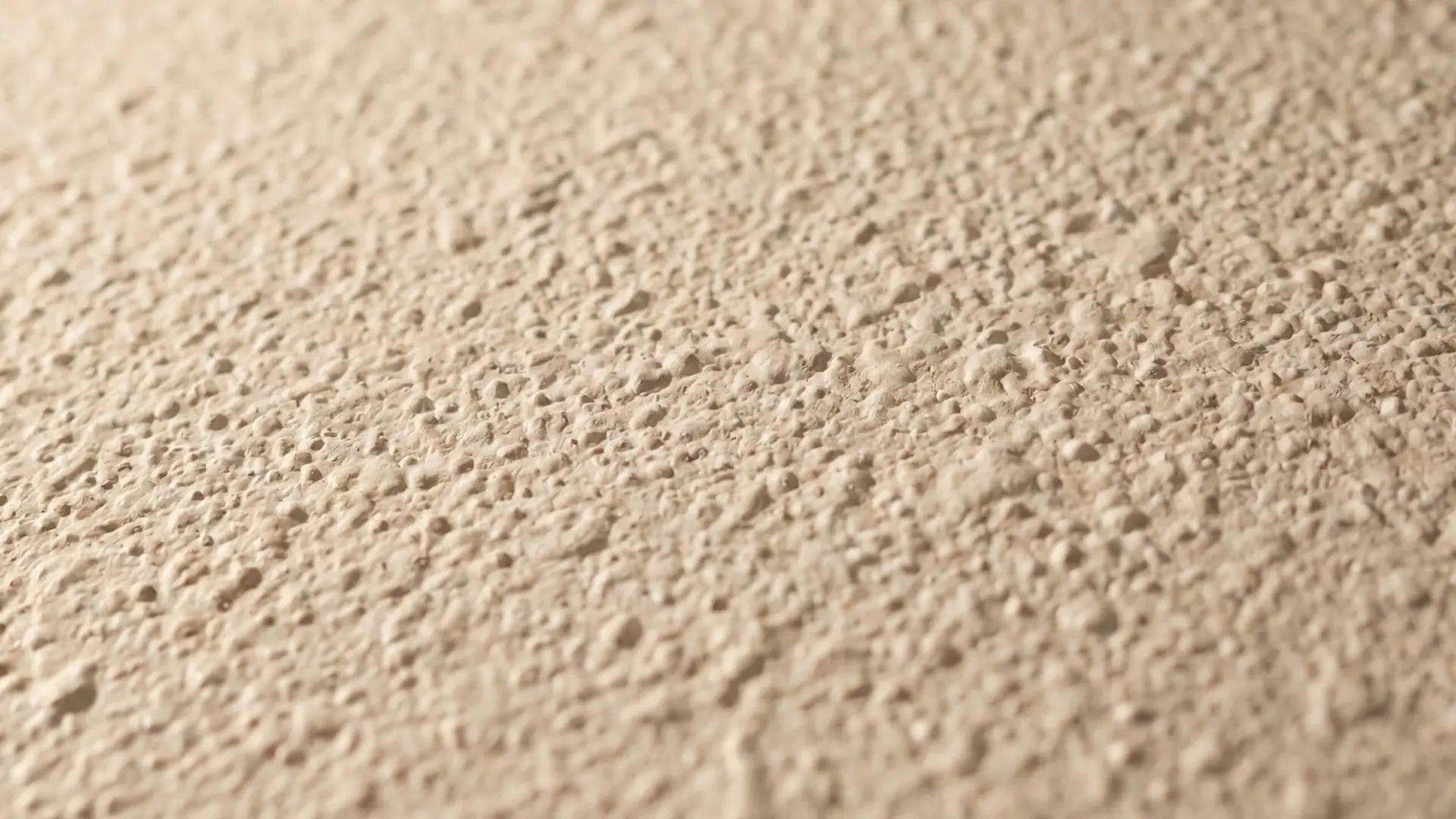
The orange peel texture resembles an orange’s skin, with small, rounded bumps spread evenly across the surface. It is applied by spraying thinned joint compound through a hopper gun.
It is one of the most common textures in homes built from the 1990s onwards.
3. Skip Trowel Texture
Skill Level: Advanced
Suitable For: Living rooms, dining rooms, Mediterranean and transitional interiors
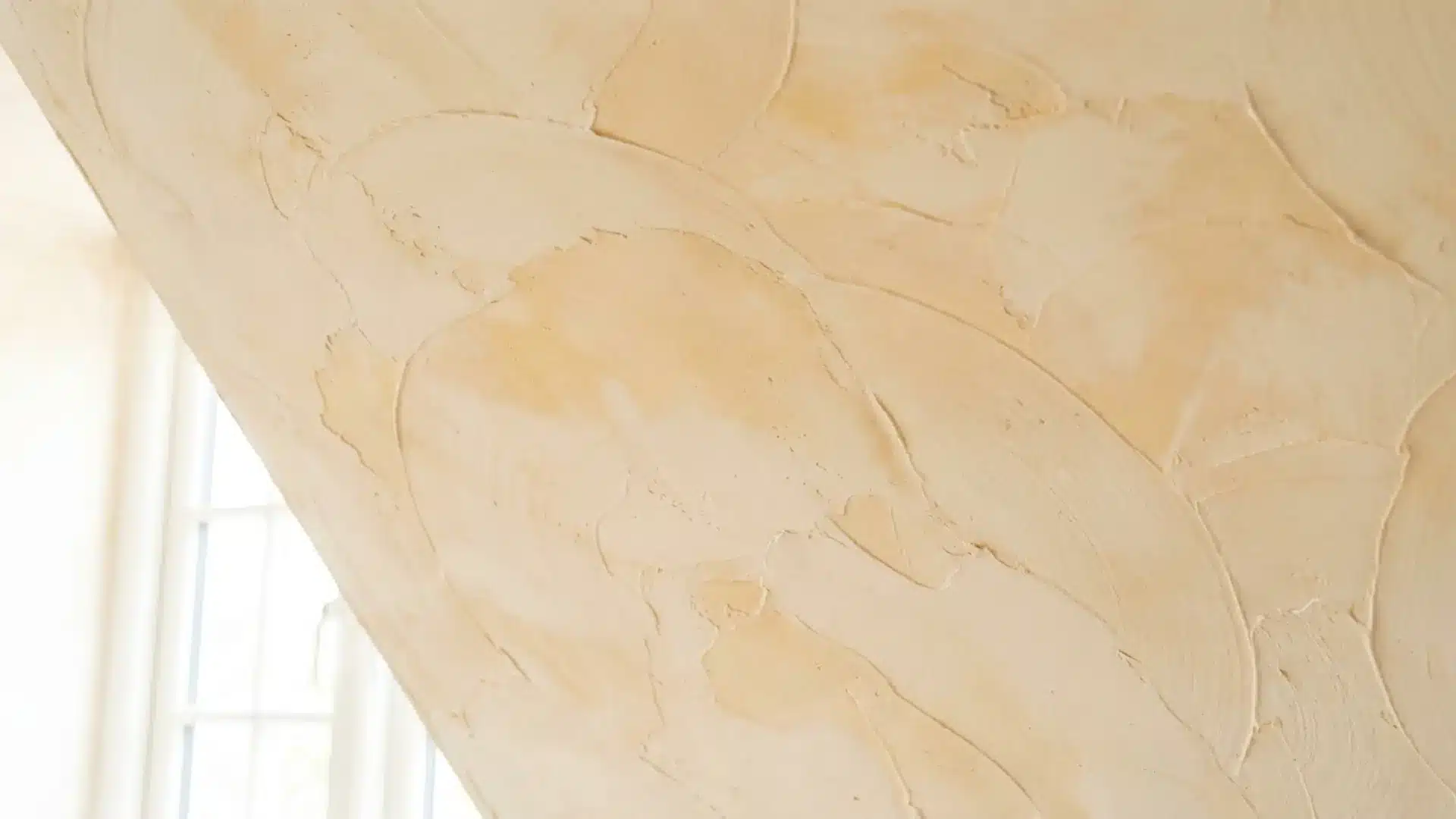
Skip trowel is hand-applied using a curved trowel, leaving behind irregular, flat patches with a Mediterranean character. No two skip-trowel ceilings look identical, making it a truly artisanal finish.
It requires a skilled plasterer and incurs higher labor costs than spray-applied options.
4. Knockdown Texture
Skill Level: Intermediate
Suitable For: Living rooms, bedrooms, transitional interiors
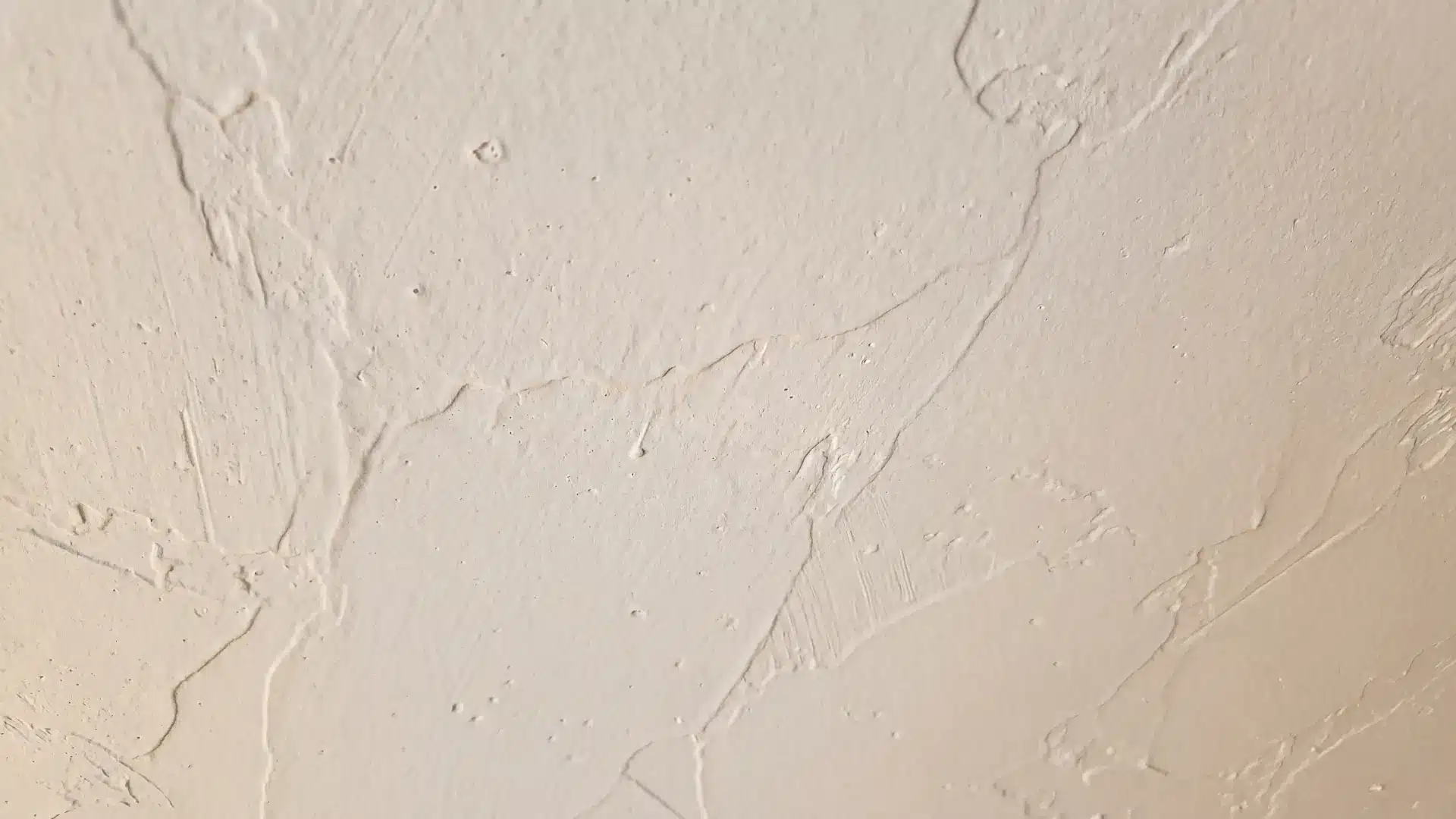
Knockdown texture is created by spraying joint compound, then lightly troweling it before it dries. It bridges traditional and modern ceiling texture design styles, making it a versatile choice for a range of interiors.
It is more consistent than skip trowel but more textured than orange peel. It is also one of the more DIY-friendly ceiling texture types available.
5. Smooth or Flat Ceiling

Skill Level: Advanced
Suitable For: Modern, minimalist, and contemporary interiors
A smooth ceiling has no texture and is finished to a completely flat surface before painting. It reflects light evenly, makes rooms feel larger, and suits contemporary interiors.
Every drywall imperfection becomes visible, so finishing work must be precise.
6. Sand Texture
Skill Level: Beginner
Suitable For: Bedrooms, hallways, low-budget renovations
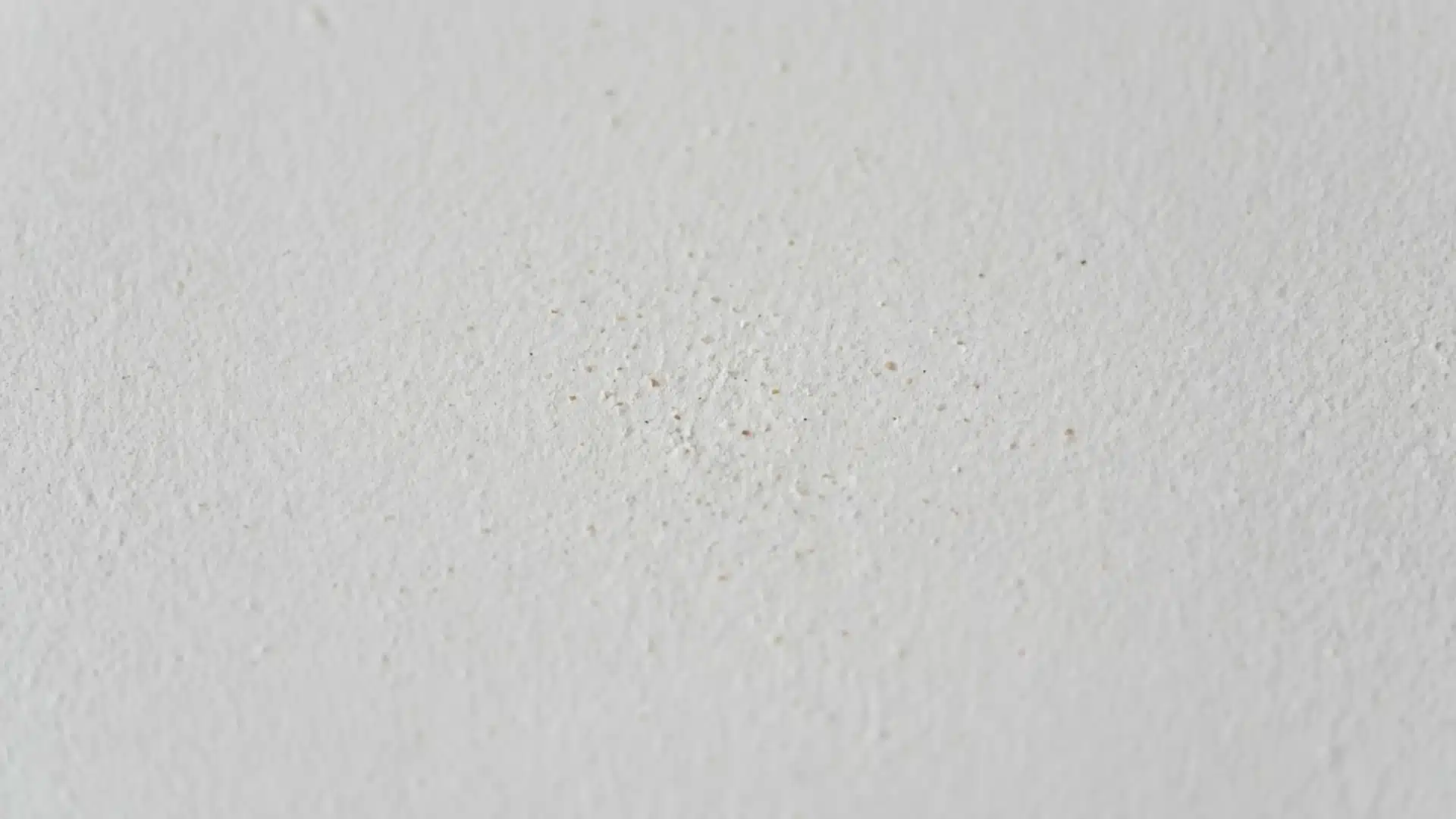
Sand texture is created by mixing fine sand into ceiling paint and rolling it onto the surface. It adds a subtle, gritty finish that hides minor flaws without drawing attention.
It is one of the easiest textures to apply without special equipment.
7. Swirl Texture
Skill Level: Intermediate
Suitable For: Formal living rooms, dining rooms, traditional interiors
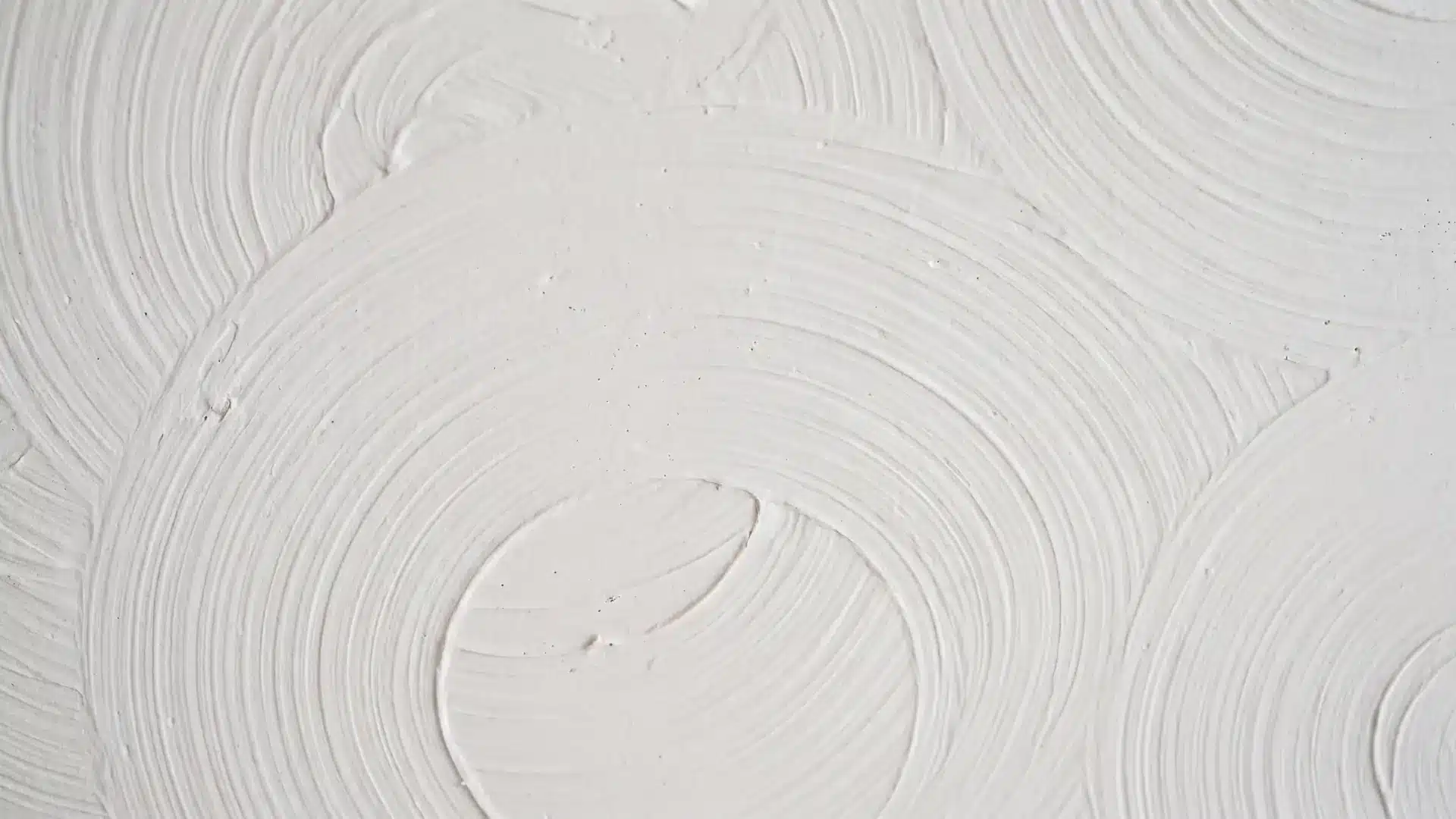
The swirl texture is created by applying joint compound and brushing it to create circular, overlapping patterns.
It carries a formal, decorative character suited to traditional interiors. Smaller-scale swirl patterns are finding renewed interest in contemporary spaces.
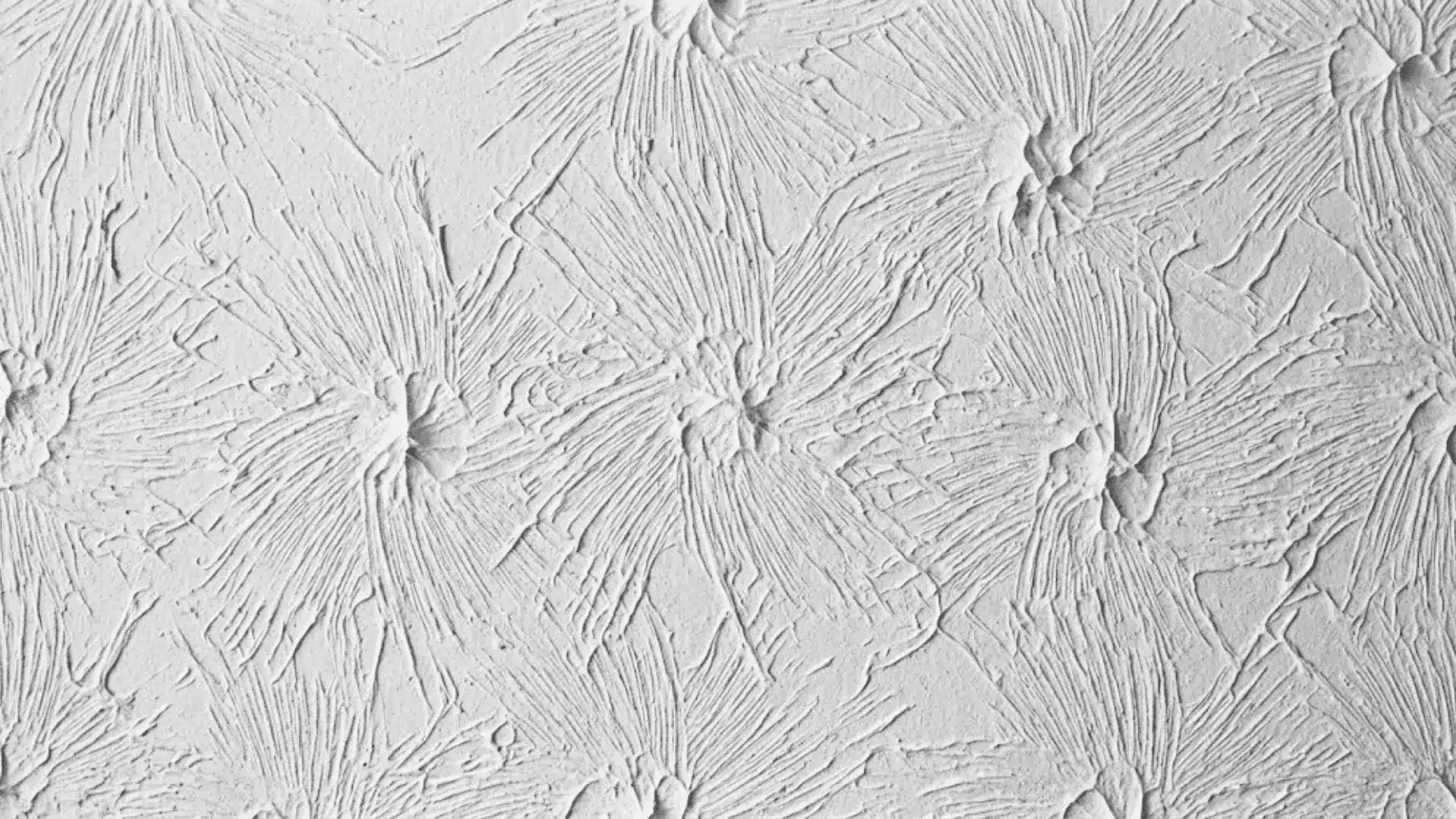
8. Rosebud Texture
Skill Level: Intermediate
Suitable For: Bedrooms, traditional homes, decorative accent ceilings
Rosebud texture is created by pressing a stomp brush into wet joint compound and pulling it away to form small flower-like patterns.
It has a distinctive handcrafted quality that stands apart from standard spray finishes. It is commonly found in older homes and adds a decorative feel to any room.
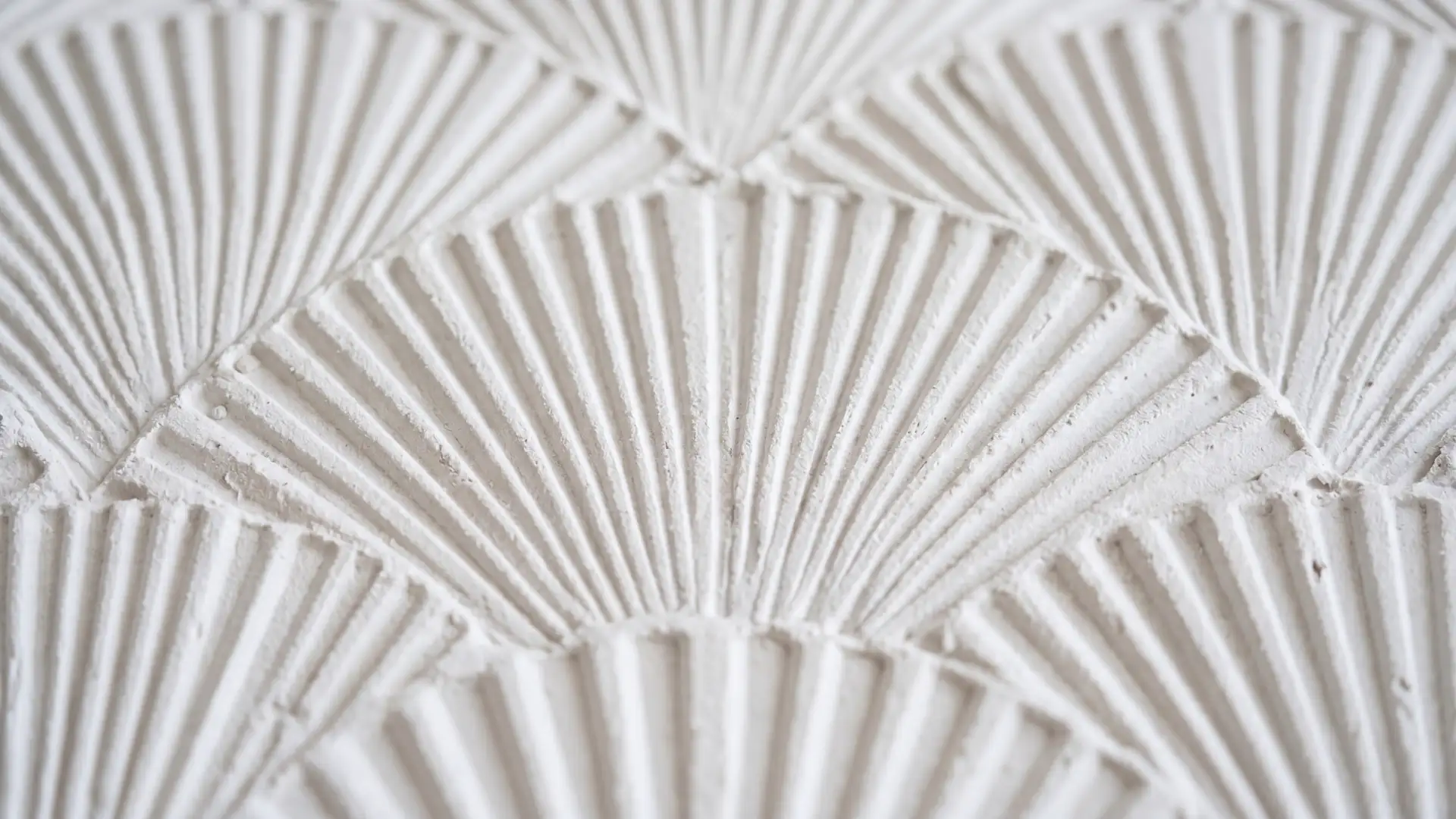
9. Comb Texture
Skill Level: Beginner
Suitable For: Traditional, vintage, and colonial style interiors
Comb texture is applied by dragging a toothed tool through wet joint compound to create repeating lines or fan-shaped patterns.
The result is a highly uniform geometric finish that works well in traditional or vintage interiors. It is one of the few ceiling textures that creates a clearly defined intentional pattern.
10. Slap Brush Texture

Skill Level: Beginner
Suitable For: Rustic, southwestern, and casual interiors
Slap brush texture is created by repeatedly slapping a brush or roller against wet joint compound, leaving behind random overlapping marks.
It has a bold, irregular appearance that adds strong visual character to a room. It is most common in southwestern and rustic style interiors.
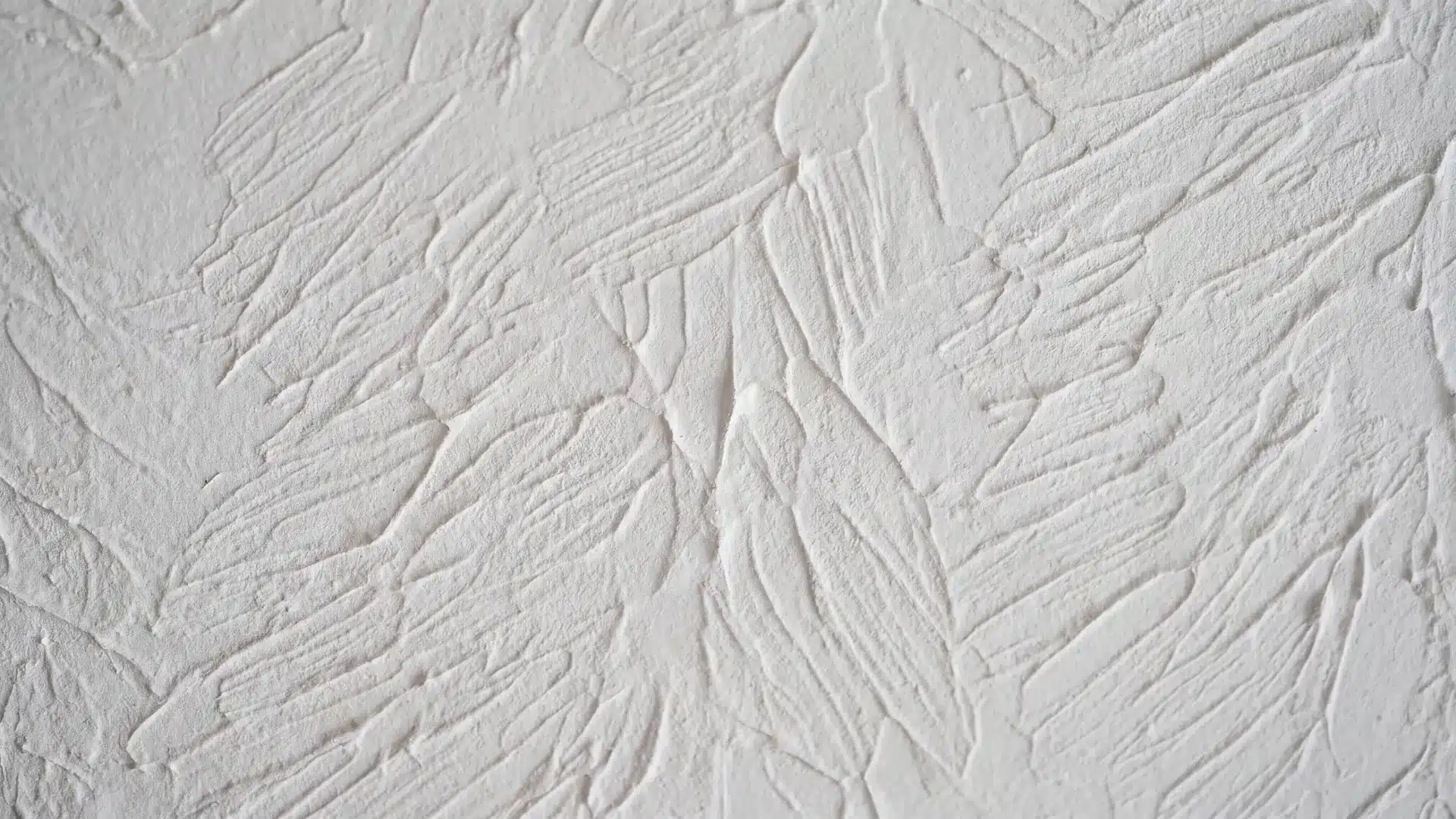
11. Crow’s Foot Texture
Skill Level: Intermediate
Suitable For: Traditional, transitional, and formal interiors
Crow’s foot texture is made by pressing a stipple brush into wet compound and pulling it away to create a pattern resembling bird footprints.
It has a softer, more refined look than a slap brush and works well in both traditional and transitional interiors.
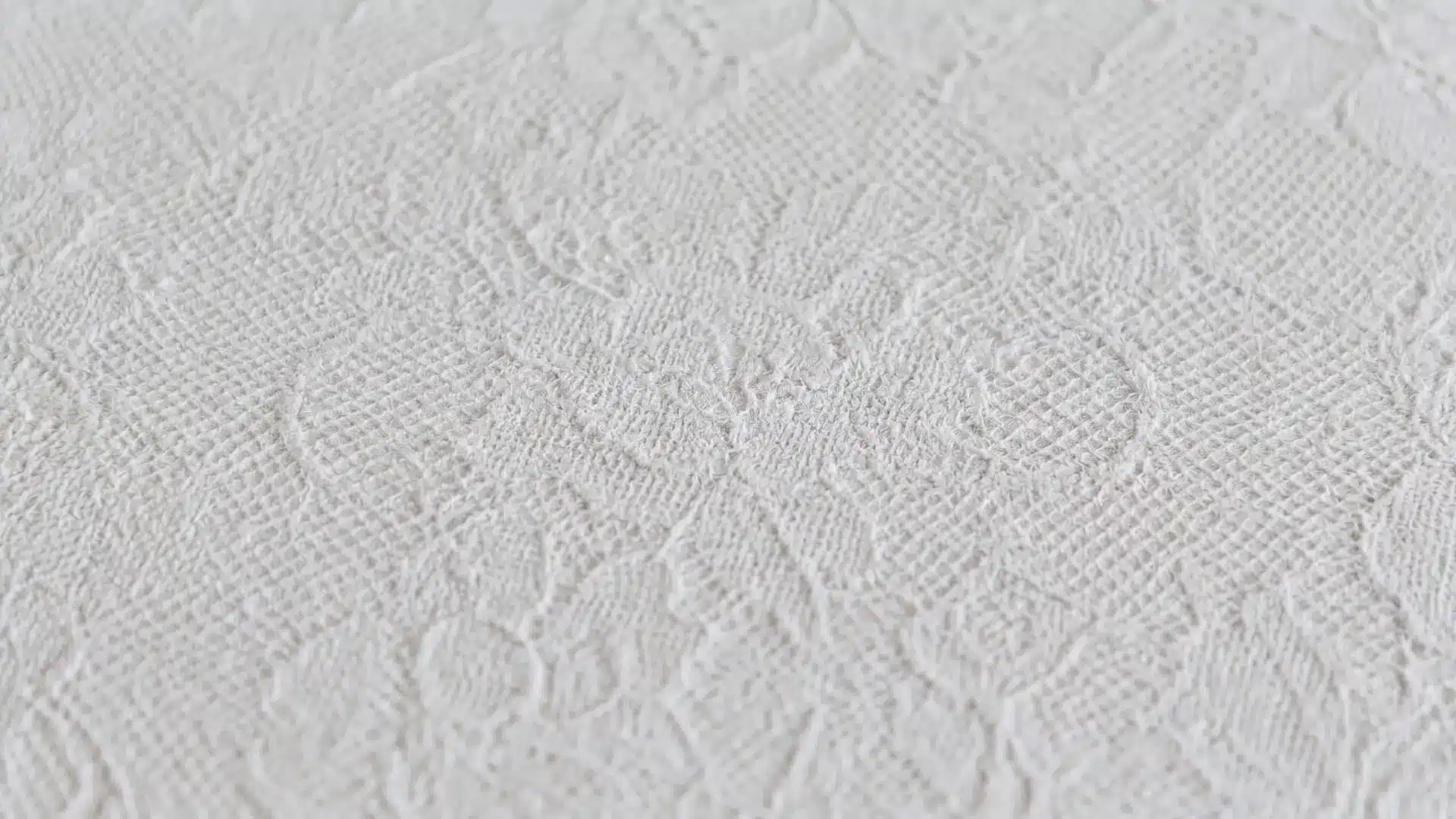
12. Lace Texture
Skill Level: Intermediate
Suitable For: Formal living rooms, bedrooms, and decorative spaces
Lace texture is a fine, delicate spray finish that creates a subtle layered pattern resembling fabric lace.
It is lighter than orange peel and adds a soft decorative quality without overwhelming a space. It is a popular choice in formal living rooms and bedrooms.
13. Trowel Texture
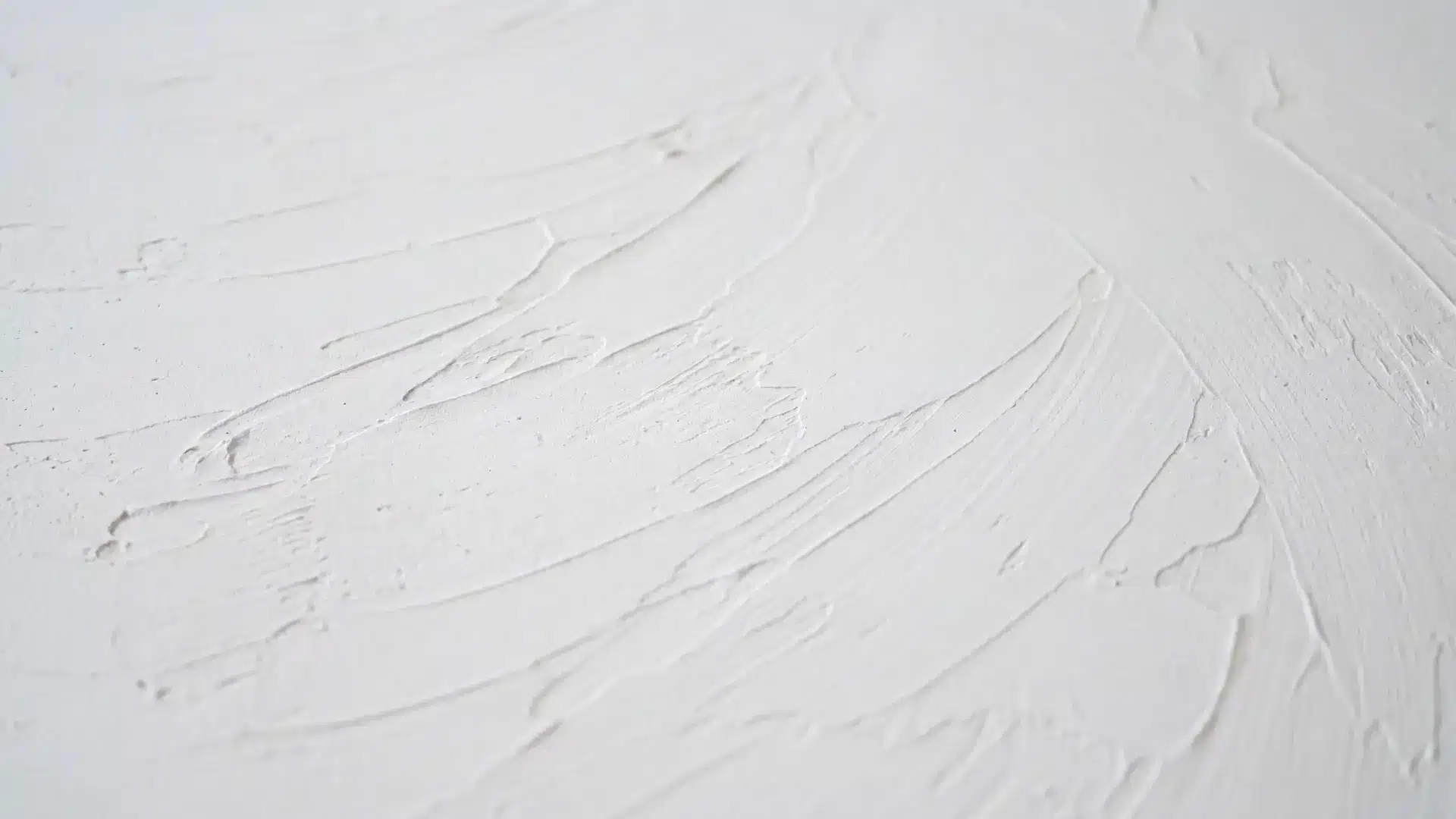
Skill Level: Advanced
Suitable For: Contemporary, transitional, and high-end residential interiors
Trowel texture is applied by spreading joint compound across the ceiling in broad sweeping strokes with a flat trowel.
Each pass leaves behind a thin layer with visible directional marks, creating a clean yet textured surface. It falls between a smooth and a skip trowel in terms of visual weight.
Each of these ceiling texture types serves a different purpose and suits a different space. The right choice depends on your room, your budget, and how much of the work you plan to take on yourself.
Modern Ceiling Texture Design
Modern ceiling texture design is not just about picking a finish you like. It is about understanding how that finish interacts with everything else in the room.
The right combination elevates a space. The wrong one makes it feel disconnected.
| Ceiling Texture | Works Well With | Avoid |
|---|---|---|
| Popcorn | Retro furniture, wood paneling | Minimalist decor |
| Orange Peel | Neutral walls, open-plan layouts | Bold wall textures |
| Skip Trowel | Exposed beams, warm earthy tones | Cold grey palettes |
| Knockdown | Rustic wood, transitional interiors | Ultra-modern spaces |
| Smooth or Flat | Concrete floors, minimalist furniture | Busy wallpaper |
| Sand | Soft neutrals, casual interiors | Luxury finishes |
| Swirl | Crown molding, formal spaces | Industrial interiors |
| Rosebud | Vintage decor, traditional homes | Contemporary interiors |
| Lace | Formal living rooms, layered decor | Stark minimalism |
| Trowel | Clean lines, warm neutrals | Ornate decor |
In modern ceiling texture design, cohesion is everything.
The ceiling does not have to match the walls or the floor, but it has to belong in the same conversation as the rest of the room.
How to Identify the Ceiling Texture in Your Home?
Identifying ceiling texture types is easier than it sounds once you know what to look for.
- Look at Pattern Shape: Heavy, clustered bumps point to popcorn texture. Evenly distributed small bumps suggest an orange peel effect. Irregular flat patches indicate skip trowel or knockdown.
- Check Texture Thickness: Run your hand lightly across the surface. Popcorn feels rough and crumbly. Orange peel and knockdown feel firm but uneven. Sand texture feels like fine grit. Smooth ceilings feel exactly that.
- Determine Spray vs Hand-Applied Texture: Spray-applied textures, such as orange peel and knockdown, exhibit a mechanical pattern across the entire surface. Hand-applied textures like skip trowel and swirl show visible tool marks.
- Compare With Texture Samples: If you are still unsure, pick up a ceiling texture identification card from a hardware store or search texture samples online.
When to call a professional? If your home was built before 1980, do not scrape or sand the ceiling yourself. Older popcorn textures may contain asbestos, which requires professional testing before any work begins.
Ceiling Texture Types by Room
Not every ceiling texture suits every room. The right choice depends on how the space is used, how much moisture it sees, and what the room needs to feel like visually.
| Room | Best Choice | Avoid |
|---|---|---|
| Living Room | Skip trowel, knockdown, coffered | Nothing specific |
| Bedroom | Orange peel, smooth | Heavy decorative textures |
| Kitchen | Smooth, sand | Popcorn, skip trowel |
| Bathroom | Smooth with moisture-resistant paint | All spray-applied textures |
| Open-Plan | Smooth, orange peel | Mixing different textures |
| Dining Room | Coffered, swirl | Popcorn, sand |
The ceiling texture you choose should work with the room, not against it. High-moisture rooms always call for simpler, smoother finishes.
Decorative textures are best reserved for dry living spaces where they can be appreciated without the risk of damage.
How to Choose the Best Ceiling Texture?
Choosing the right ceiling texture comes down to four things: the room, the style, the budget, and the skill level of whoever is doing the work.
- Consider the Room First: High-moisture rooms like bathrooms and kitchens need smooth, easy-to-clean finishes. Living rooms and bedrooms have more flexibility and can carry heavier, more decorative textures.
- Match Your Interior Style: Modern, minimalist interiors pair well with smooth or orange peel finishes. Traditional and Mediterranean spaces work well with a skip trowel or swirl.
- Set a Realistic Budget: DIY-friendly textures like sand and orange peel keep costs low. Hand-applied finishes like skip trowel and Venetian plaster require skilled labor and carry a higher price tag.
- Think About Maintenance: Heavily textured ceilings, like popcorn, collect dust and are difficult to repaint. Smoother finishes are easier to maintain and touch up over time.
- Factor in Ceiling Height: Low ceilings benefit from smooth or very subtle textures that do not add visual weight. High ceilings can carry bolder, more dramatic finishes without making a room feel smaller.
The best ceiling texture is the one that fits your space without working against it.
Ceiling Texture vs. Wall Texture
Ceiling texture and wall texture are often confused, but they serve different purposes and follow different rules. Here is a clear breakdown of how the two differ.
| Factor | Ceiling Texture | Wall Texture |
|---|---|---|
| Purpose | Hides imperfections, manages light and acoustics | Primarily decorative |
| Finish Weight | Light to moderate | Light to heavy |
| Paint Type | Drip-resistant ceiling paint | Wall paint with a specific sheen |
| Need to Match | No, contrast is intentional | Should complement the ceiling |
| Common Mistake | Using heavy wall texture on the ceiling | Ignoring how it interacts with the ceiling |
Getting this balance right is what separates a well-designed room from one that feels unintentionally busy.
DIY vs. Professional Application
Knowing which ceiling texture types you can handle yourself and which require a professional can save you significant time and money.
DIY-Friendly Textures
- Sand Texture: Requires only a thick-nap roller and texture paint. No special skills needed.
- Orange Peel: Achievable with a hopper gun and an air compressor. Takes practice but is manageable for a first-timer.
- Knockdown: Spray first with a hopper gun, then flatten with a trowel. Forgiving enough for beginners.
Leave These to a Professional
- Skip Trowel: Requires a skilled hand and years of experience to look right.
- Venetian Plaster: A multi-layer application that demands professional expertise.
- Coffered Ceilings: Involves structural work and precise carpentry.
How to Remove or Change Ceiling Texture?
Removing or changing a ceiling texture is one of the more labor-intensive home improvement projects, but it is entirely achievable with the right approach.
Before any removal work begins, always test for asbestos if your home was built before 1980.
| Method | Difficulty | DIY Cost | Professional Cost | Best For |
|---|---|---|---|---|
| Scraping | Easy | $50 – $100 | $1 – $3 per sq ft | Popcorn and light spray textures |
| Skim Coating | Moderate | $100 – $200 | $1.50 – $3 per sq ft | Firmly bonded textures |
| Ceiling Overlay | Hard | Not recommended | $3 – $6 per sq ft | Heavily damaged ceilings |
| Asbestos Testing | Required | $25 – $75 per sample | $75 – $150 per sample | Homes built before 1980 |
Frequently Asked Questions (FAQs)
What is the Most Popular Ceiling Texture Today?
Orange peel and smooth finishes are currently the most popular. Orange peel is common in newer homes for its subtle, clean look, while smooth ceilings are the defining choice in modern interior design.
Is Popcorn Ceiling Still Used Today?
Popcorn texture is rarely used in new construction today. It is mostly found in older homes built between the 1950s and 1980s and is increasingly being removed during renovations.
Can I Paint Over the Ceiling Texture?
Yes, most ceiling textures can be painted over. However, popcorn texture requires a careful approach as heavy rolling can cause it to peel or absorb too much paint.
How Do I Know if My Popcorn Ceiling Contains Asbestos?
Visual inspection alone cannot confirm the presence of asbestos. If your home was built before 1980, the only way to know for certain is to have a certified asbestos inspector conduct professional testing.
Which Ceiling Texture is Easiest to DIY?
Sand texture and orange peel are the most beginner-friendly options. Sand texture requires only a roller and texture paint, while orange peel needs a hopper gun but is forgiving for first-timers.
Wrapping It Up
Ceiling textures are more than a finishing detail. They affect how a room looks, feels, and functions every single day.
From the classic popcorn ceilings of older homes to the clean, smooth finishes that define modern ceiling texture design, every type of texture has a purpose and a place.
If you are planning a renovation, consulting a licensed contractor is always a worthwhile first step.
Texture identification, removal methods, and professional advice are all here, so you can move forward with complete confidence.
Found this helpful? Bookmark this page so you can come back to it when you are ready to start your project.

With a Master in Architectural Studies from University of Pennysylvania, Marwa Haydar has pioneered living spaces since 2005. Her expertise, initially honed in a prestigious architectural firm, is evident in her approach to creating environments. Marwa became part of our team in 2019 and has since been a driving force in our home improvement section, known for her practical yet stylish solutions. She’s been spearheading our design workshops since then, infusing her passion for teaching into her work. In her leisure time, Marwa enjoys exploring historic architecture and is an enthusiastic pottery hobbyist, further enriching her understanding of form and texture.