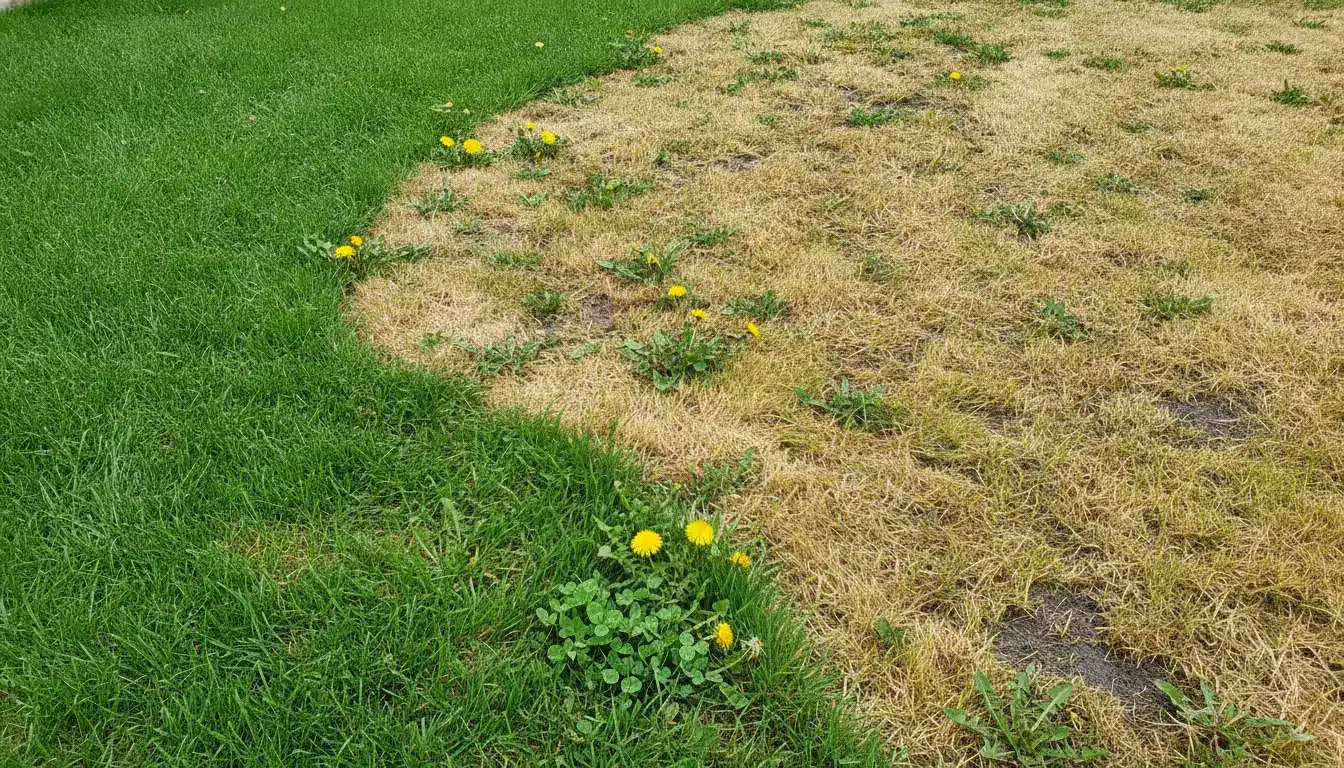

Not long ago, your grass was a vibrant, unbroken green, but somewhere over the last few weeks, a quiet shift took place, and now the whole lawn just looks lacklustre.
Between the odd brown patches here and a few suspicious weeds there, the warning signs are everywhere. And if you ignore them long enough, you’ll end up with more of a wasteland than a garden.
Read on, and we’ll walk you through exactly what to look out for before things go properly pear-shaped.
Irregular Brown Patches
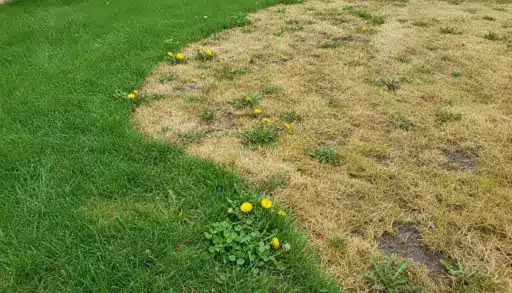
Before anything else, take a proper look at the colour of your grass. Healthy turf should be consistently green, so the moment you notice uneven brown patches appearing, something has already gone wrong at the soil level.
Brown patches are rarely random; they usually point to specific problems.
These could range from fungal infection spreading through the root zone, compacted soil cutting off water and nutrients, or dry spots caused by an irrigation system that isn’t reaching every corner of the lawn.
The shape of the damage tells a story, too. Perfect circles or rings usually point to a fungal infection, whereas messy, irregular patches that spread across the lawn are a classic sign of drought stress or waterlogging.
Don’t just write it off as a bad spell of weather. Instead, we highly recommend you get close to ground level and see what you’re really dealing with.
Excessive Weed Growth
Once you’ve had a good look at any discolouration, shift your attention to what’s growing where it shouldn’t be. A weed or two is perfectly normal, but when they start taking over in noticeable clusters, that’s definitely a red flag.
To understand why weeds suddenly take over, look under the surface. A healthy lawn has a thick, tangled web of roots that acts like a shield, blocking out sunlight and soaking up all the nutrients before weed seeds can even start to grow.
If the grass gets weak from heavy foot traffic or a lack of nutrients, that shield breaks.
Dandelions, clover, and moss are particularly common across UK lawns, and each tends to thrive in specific conditions, from compacted soil to excessive moisture or low fertility.
Pulling weeds without addressing the underlying cause is a bit like mopping up a leak without fixing the pipe. Identify why they’re gaining ground, and you’ll have a much better chance of controlling them.
Thinning Grass
With weeds creeping in, the next thing to look for is the density of your turf. If your grass is starting to look sparse or you can see patches of bare soil showing through, it’s highly likely that your lawn is under serious stress.
Thinning can result from several overlapping issues: soil compaction, poor nutrition, or a lawn that has simply grown old and lost its vitality.
There’s also the issue of excess moisture, where prolonged rainfall or overwatering can suffocate the root systems. It turns out grass can survive a brutal winter, but it’ll fall apart if it gets slightly damp on Tuesday.
A quick way to check is to run your fingers through the grass. A healthy lawn should feel thick and springy underfoot. If your hand reaches the soil too easily, the grass coverage has already thinned out.
Uneven Growth Patterns
Now that you’ve checked the density, look at how evenly your grass is growing across the whole lawn. Patches that shoot up fast in one area while staying stubbornly short in another are a reliable indicator that something is quite unbalanced in the soil.
Uneven growth often comes down to inconsistent nutrient distribution, particularly nitrogen. Over-fertilising in one spot and neglecting another will result in a lawn that looks patchy and unkempt, no matter how often you mow it.
Poor drainage creates the same patchy effect. Water collects in the low spots, leaving the grass submerged and gasping for air, while the well-drained patches nearby grow perfectly normally.
Soil testing will give you a clearer picture of what’s actually happening beneath the surface, and it’s a simple step that any UK garden centre can help you with.
Pest Activity
With an uneven, thinning lawn already under strain, pest activity can arrive to turn a minor frustration into a total disaster.
Because these pests operate entirely underground, they manage to do an incredible amount of structural damage while leaving you completely in the dark.
In the UK, this usually means leatherjackets and chafer grubs. They feed directly on the root area, damaging the lawn’s source of water and nutrients.
The first clue is usually a section of grass that detaches from the earth entirely, lifting up like a loose rug that’s lost its grip on the floorboards.
You can also spot the problem by watching the local birds. When starlings and magpies begin persistently pecking at a single area, they’re following the scent of a larval feast below.
Nothing humbles a homeowner quite like watching a group of birds systematically dismantle a garden you’ve spent months trying to keep alive. If they won’t leave a spot alone, peel back a square of turf and see what’s creating the problem beneath the roots.
Grass Discolouration
And now, there’s one final warning sign that is hard to miss: a total loss of healthy green colour. Turf discolouration comes in a depressing palette of yellow, pale green, or a bleached-out straw shade.
Wide areas of yellow usually mean a lack of nitrogen, while a pale, washed-out look suggests the soil is completely waterlogged.
If you notice a strange orange or reddish tint, you’re likely dealing with red thread—a fungal disease that thrives in the predictably damp, unpredictable chaos of British summer weather.
If your lawn has more issues than a piece of glitchy smart-home technology, it’s time to stop your DIY efforts and look for solutions elsewhere. Trying to fix it yourself usually just leads to more frustration.
We recommend that you hand the crisis over to a lawn care maintenance specialist. They can run a proper soil analysis and fix the underlying issues, saving you from wasting another weekend on expensive treatments that only scratch the surface of the problem.
Conclusion
Congratulations, you’ve made it through the grim list of everything that can damage your grass. Lawn care is mostly just a continuous negotiation with nature, but catching these warning signs early means you’re already ahead of the game.
But with the right adjustments, getting that thick, healthy turf back is completely doable!

With a Master’s in Landscape Architecture from the University of Virginia, Sophia Stephenson has dedicated the last 20 years to creating and maintaining vibrant outdoor spaces. Her professional journey started in landscape design, where she gained a reputation for innovative and sustainable approaches. Sophia became a part of our editorial team as a freelancer in 2019, offering a fresh perspective on outdoor living. Since 2020, she has been the chief for our outdoor design content, blending aesthetic appeal with environmental stewardship. In her leisure time, Sophia is a keen photographer, capturing the beauty of natural landscapes, a hobby that complements her professional expertise.