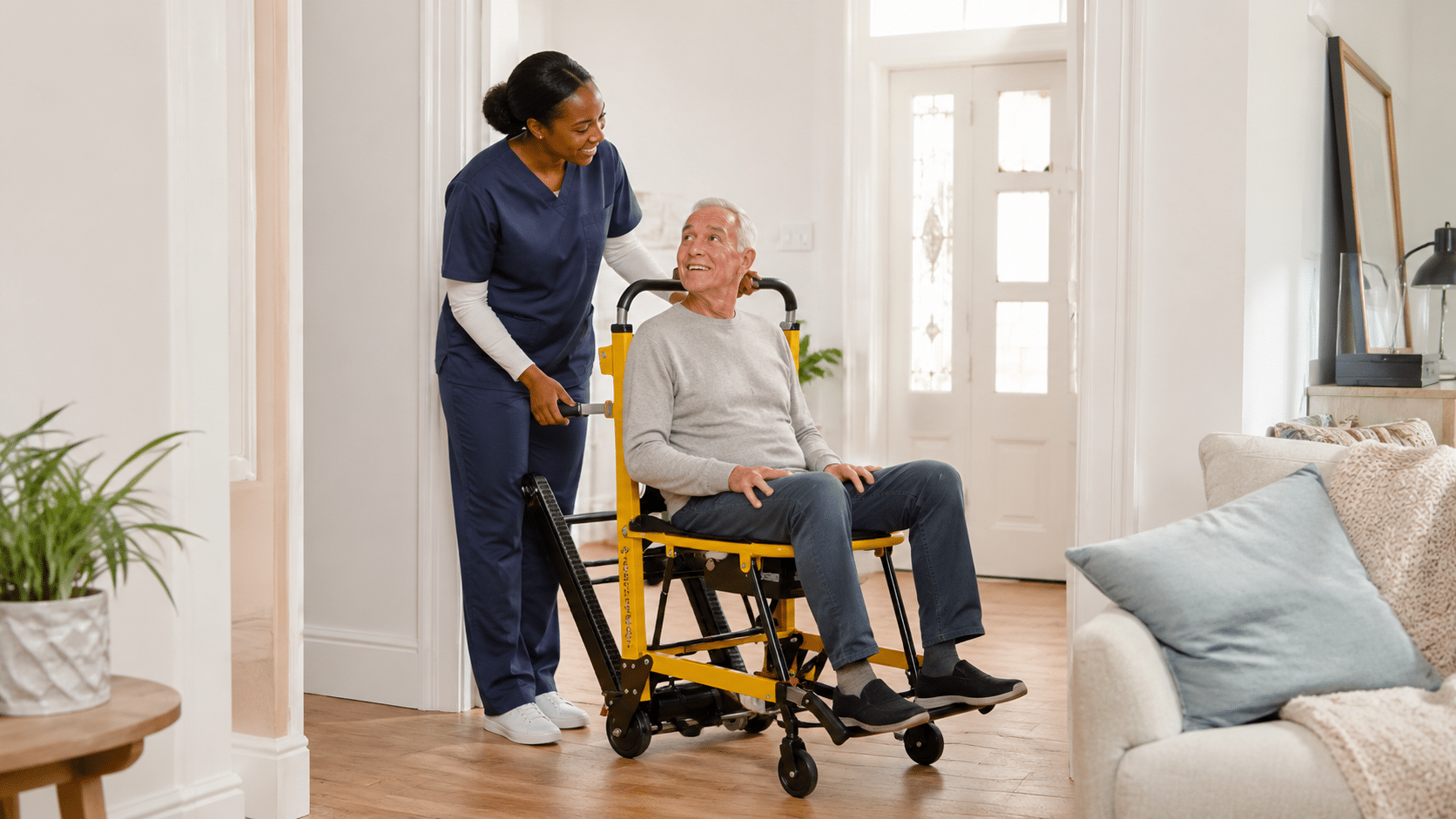

A safer home starts with understanding how someone moves through it every day.
For older adults, risk often appears in ordinary routines: getting out of bed, walking to the bathroom at night, stepping into the shower, standing from a chair, or moving from one surface to another. Small barriers can become daily stress points when balance, strength, vision, or mobility changes.
The goal is not to make the home feel clinical. The goal is to create a safer, more accessible home that supports daily movement, protects dignity, and reduces strain for family caregivers.
Start With The Daily Movement Route
Walk through the home as the older adult uses it.
Follow the route from the bed to the bathroom. Check the path from the favourite chair to the kitchen. Look at entryways, stairs, hallway turns, and any area where someone needs to reach, pivot, bend, or step over something.
The useful question is simple: where does movement become uncertain?
Loose rugs, narrow walkways, poor lighting, low furniture, trailing cords, and cluttered corners may not seem serious on their own. Together, they can turn a familiar home into a sequence of avoidable risks.
The CDC identifies falls as a major injury concern for adults aged 65 and older. That does not mean every home needs a renovation. It means fall risk deserves practical, room-by-room planning.
Improve Lighting Where Movement Decisions Happen
Lighting matters most where people make movement decisions.
A bright living room helps, but higher-risk areas are often more specific: bedside space, hallway corners, stair treads, bathrooms, entryways, and the route between the bedroom and toilet.
Motion-sensor night lights can make late-night movement easier. Light switches should be reachable before someone enters a dark room. Stair lighting should show each step clearly, not just brighten the landing.
Good lighting also supports confidence. When someone can see the floor, furniture edges, and changes in level, movement becomes less hesitant.
Clear Pathways Before Adding Equipment
Many home accessibility problems begin with layout.
A walker, wheelchair, cane, or caregiver may need more turning space than the room currently allows. Side tables, ottomans, plant stands, shoe racks, and loose cables can make daily movement harder than it needs to be.
Clear the main walking routes first. Keep frequently used items within easy reach. Remove rugs that slide, curl, or catch underfoot. Secure cords against walls. Make sure bedroom, bathroom, and kitchen pathways allow enough space for the person’s current mobility support.
The National Institute on Aging recommends planning ahead for home safety, support, and changing daily needs when older adults want to remain at home. A home that works today may need small adjustments as routines change.
Make The Bathroom A Priority Safety Zone
Bathrooms deserve early attention because they combine wet surfaces, tight spaces, standing, sitting, turning, and reaching.
Useful upgrades may include grab bars near the toilet and shower, a raised toilet seat, a shower chair, a handheld showerhead, non-slip flooring, and better lighting. Door swing and floor space also matter, especially when a caregiver needs to assist.
Do not treat bathroom safety as only a shower issue. Toilet transfers, towel placement, night-time access, and the step into the bathing area can all create risk.
For some homes, a walk-in shower or lower threshold may be worth considering. For others, smaller changes may provide enough support. The right decision depends on mobility level, balance, bathroom size, and how much help is needed during daily routines.
Match Furniture To Real Mobility Needs
Furniture can either support movement or make it harder.
Low sofas, deep cushions, unstable armrests, and beds that sit too high or too low can make standing and transfers more difficult. A firm chair with supportive arms may be more useful than another decorative upgrade.
Bed height matters as well. The person should be able to sit with feet supported and stand without excessive strain. If a caregiver helps with transfers, there should be enough space beside the bed to stand, turn, and assist safely.
The AARP HomeFit Guide explains how many homes can be adjusted to better support older adults and people with disabilities. Furniture, layout, doorways, lighting, and bathroom access should be reviewed together, not as separate problems.
Address Transfers And Caregiver Strain
Home safety is not only about the person receiving care. The caregiver’s body is part of the safety system too.
Repeated manual lifting can become difficult during bed-to-chair movement, toilet transfers, standing support, or recovery from the floor. If a caregiver is regularly pulling, lifting, or supporting most of someone’s body weight, the home setup needs a closer look.
Where standing, bed-to-chair movement, or floor recovery has become difficult, families may need to compare lifts for elderly at home as part of a broader accessibility plan.
Lift equipment should not be treated as a one-size-fits-all purchase. A sit-to-stand lift may suit someone with partial weight-bearing ability. A patient lift may be more relevant when fuller transfer support is needed. A floor lift is a different category, often considered when getting up from the floor has become a serious concern.
Before choosing any home lift assist device, compare the person’s mobility level, weight capacity needs, room clearance, sling compatibility, base width, flooring, transfer destination, and caregiver ability. Professional guidance is sensible when transfer safety is unclear.
The Occupational Safety and Health Administration highlights lifting and transferring as a risk area for both patients and care staff. Unsafe manual lifting at home can create risk for everyone involved.
Think Beyond Single-Room Fixes
A safer home works as a connected system.
Improving the bathroom helps, but the person still needs to reach it. A better chair helps, but only if the path around it is clear. A ramp helps, but only if the entryway is well lit and the door can be opened comfortably.
Look at the whole routine. Can the person enter the home safely? Can they move from bedroom to bathroom without rushing? Can they sit, stand, and turn without grabbing unstable furniture? Can a caregiver assist without twisting, dragging, or lifting awkwardly?
Those questions keep accessibility planning grounded in daily life.
Choose Support That Fits The Person
Accessibility products should match the actual movement problem.
A grab bar helps with balance and positioning. A ramp helps with step-free access. A shower chair helps reduce standing time while bathing. A lift may support transfers when standing, moving between surfaces, or getting up from the floor has become difficult.
The wrong equipment can add clutter, cost, and confusion. The right equipment should make a specific daily task safer, clearer, or easier to manage.
Families should also review whether the need is temporary, changing, or long-term. Someone recovering from surgery may need different support from someone with progressive mobility decline.
Make The Home Safer Without Overbuilding It
Improving safety and accessibility at home is not about creating a perfect environment. It is about removing avoidable friction from everyday movement.
Start with the routes used most often. Improve lighting, clear pathways, stabilise key areas, and make the bathroom easier to use. Then look at transfer safety, caregiver strain, and whether equipment is needed for support that layout changes cannot provide.
A good home safety plan is practical, respectful, and specific. It helps the person move through familiar spaces with more confidence, while giving caregivers a safer way to support daily routines.

With a Master’s in Architecture from the University of California, Berkeley, Mitchell Green has spent over two decades dedicated to the study and practical application of home fixture design. His career started in an architectural firm, providing him a strong foundation in the structural and aesthetic aspects of home interiors. Mitchell brought his comprehensive knowledge to our platform, where he has been an influential voice in our home fixtures and fittings section. Since 2018, he has been guiding our readers through the intricacies of selecting and installing fixtures, combining technical know-how with design flair. In his spare time, Mitchell is a keen photographer, capturing architectural details and design elements, an interest that complements his professional focus.