
Most British homeowners dream of a lush, green lawn that boosts kerb appeal and becomes a relaxing outdoor space. Yet many end up disappointed. A recent survey of UK homeowners uncovered the most common lawn regrets, and the costly lessons that come with them.
From patchy grass that ruins summer barbecues to unexpected maintenance headaches, these regrets highlight how small oversights can quickly spiral.
Fortunately, learning from others’ mistakes makes it much easier to avoid them. This article explores the top regrets, why they happen, and practical steps to keep your lawn looking its best year-round.
Not Investing in Proper Watering Solutions
One of the most frequent regrets comes down to watering—or more accurately, inconsistent watering. Many homeowners assume that the UK climate will take care of things, only to find their lawn struggling during prolonged dry spells in late spring or summer.
The issue isn’t just appearance. Grass that’s regularly under-watered becomes thin and weak, making it far more vulnerable to wear, weeds, and long-term damage. By the time the problem is obvious, recovery can take weeks or even months.
What many realise too late is that occasional, shallow watering does very little. Lawns respond far better to deeper, less frequent watering that encourages roots to grow stronger and more resilient.
Underestimating the Long-Term Effects of Irregular Mowing
Skipping a few mowing sessions rarely feels like a big deal at the time. Life gets busy, the weather turns, and the lawn can wait. But that stop-start approach is one of the quickest ways to lose control of how a lawn looks and behaves.
When grass grows too long and is then cut back heavily, it becomes stressed. The result is uneven growth, visible clippings, and a lawn that never quite regains a consistent finish. It also opens the door to weeds, which take advantage of the disruption.
This is one of those regrets that tends to come with hindsight. What seemed like saving time often leads to more effort trying to fix the knock-on effects.
Choosing the Wrong Type of Grass
Not all lawns are created equal, and this is something many homeowners only realise after the fact. One type of grass that thrives in one garden may struggle in another, depending on shade, soil, and foot traffic.
In the UK, where gardens often deal with a mix of damp conditions and limited sunlight, choosing the wrong type of grass can lead to constant patchiness or thinning. Some lawns simply aren’t suited to heavy use, while others struggle without full sun.
The regret here isn’t just about appearance—it’s about the ongoing effort required to maintain something that was never quite right to begin with.
Neglecting Soil Health
It’s easy to focus on what’s happening above the surface, but many lawn issues start below it. Compacted or nutrient-poor soil quietly undermines everything, from growth to drainage.
Homeowners often notice the symptoms—water pooling, thinning grass, or dry patches—but not the cause. Without addressing the soil itself, these problems tend to return no matter how much care is given on the surface.
By the time this becomes clear, the fix usually involves more effort than simple maintenance would have required in the first place.
Leaving Weeds and Moss Too Long
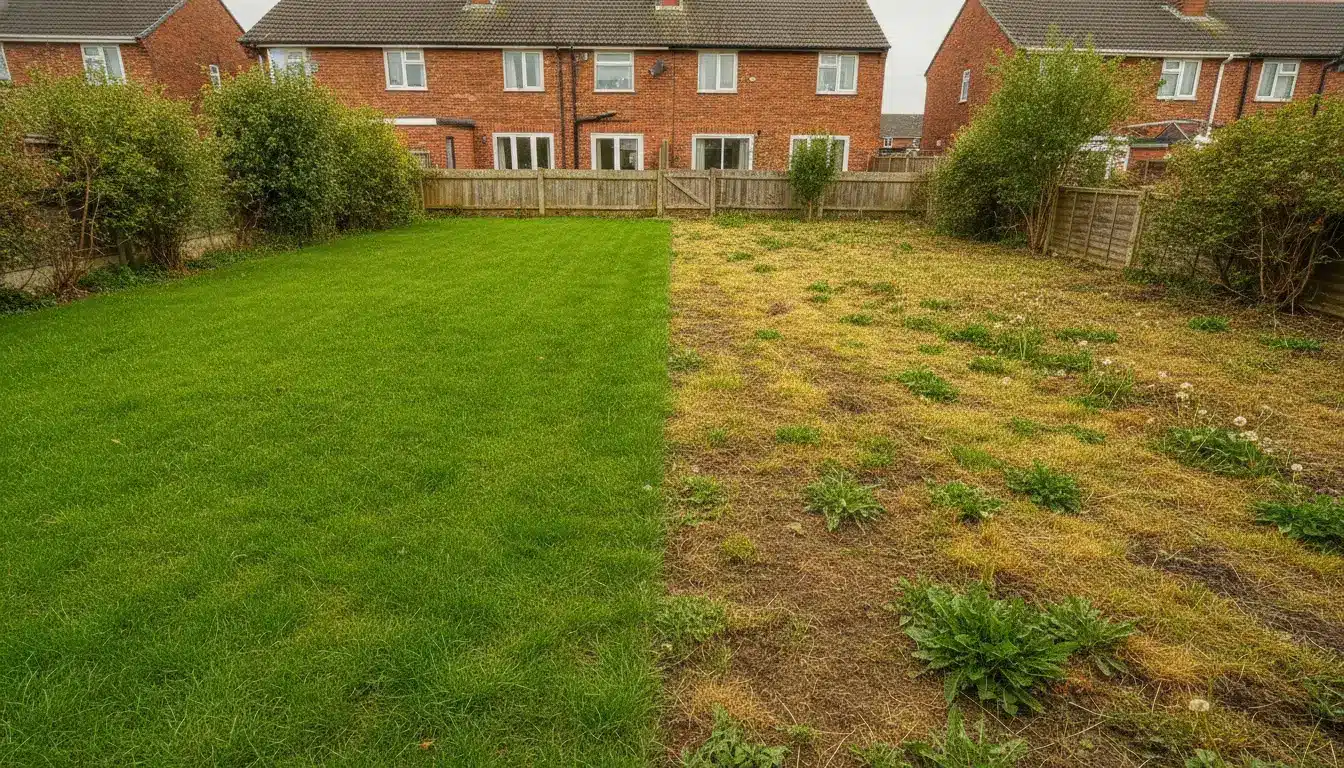
Weeds and moss rarely grow overnight. They creep in gradually, often in areas where the lawn is already struggling—shaded corners, damp patches, or worn sections.
Because the change is slow, it’s easy to ignore at first. But once established, weeds and moss spread quickly, competing with grass for space and nutrients. Before long, they become one of the most noticeable features of the lawn.
This is a classic case of a small issue becoming a larger one simply through delay.
Fixing Everything at Once
In an effort to improve their lawn quickly, some homeowners go too far in the opposite direction—overwatering, overfeeding, or cutting too short in one go.
While well-intentioned, this approach often causes more harm than good. Grass can become stressed, soil balance can be disrupted, and results are rarely as quick as hoped.
The regret here isn’t neglect—it’s impatience. Lawns respond best to steady, measured care rather than sudden, intensive fixes.
How to Keep Your Lawn in Good Condition
Most lawn regrets share a common thread: inconsistency or misjudgement rather than lack of effort. Fortunately, a healthy lawn doesn’t require constant attention—just the right approach, applied regularly.
- Keep Mowing Consistent. A steady mowing routine during the growing season helps maintain an even, healthy lawn. Cutting little and often avoids stress and keeps growth under control without creating patchiness.
- Water Deeply, Not Frequently. Rather than light, daily watering, aim for deeper sessions during dry periods. This encourages stronger root systems and helps the lawn cope better with changing conditions.
- Match Your Lawn to Your Garden. If you’re starting fresh or making improvements, choose grass types suited to your conditions—whether that’s shade, sun, or heavy use. It reduces long-term maintenance significantly.
- Look After the Soil. Aerating compacted areas and feeding the lawn at key times of year supports healthier growth from the ground up. Good soil makes everything else easier.
- Deal with Problems Early. Weeds, moss, and thin patches are far easier to manage when caught early. Regular checks help prevent small issues from becoming dominant features.
- Work With the Seasons. Adjust your routine throughout the year—reviving in spring, maintaining in summer, strengthening in autumn, and protecting in winter. It keeps the lawn balanced and manageable.
When to Consider Professional Lawn Care
For many homeowners, the challenge isn’t knowing what to do—it’s finding the time to do it consistently. This is where professional lawn treatment services can offer real value.
A reliable service brings structure to lawn maintenance, ensuring mowing, treatments, and seasonal care are handled at the right time. It also removes much of the guesswork, particularly when dealing with issues like soil health, weeds, or patchy growth.
Whether it’s ongoing support or a one-off refresh before the warmer months, professional care can help you avoid the common pitfalls that lead to long-term frustration.
Conclusion
Britain’s biggest lawn regrets usually stem from good intentions meeting real-life busyness. Then again, with the right know-how, your lawn can become a source of pride rather than frustration.
Take stock of your current routine, pick one or two areas to improve this season, and you’ll quickly notice the difference.
Ready to move past regret? Start small this weekend and create an outdoor space you genuinely enjoy!

With a Master’s in Landscape Architecture from the University of Virginia, Sophia Stephenson has dedicated the last 20 years to creating and maintaining vibrant outdoor spaces. Her professional journey started in landscape design, where she gained a reputation for innovative and sustainable approaches. Sophia became a part of our editorial team as a freelancer in 2019, offering a fresh perspective on outdoor living. Since 2020, she has been the chief for our outdoor design content, blending aesthetic appeal with environmental stewardship. In her leisure time, Sophia is a keen photographer, capturing the beauty of natural landscapes, a hobby that complements her professional expertise.